
Ezra 2:43-54 is about the priests, Levites, temple servants, and descendants of Solomon’s servants who returned from exile in Babylon to rebuild the temple in Jerusalem, representing the restoration of worship and service to God after a period of captivity and disobedience.
43 The temple servants: the sons of Ziha, the sons of Hasupha, the sons of Tabbaoth,
44 The singers: the sons of Asaph, 148.
45 The gatekeepers: the sons of Shallum, the sons of Ater, the sons of Talmon, the sons of Akkub, the sons of Hatita, and the sons of Shobai, in all 139.
46 the sons of Jediael, the sons of Jeshaiah, 2,818
47 the descendants of Keros, the descendants of Siaha, the descendants of Padon,
48 The people of Lod, Hadid, and Ono, 721.
49 The descendants of Keros, the descendants of Siaha, the descendants of Padon,
50 The children of Keros, the children of Siaha, the children of Padon,
51 The sons of Bakbuk, the sons of Hakupha, the sons of Harhur,
52 The people of Bethel and Ai, 743
53 the sons of Barkos, the sons of Sisera, the sons of Temah,
54 The sons of Neziah, the sons of Hatipha.
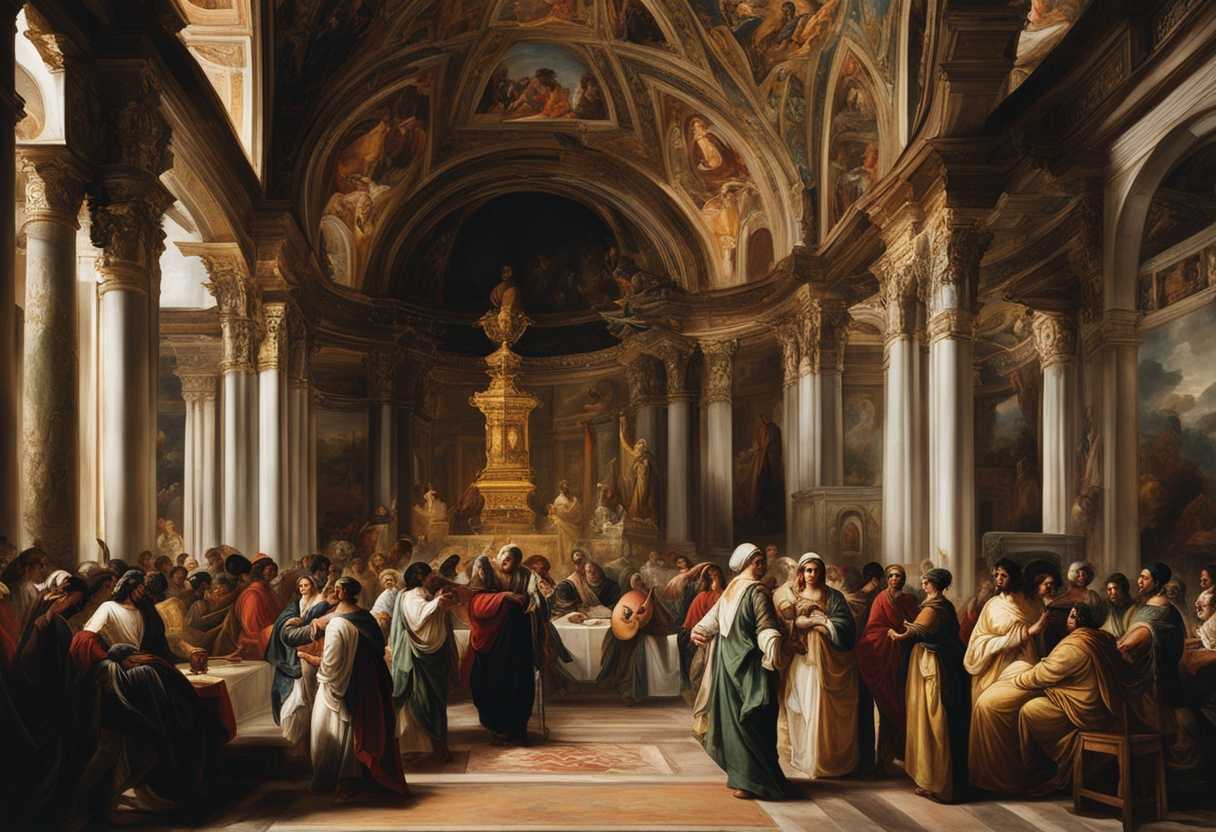
Setting the Scene for Ezra 2:43-54
In Ezra chapter 2, we find a scene set in the ancient city of Jerusalem shortly after the Israelites have returned from exile in Babylon. The city is bustling with activity as the people work together to rebuild their lives and their sacred temple. The sun is setting, casting a warm glow over the city walls and the dusty streets below.
Among the crowd gathered in the city square are several prominent figures, including Ezra the scribe, who has been tasked with leading the people in the restoration of their religious practices. He is surrounded by a group of priests and Levites, who are diligently recording the names of the returning exiles and their ancestral homes as part of a census. The people are eager to be counted and to reclaim their place in the community after years of displacement.
As the evening progresses, the sound of prayers and songs of thanksgiving fill the air, echoing off the stone buildings and mingling with the scent of incense burning in the temple. The scene is one of hope and renewal, as the Israelites come together to rebuild their city and their faith, united in their shared history and their vision for the future.
What is Ezra 2:43-54 about?
The list of priests, Levites, temple servants, and descendants who returned from exile in Babylon in this verse reflects the restoration and rebuilding of the community of faith after a period of trials and hardships. It speaks to the resilience and faithfulness of the people who endured exile and then returned to their homeland to continue their worship and service to God. This list is more than just names; it represents a story of hope, perseverance, and renewal.
Imagine the emotions and struggles these individuals must have faced as they returned from exile to a land that may have been vastly different from what they remembered. Consider how priests, Levites, and temple servants play significant roles in the worship and daily functioning of the community. Their return symbolizes not only a physical journey but also a spiritual homecoming, a restoration of their identity and purpose as God’s chosen people. This list is a reminder that even in the midst of trials and challenges, God is faithful to bring His people back to where they belong, to rebuild what was broken, and to renew their faith and commitment.
Understanding what Ezra 2:43-54 really means
The Book of Ezra provides a glimpse into the return of Jewish exiles from Babylon and the rebuilding of the Temple in Jerusalem. In Ezra 2:43-54, we encounter the Nethinim, temple servants crucial in assisting the Levites. These individuals, though their role may appear minor, played a significant part in the restoration of worship in Jerusalem. Understanding the historical and cultural context surrounding these temple servants allows us to grasp the importance of their contribution to the religious life of the community.
The term “Nethinim” refers to the temple servants who supported the Levites in their duties. Despite their seemingly humble position, their service was vital for the daily operations of the temple. The repetition of the phrase “sons of” in the passage underscores the lineage and continuity of service among the Nethinim, highlighting the significance of family and generational faithfulness in God’s work. This emphasis on lineage serves as a reminder of the importance of passing down faith and service through generations.
In Nehemiah 7:46-56 and 1 Chronicles 9:2, we find further references to the Nethinim, reinforcing their essential role in the post-exilic community and their longstanding service in temple worship. These passages, along with Romans 12:4-8, where Paul discusses the diverse roles within the body of Christ, emphasize the value of every individual’s contribution, no matter how seemingly insignificant. This broader biblical context encourages us to appreciate the diversity of roles within the faith community and the importance of each person’s service.
The lessons from Ezra 2:43-54 remain relevant today, reminding us of the significance of service and humility in our communities of faith. In a world that often values recognition and status, this passage challenges us to embrace humble service and to recognize the importance of every role within the body of believers. The Nethinim serve as a model for faithfulness across generations, urging us to invest in the spiritual growth of our families and to uphold traditions of service and devotion.
Consider the example of a small church where dedicated volunteers quietly clean the sanctuary each week, ensuring a welcoming space for worship. Their behind-the-scenes service mirrors that of the Nethinim, illustrating the essential nature of humble contributions to the spiritual life of the community. Personal stories, like that of John, a janitor who faithfully served in a church for decades, further exemplify the impact of quiet dedication and faithfulness in God’s eyes. These anecdotes bring to life the timeless lessons of Ezra 2:43-54, demonstrating the enduring relevance of service, humility, and faithfulness in our modern contexts.
In conclusion, while Ezra 2:43-54 may appear as a simple list of names, it carries profound teachings about the value of every individual’s service, the importance of humility, and the legacy of faithfulness across generations. This passage challenges us to recognize and honor the diverse roles within our faith communities, inspiring us to pass down a heritage of service and devotion to future generations.
How can we maintain unity amid diversity in faith?
Maintaining unity amid diversity in faith can be achieved by fostering mutual respect, understanding, and acceptance of each other’s beliefs. We can also come together as a unified whole despite our individual beliefs, just as the different families listed in the passage from Ezra came together as one community despite their diverse backgrounds. It is important to celebrate and appreciate the unique contributions that each faith tradition brings to the table, recognizing that diversity enriches our collective experience. We can create a sense of unity that transcends specific religious doctrines by emphasizing common values and principles that are shared across different faiths. Building bridges of communication and dialogue can help us navigate differences in belief and practice, while focusing on our shared humanity can help us overcome divisions and work towards common goals. We ultimately require tolerance, humility, and a spirit of cooperation to embrace unity in diversity as we journey together in faith.
Application
Let’s unite like a well-oiled machine at work, valuing each person’s unique skills just like a family supports each member. Let’s join forces, celebrating our differences and blending them to create something amazing, just as they did in rebuilding the temple. Will you rise to the occasion of nurturing unity and gratitude in our community today?

Reverend Michael Johnson is an experienced Church Minister with a profound expertise in spirituality and guidance. With a serene presence and a compassionate heart, he has faithfully served his congregation for over 20 years, leading them on a spiritual journey towards inner peace and enlightenment. Reverend Johnson’s extensive knowledge of religious philosophies and profound understanding of human nature have made him a trusted confidant and mentor to many, as he seamlessly weaves his profound wisdom into life teachings. Reverend Johnson’s calming demeanor and empathetic nature continue to uplift and heal souls, nurturing a sense of unity and tranquility within his community.