
Ezra 3:1-7 is about the remnant of Israel returning from exile in Babylon, prioritizing the rebuilding of the altar and the foundation of the temple as a symbolic act of renewing their covenant with God and reestablishing their worship practices.
3 When the seventh month came, and the children of Israel were in the towns, the people gathered as one man to Jerusalem.
2 Then Jeshua the son of Jozadak and his fellow priests arose and built the altar of the God of Israel, to offer burnt offerings on it, as it is written in the Law of Moses the man of God.
3 They set the altar in its place, for fear was on them because of the peoples of the lands, and they offered burnt offerings on it to the Lord, burnt offerings morning and evening.
4 And they kept the Feast of Booths, as it is written, and offered the daily burnt offerings by number according to the rule, as each day required,
5 and after that the regular burnt offerings, the offerings at the new moon and at all the appointed feasts of the Lord, and the offerings of everyone who made a freewill offering to the Lord.
6 From the first day of the seventh month they began to offer burnt offerings to the Lord. But the foundation of the temple of the Lord was not yet laid.
7 And they gave money to the masons and the carpenters, and food, drink, and oil to the Sidonians and the Tyrians to bring cedar trees from Lebanon to the sea, to Joppa, according to the grant that they had from Cyrus king of Persia.
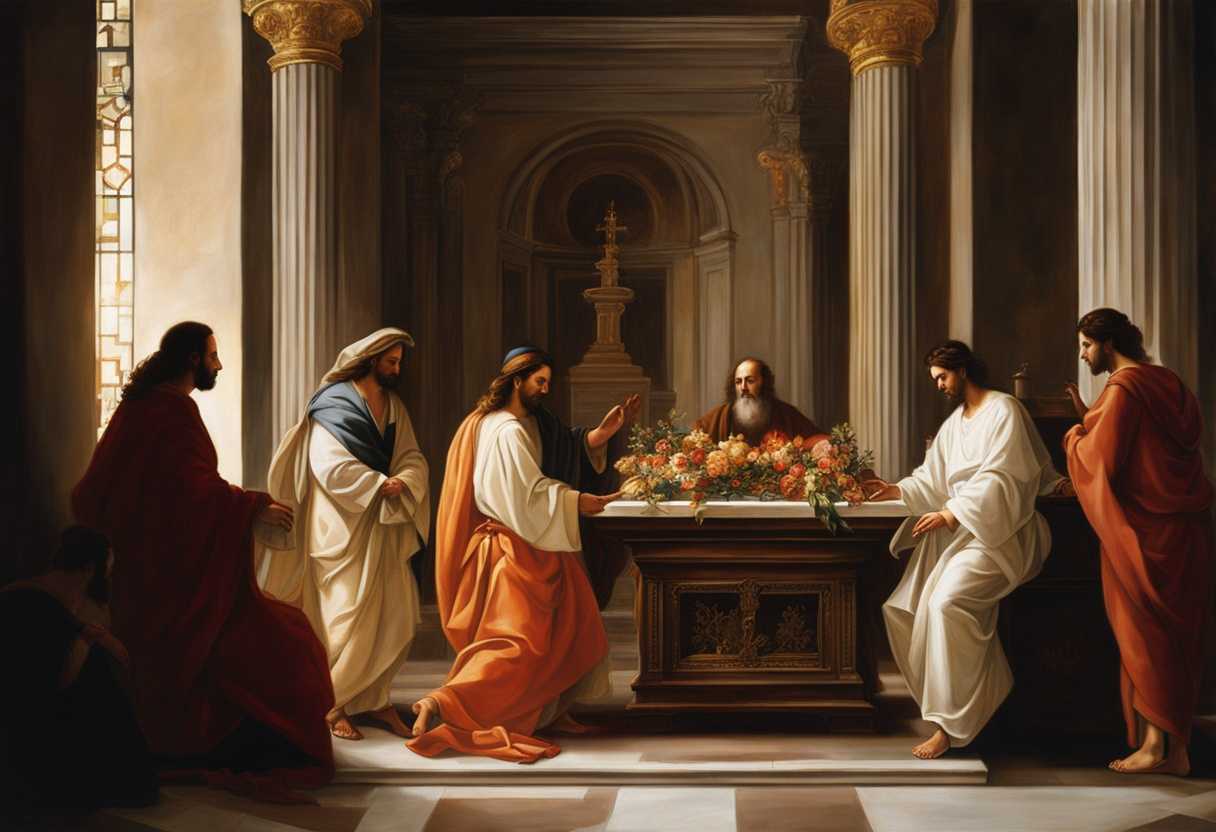
Setting the Scene for Ezra 3:1-7
In Ezra chapter 3, we find the scene set in Jerusalem, specifically at the location of the original temple that had been destroyed by the Babylonians. The main characters in this scene are Zerubbabel, the governor of Judah, and Jeshua, the high priest, along with the rest of the Jewish exiles who had returned to Jerusalem from Babylon. These individuals had been granted permission by King Cyrus of Persia to rebuild the temple of the Lord.
The surroundings are a mix of emotions and anticipation as the exiles gather together to lay the foundation of the new temple. The site is likely filled with rubble and remnants of the old temple, serving as a poignant reminder of the destruction that had taken place. Despite the challenges they faced, the people were filled with hope and determination to restore the worship of the Lord in their homeland.
As the scene unfolds, we see the priests in their sacred garments, the Levites with their musical instruments, and the people coming together in unity to praise and thank the Lord. The sound of trumpets and cymbals fills the air as they offer burnt offerings on the altar. It is a moment of both solemnity and celebration, marking the beginning of a new chapter in the history of the Jewish people as they seek to honor God and rebuild their spiritual heritage.
What is Ezra 3:1-7 about?
This verse signifies a significant turning point for the Israelites. After facing hardships and exile, they are now returning to their homeland and rebuilding their connections with God through the reconstruction of the altar. This act not only symbolizes their physical return to Jerusalem but also their spiritual revival and dedication to their faith. The celebration of the Feast of Tabernacles is a joyous occasion that marks their renewed commitment to God and their heritage. It is a time for them to come together as a community, offer thanks for their blessings, and reestablish their covenant with God.
Imagine the emotions running through the Israelites as they rebuild the altar and partake in the festivities of the Feast of Tabernacles. There must have been a sense of relief and gratitude for being able to worship freely in their homeland once again. This verse reminds us of the resilience of the human spirit and the power of faith to guide us through difficult times. It prompts us to reflect on our own beliefs and the role they play in our lives. We too can find comfort and purpose in our spiritual connections, just as the Israelites found solace and strength in their religious practices.
Understanding what Ezra 3:1-7 really means
The Book of Ezra delves into the return of Jewish exiles from Babylon and the reconstruction of the Temple in Jerusalem. In Ezra 3:1-7, we witness the initial steps taken to reinstate worship and rebuild the altar, emphasizing the significance of communal worship and adherence to God’s commandments. As the seventh month arrived and the Israelites settled in their towns, they gathered in unity in Jerusalem. This unity showcases their collective effort towards a shared goal, setting aside individual struggles for a greater purpose. The leadership of Joshua, Zerubbabel, and the priests in constructing the altar highlights the importance of both spiritual and civic leadership in guiding the community towards spiritual renewal.
Despite facing fear from the surrounding peoples, the Israelites displayed remarkable courage and faith by building the altar on its foundation and offering sacrifices to the Lord. This act of devotion, with morning and evening sacrifices, underscores their unwavering commitment to worship and obedience, even in the midst of uncertainty and potential danger. The themes of unity, faith, and obedience depicted in this passage resonate across time and hold relevance in today’s world. In a society often plagued by division and fear, the story of the Israelites serves as a poignant reminder of the strength found in coming together for a common purpose and placing trust in God’s plan.
Drawing parallels to contemporary scenarios, imagine a community grappling with a natural disaster. Despite the challenges and fears, individuals unite to rebuild and support one another, mirroring the actions of the Israelites. Their collective effort and faith in a brighter future exemplify the enduring lessons of unity and courage found in Ezra 3:1-7. Reflecting on this passage prompts introspection on the role of community and unity in our lives. How can we contribute to the well-being of our communities and foster a sense of togetherness amidst adversity?
Furthermore, considering the significance of faith and courage, we are encouraged to evaluate areas in our lives where fear may hinder our trust in God’s plan. By acknowledging and confronting these fears, we can strive towards a deeper reliance on faith and courage in navigating life’s challenges. Additionally, reflecting on the leaders in our lives prompts us to consider how we can support and uplift them in their endeavors to guide the community towards righteousness and faith. Through introspection and application of the lessons from Ezra 3:1-7, we can draw strength and inspiration to confront our own obstacles with faith, unity, and courage.
How do we prioritize worship and building community?
The Israelites prioritize worship and the building of community in Ezra 3:1-7 by coming together to rebuild the altar of the Lord and celebrate the Feast of Tabernacles. This passage highlights the importance of gathering as a community to worship God and honor His commandments. The Israelites were able to strengthen their bonds with each other and with God by uniting in worship and service.
The Israelites’ actions in Ezra 3:1-7 demonstrate that building community and prioritizing worship go hand in hand. The Israelites not only rebuilt their place of worship but also reaffirmed their unity as a community by centering their efforts on the restoration of the altar and the observance of the feast. This serves as a powerful example of how coming together in worship can help strengthen relationships, foster a sense of belonging, and deepen spiritual connections. Ezra 3:1-7 ultimately teaches us that worship and building community are interconnected aspects of a vibrant faith life. When we prioritize worship and come together as a community to serve and glorify God, we not only draw closer to Him but also to one another. We can cultivate a strong sense of unity, fellowship, and spiritual growth within our own communities of faith by following the example set by the Israelites in this passage.
Application
Think about your busy life like a bustling city. Amid the chaos, we need time for something greater. Just like Ezra 3:1-7 calls for unity in worship, let’s gather as a community and strengthen our faith together. Commit to rebuilding our spiritual home, brick by brick. Will you stand with us and make time for deeper fellowship and worship with our family in Christ?

Reverend Michael Johnson is an experienced Church Minister with a profound expertise in spirituality and guidance. With a serene presence and a compassionate heart, he has faithfully served his congregation for over 20 years, leading them on a spiritual journey towards inner peace and enlightenment. Reverend Johnson’s extensive knowledge of religious philosophies and profound understanding of human nature have made him a trusted confidant and mentor to many, as he seamlessly weaves his profound wisdom into life teachings. Reverend Johnson’s calming demeanor and empathetic nature continue to uplift and heal souls, nurturing a sense of unity and tranquility within his community.