
1 Then Darius the king made a decree, and search was made in Babylonia, in the house of the archives where the documents were stored.
2 And in Ecbatana, the citadel that is in the province of Media, a scroll was found on which this was written: “A record.
3 In the first year of Cyrus the king, Cyrus the king issued a decree: Concerning the house of God at Jerusalem, let the house be rebuilt, the place where sacrifices were offered, and let its foundations be retained. Its height shall be sixty cubits and its breadth sixty cubits,
4 with three layers of great stones and one layer of timber. And let the cost be paid from the royal treasury.
5 And also let the gold and silver vessels of the house of God, which Nebuchadnezzar took out of the temple that is in Jerusalem and brought to Babylon, be restored and brought back to the temple that is in Jerusalem, each to its place. You shall put them in the house of God.”
6 Now therefore, Tattenai, governor of the province Beyond the River, Shethar-bozenai, and your associates the governors who are in the province Beyond the River, keep away.
7 Let the work on this house of God alone. Let the governor of the Jews and the elders of the Jews rebuild this house of God on its site.
8 Moreover, I make a decree regarding what you shall do for these elders of the Jews for the rebuilding of this house of God. The cost is to be paid to these men in full and without delay from the royal revenue, the tribute of the province from Beyond the River.
9 And whatever is needed—bulls, rams, or sheep for burnt offerings to the God of heaven, wheat, salt, wine, or oil, as the priests in Jerusalem require—let that be given to them day by day without fail,
10 that they may offer pleasing sacrifices to the God of heaven and pray for the life of the king and his sons.
11 Also I make a decree that if anyone alters this edict, a beam shall be pulled out of his house, and he shall be impaled on it, and his house shall be made a dunghill.
12 May the God who has caused his name to dwell there overthrow any king or people who shall put out a hand to alter this, or to destroy this house of God that is in Jerusalem. I Darius make a decree; let it be done with all diligence.”
13 Then, according to the word sent by Darius the king, Tattenai, the governor of the province Beyond the River, Shethar-bozenai, and their associates did with all diligence what Darius the king had ordered.
14 And the elders of the Jews built and prospered through the prophesying of Haggai the prophet and Zechariah the son of Iddo. They finished their building by decree of the God of Israel and by decree of Cyrus and Darius and Artaxerxes king of Persia.
15 And this house was finished on the third day of the month of Adar, in the sixth year of the reign of Darius the king.
16 And the people of Israel, the priests and the Levites, and the rest of the returned exiles, celebrated the dedication of this house of God with joy.
17 And they offered at the dedication of this house of God 100 bulls, 200 rams, 400 lambs, and as a sin offering for all Israel 12 male goats, according to the number of the tribes of Israel.
18 And they set the priests in their divisions and the Levites in their divisions, for the service of God at Jerusalem, as it is written in the Book of Moses.
19 On the fourteenth day of the first month, the returned exiles kept the Passover.
20 For the priests and the Levites had purified themselves together; all of them were clean. So they slaughtered the Passover lamb for all the returned exiles, for their fellow priests, and for themselves.
21 And the people of Israel who had returned from exile, and all who had separated themselves from the uncleanness of the peoples of the land to seek the Lord, the God of Israel, ate.
22 And they kept the Feast of Unleavened Bread seven days with joy, for the Lord had made them joyful and had turned the heart of the king of Assyria to them, so that he aided them in the work of the house of God, the God of Israel.
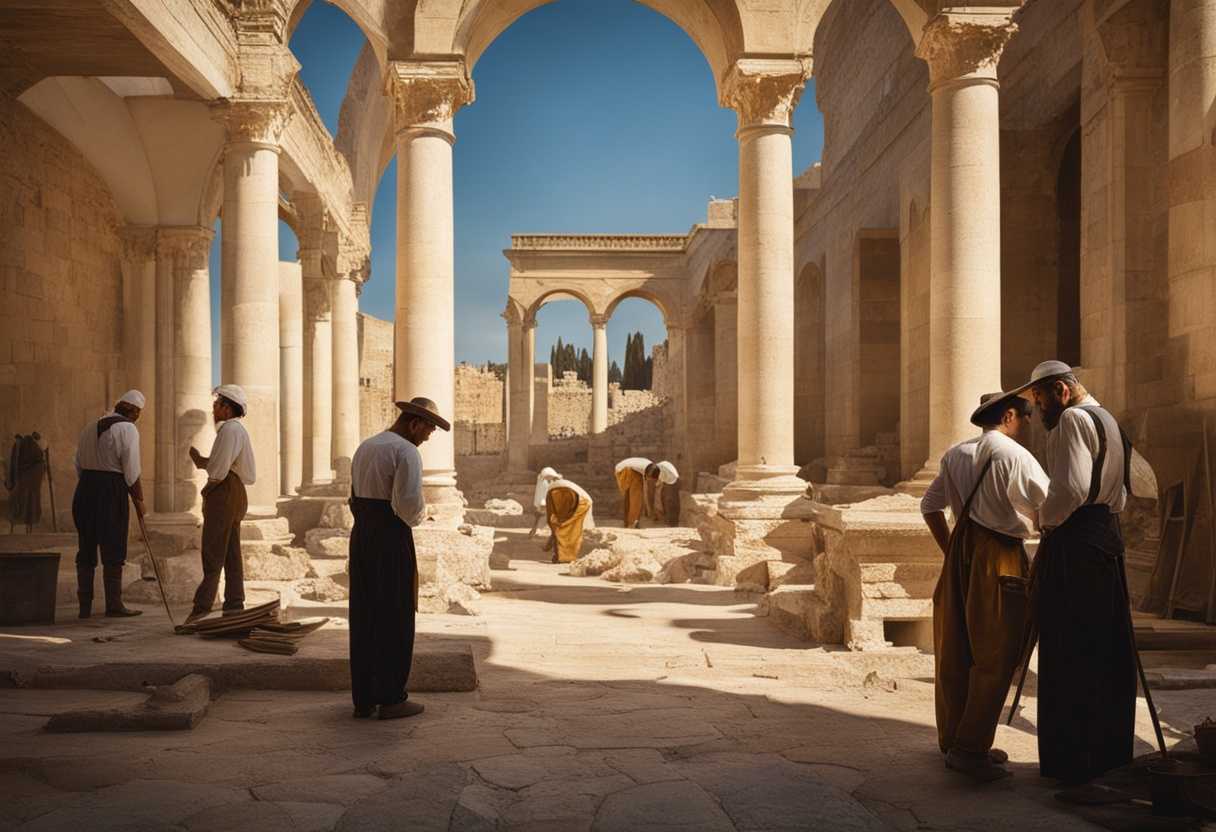
The True Meaning of Ezra 6
The book of Ezra was written by the prophet Ezra, a scribe and priest who played a crucial role in the restoration of the Jewish people after their exile in Babylon. We witness the continuation of the rebuilding of the temple in Jerusalem, a pivotal moment in the history of God’s chosen people in this chapter.
The events described in Ezra 6 highlight the challenges and triumphs faced by the Israelites as they sought to reestablish their connection with the Lord. We will see how the king’s decree, the opposition of their enemies, and the perseverance of the people all contribute to the eventual completion of the temple, fulfilling the prophecy found in Jeremiah 29:10, which promised the return of the exiles after seventy years. As we delve into this chapter, we will be reminded of the importance of obedience to God’s commands, the power of prayer, and the unwavering faith of those who remained steadfast in the face of adversity. These lessons are timeless and can provide guidance for us in our own spiritual journeys, as we strive to honor the Lord and build His kingdom on earth.
Ezra 6:1-5
King Darius issued a decree to search the archives in Babylon to find the original decree that King Cyrus had made regarding the rebuilding of the temple in Jerusalem. This demonstrates Darius’ support for the Jews and their worship of God. It also emphasizes the importance of keeping records and archives, as the original decree had been hidden away, but was crucial in ensuring the temple could be rebuilt. The act of searching for the original decree reflects the meticulous nature of the Persian bureaucracy and the value they placed on accurate documentation.
The mention of King Cyrus in the decree is significant as he was the one who initially allowed the Jews to return to Jerusalem and rebuild the temple after their exile in Babylon. This intricate connection highlights the continuity of God’s plan throughout history. It showcases God’s faithfulness to His people and how He can use pagan rulers like Cyrus and Darius to fulfill His purposes. This aligns with other verses in the Bible, such as in Isaiah 44:28, where Cyrus is referred to as God’s shepherd and the one who will fulfill all his purposes.
The decree also commands that the temple in Jerusalem is to be rebuilt at its original site. This restoration of the temple is a key moment in the history of the Jewish people, as the temple was a central place of worship and sacrifice. The act of rebuilding the temple symbolizes the restoration of the Jewish faith and their relationship with God. The temple held immense spiritual and cultural significance for the Jews, as it was a physical representation of God’s presence among them. It was a place where they could offer sacrifices, seek forgiveness, and connect with God. The revival of the temple was essential for the Jews to fully practice their faith and maintain their identity as God’s chosen people.
Furthermore, the decree orders that the construction of the temple should be funded by the royal treasury and that the expenses should be fully covered. This generous financial support from the king illustrates God’s providence and provision for His people. It shows how God can move the hearts of rulers to support His work and bless His people. This theme of divine provision and support can be seen throughout the Bible, such as in the story of Joseph in Egypt (Genesis 41) or the feeding of the five thousand by Jesus (Matthew 14:13-21). It serves as a reminder that God is always faithful to provide for His people and fulfill His promises.
Ezra 6:6-12
King Darius issued a decree in response to a letter he received regarding the rebuilding of the temple in Jerusalem, as seen in Ezra 6:6-12. This decree is significant as it not only reaffirms the decree of King Cyrus to allow the Jews to rebuild the temple but also goes a step further by ordering that the expenses for the construction be fully covered from the royal treasury.
This act of providing financial support for the rebuilding of the temple by a pagan king like Darius is a clear demonstration of how God can work through even those who do not worship Him directly. It shows that God is sovereign over all rulers and nations, using them to fulfill His divine purposes. This reaffirms the message found in Proverbs 21:1, “The king’s heart is a stream of water in the hand of the Lord; he turns it wherever he will.”
Furthermore, this decree also highlights the importance of obedience to God’s commands. Despite facing opposition and challenges, the Jewish people remained faithful to God and continued to work on rebuilding the temple. Their perseverance and obedience ultimately led to the fulfillment of God’s promises and the restoration of their place of worship. This serves as a reminder to believers today that God honors and rewards obedience, even in the face of adversity.
Additionally, we see an emphasis on God’s protection over His people in this passage. King Darius commands that anyone who interferes with the temple’s construction will face severe consequences, including having a beam from their own house be used for their own execution. This highlights God’s promise to protect and uphold His people, as seen throughout the Bible. One cannot help but think of the promise in Isaiah 54:17, “no weapon that is fashioned against you shall succeed. God’s sovereignty, faithfulness, and protection over His people are showcased in Ezra 6:6-12. It serves as a powerful reminder of the importance of obedience, perseverance, and trust in God’s providence, even in the midst of challenges and opposition. It encourages believers to remain steadfast in their faith and to trust that God’s plans will ultimately prevail, just as He promised in Jeremiah 29:11, “For I know the plans I have for you, declares the Lord, plans for welfare and not for evil, to give you a future and a hope.”
Ezra 6:13-15
A significant moment in the rebuilding of the temple in Jerusalem is seen in Ezra 6:13-15. This section can be broken down into a few important parts: the completion of the temple, the dedication of the temple, and the celebration of the Passover.
Firstly, the completion of the temple is a momentous occasion. After facing opposition and obstacles, the Jewish people, under the leadership of Zerubbabel and later Ezra, finally finish rebuilding the temple. This act of rebuilding symbolizes the restoration of their relationship with God and the reestablishment of their identity as a people set apart for Him. It is a testament to their faithfulness and perseverance despite the challenges they faced. This serves as a reminder to us that even in the face of adversity, we must remain steadfast in our faith and trust in God’s plan for us.
Secondly, the dedication of the temple is a sacred and joyous event. The temple is not just a physical structure but a place where the people can worship God and seek His presence. The dedication of the temple signifies the people consecrating it to God, acknowledging His sovereignty over their lives, and declaring their commitment to worship Him alone. This act of dedication is significant as it marks a new beginning for the Jewish people, a fresh start in their relationship with God. It reminds us that we, too, must consecrate ourselves to God daily, offering our lives as living sacrifices, holy and pleasing to Him (Romans 12:1).
Lastly, the celebration of the Passover is a time of remembrance and thanksgiving. The Passover was a crucial event in the history of Israel, commemorating their deliverance from slavery in Egypt. The Jewish people, by celebrating the Passover in conjunction with the dedication of the temple, are not only looking back at God’s faithfulness in the past but also looking forward to His continued faithfulness in the future. This celebration serves as a reminder to us that we must never forget God’s faithfulness in our lives and always give thanks for His provision and deliverance. Ezra 6:13-15 teaches us about the importance of perseverance in the face of adversity, the significance of dedicating ourselves to God, and the value of remembering and giving thanks for God’s faithfulness. It is a reminder that God is faithful to fulfill His promises and that His people should respond with dedication, celebration, and gratitude.
Ezra 6:16-18
Several key sections stand out in the context of the events surrounding the completion of the temple in Ezra 6:16-18. Firstly, it starts by stating, “Then the people of Israel – the priests, the Levites, and the rest of the exiles – celebrated the dedication of the house of God with joy.” This is a pivotal moment as it signifies the culmination of their efforts to rebuild the temple in Jerusalem after years of exile. The dedication of the house of God was not merely a physical act, but a spiritual one, symbolizing the restoration of their relationship with God and the renewal of their covenant.
The verse then continues, mentioning the offerings made for the dedication of the temple: “At the dedication of this house of God they offered one hundred bulls, two hundred rams, four hundred lambs, and as a sin offering for all Israel twelve male goats, according to the number of the tribes of Israel.” The magnitude of these offerings indicates the significance of the occasion and the sincerity of the Israelites in acknowledging their past transgressions and seeking reconciliation with God through the prescribed sacrificial rituals. This act of atonement mirrors the Old Testament’s emphasis on the importance of offerings and sacrifices in seeking forgiveness and communion with God, as outlined in Leviticus and other books.
The mention of the twelve male goats as a sin offering for all Israel, according to the twelve tribes, is particularly noteworthy. It reflects the communal aspect of sin and the responsibility of the entire nation to seek forgiveness and atonement collectively. This reinforces the concept of collective responsibility and the interconnectedness of the Israelites as a chosen people bound by their covenant with God, a theme that resonates throughout the Bible. The final part of the verse highlights the role of the priests and Levites in their service: “They set the priests in their divisions and the Levites in their orders for the service of God at Jerusalem, as it is written in the Book of Moses.” This underscores the importance of order, organization, and adherence to the teachings of the Law as given through Moses. The meticulous observance of these regulations not only demonstrates the Israelites’ commitment to God but also serves as a reminder of the importance of obedience and faithfulness in worship. Ezra 6:16-18 captures a significant moment in the history of Israel, marking the completion and dedication of the temple and the restoration of their spiritual life. It emphasizes themes of repentance, atonement, collective responsibility, and the central role of the priesthood in facilitating worship and maintaining the religious practices prescribed in the Law. The events described in these verses serve as a testament to the enduring faith of the Israelites and their commitment to honoring God through obedience and worship.
Ezra 6:19-22
The returned exiles kept the Passover on the fourteenth day of the first month, as written in Ezra 6:19-22. For the priests and the Levites had purified themselves together; all of them were clean. So they slaughtered the Passover lamb for all the returned exiles, for their fellow priests, and for themselves. It was eaten by the people of Israel who had returned from exile, and also by every one who had joined them and separated himself from the uncleanness of the peoples of the land to worship the Lord, the God of Israel. And they kept the Feast of Unleavened Bread seven days with joy, for the Lord had made them joyful and had turned the heart of the king of Assyria to them, so that he aided them in the work of the house of God, the God of Israel.”
This section is a culmination of a significant event in the Book of Ezra. It depicts the completion of the temple in Jerusalem and the celebration of the Passover. The Passover was a pivotal event in the Hebrew calendar, commemorating the Israelites’ deliverance from slavery in Egypt. This celebration was not only a traditional observance for the returned exiles but a symbol of their renewed commitment to God after the restoration of the temple.
The purification of the priests and Levites mentioned in this verse signifies the importance of spiritual cleanliness and sanctification before approaching God in worship. This act of purification highlights the emphasis on holiness and reverence when serving in the temple, reinforcing the concept of spiritual purity found throughout the Bible. This echoes the teachings in Leviticus 11:44, where God commands His people to be holy because He is holy.
The participation of the returned exiles, priests, and those who had separated themselves from the uncleanness of the land to worship the Lord underscores the inclusivity of God’s redemption. It demonstrates that God’s salvation is not limited to a particular group but is open to all who choose to turn to Him. This inclusivity aligns with the overarching theme of God’s salvation for all peoples, as prophesied in Isaiah 56:7, where God declares His house as a house of prayer for all nations.
The joy and celebration during the Feast of Unleavened Bread signify the gratitude and happiness of the people for God’s faithfulness in restoring them and providing for their needs. The fact that the joy came from God himself emphasizes the overarching theme of God’s provision and faithfulness throughout the Bible. It reminds us that true joy and fulfillment come from God and His presence among His people, as seen in Psalm 16:11, where it says that in God’s presence is fullness of joy.
The recognition of the influence of the king of Assyria, who aided them in the work of the house of God, reveals God’s sovereignty and His ability to move the hearts of even powerful rulers. This acknowledgment points to God’s overarching control over earthly events and His ability to use even secular authorities for the advancement of His purposes. This aligns with Proverbs 21:1, which says that the king’s heart is like a stream of water in the hand of the Lord; He turns it wherever He will. Ezra 6:19-22 encapsulates a profound moment of celebration, worship, and gratitude amidst the restoration of the temple and the observance of the Passover. It serves as a testimony to God’s faithfulness, provision, and inclusive salvation for all who seek Him. The events described in this passage demonstrate the timeless message of God’s sovereignty, holiness, and the joy that comes from serving Him faithfully.
After Ezra 6
The people of Israel had worked tirelessly to rebuild the temple in Jerusalem. They faced many challenges, but with God’s help, they persevered. The temple was finally completed, and the people celebrated with great joy. The reverend knew that this was just the beginning as the people gathered to worship in the new temple. The journey of faith was far from over. The next chapter would bring new trials and tribulations, but the people would need to hold fast to their trust in God. Only then would they find the strength to overcome the obstacles that lay ahead.

Reverend Michael Johnson is an experienced Church Minister with a profound expertise in spirituality and guidance. With a serene presence and a compassionate heart, he has faithfully served his congregation for over 20 years, leading them on a spiritual journey towards inner peace and enlightenment. Reverend Johnson’s extensive knowledge of religious philosophies and profound understanding of human nature have made him a trusted confidant and mentor to many, as he seamlessly weaves his profound wisdom into life teachings. Reverend Johnson’s calming demeanor and empathetic nature continue to uplift and heal souls, nurturing a sense of unity and tranquility within his community.