
Ezra 7:21-26 is about how King Artaxerxes granted Ezra authority to enforce the laws of God among the Jewish people, emphasizing the importance of upholding and following religious teachings as a means of governing society.
21 “And I, Artaxerxes the king, make a decree to all the treasurers in the province Beyond the River: Whatever Ezra the priest, the scribe of the Law of the God of heaven, requires of you, let it be done with all diligence,
22 up to 100 talents of silver, 100 cors of wheat, 100 baths of wine, 100 baths of oil, and salt without prescribing how much.
23 Whatever is decreed by the God of heaven, let it be done in full for the house of the God of heaven, lest his wrath be against the realm of the king and his sons.
24 We also notify you that it shall not be lawful to impose tribute, custom, or toll on anyone of the priests, the Levites, the singers, the doorkeepers, the temple servants, or other servants of this house of God.
25 “And you, Ezra, according to the wisdom of your God that is in your hand, appoint magistrates and judges who may judge all the people in the province Beyond the River, all such as know the laws of your God. And those who do not know them, you shall teach.
26 Whoever will not obey the law of your God and the law of the king, let judgment be strictly executed on him, whether for death or for banishment or for confiscation of his goods or for imprisonment.”
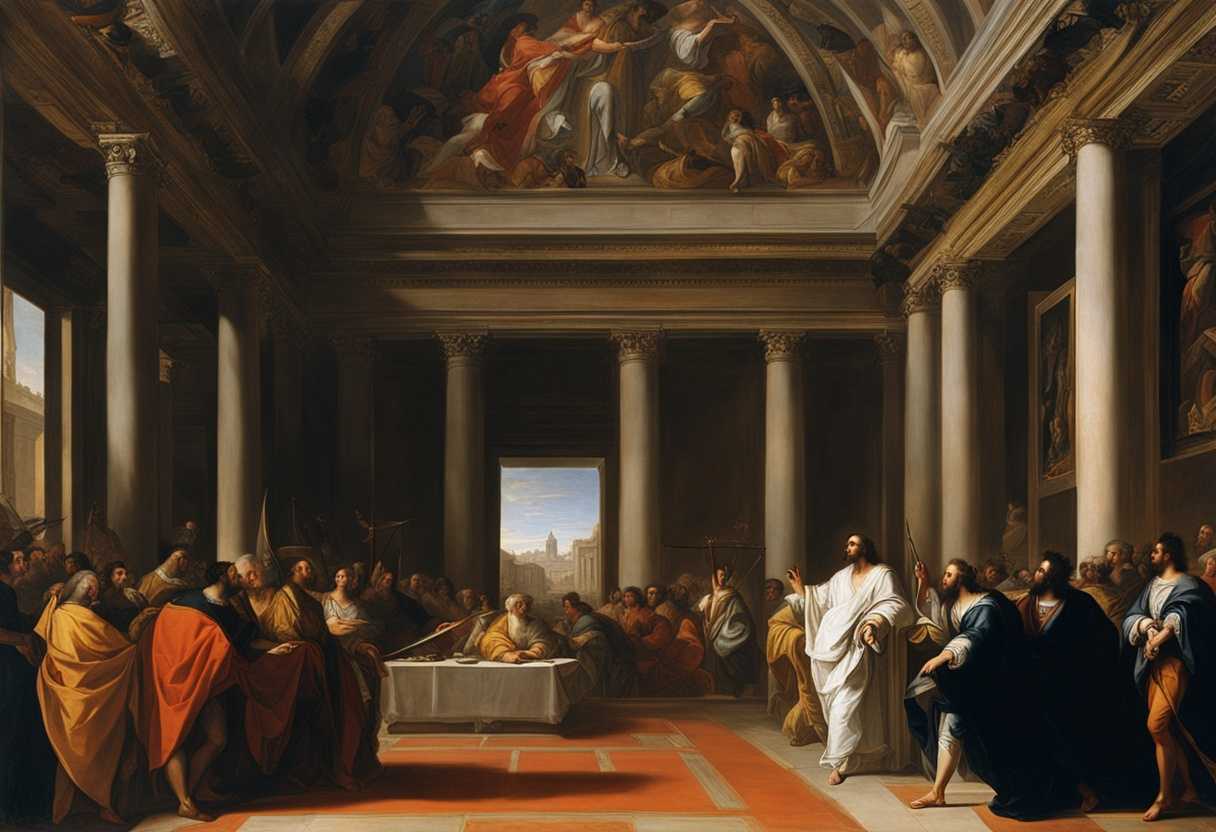
Setting the Scene for Ezra 7:21-26
In Ezra chapter 7, we find Ezra, a scribe and priest, who had been granted permission by King Artaxerxes of Persia to lead a group of Israelites back to Jerusalem from exile in Babylon. The scene unfolds as Ezra prepares for the journey back to Jerusalem with a group of exiles. The group consists of priests, Levites, singers, gatekeepers, and temple servants who have gathered in the courtyard of the king’s palace in Susa, the capital of Persia.
The courtyard is bustling with activity as the Israelites make final preparations for their journey. The sun is beginning to set, casting a warm glow over the courtyard filled with people and supplies. Ezra, a respected and learned man, is surrounded by his fellow priests and Levites, discussing the logistics of the journey and ensuring that everything is in order for their return to Jerusalem. The group is filled with a sense of anticipation and excitement as they prepare to embark on this significant journey back to their homeland, where they will work to restore the temple and worship God once again in the land of their ancestors.
What is Ezra 7:21-26 about?
This verse showcases the divine approval and blessing that Ezra receives for his mission to enforce God’s law in Judah. It highlights the importance of having earthly authority support God’s laws, demonstrating the unity of spiritual and secular leadership. The granting of authority by King Artaxerxes signifies a significant milestone in Ezra’s journey, as it legitimizes his mission and gives him the power to carry out his duties effectively.
Have you ever felt the empowering feeling of being supported by those in positions of authority? The verse reminds us of the importance of having influential figures align themselves with the principles and values we hold dear. It also serves as a reminder of the biblical concept of divine providence, showing how God can work through earthly rulers to accomplish His will. Through Ezra’s story, we are encouraged to seek divine guidance and trust in God’s timing as we navigate our own journeys of faith and obedience.
Understanding what Ezra 7:21-26 really means
Ezra 7:21-26 unveils a significant moment in history where King Artaxerxes of Persia extends his support to Ezra, a revered scribe and priest, granting him authority to lead and enforce the laws of God and the king among the Jewish people. This passage showcases the intersection of secular authority and religious leadership, emphasizing the importance of cooperation and respect between the two realms for the proper functioning of the community.
The key phrases within these verses carry profound meanings that resonate with themes of respect, exemption, and responsibility. The directive for diligent fulfillment of Ezra’s requests underscores the reverence and authority bestowed upon him, highlighting the significance of prompt and dedicated service. Moreover, the exemption of religious workers from taxes signifies the value placed on those who serve in the temple, ensuring they can carry out their duties without financial encumbrances.
In a broader biblical context, parallels can be drawn to Nehemiah 2:8, where Nehemiah, like Ezra, receives support from a foreign king to fulfill God’s purposes. This interconnectedness between divine providence and earthly rulers exemplifies how God orchestrates events through various channels to accomplish His will. Proverbs 21:1 and Romans 13:1 further reinforce the notion that all authority ultimately stems from God, illustrating His sovereignty over human affairs.
The relevance of Ezra 7:21-26 extends beyond its historical setting, resonating with contemporary believers by reminding them of God’s ability to work through diverse avenues to provide for His people. This passage serves as a testament to God’s faithfulness and sovereignty, urging individuals to trust in His plans and remain steadfast in their service to Him.
An anecdotal reflection on a modern-day scenario where a church receives unexpected support from a secular entity mirrors the divine intervention seen in Ezra’s narrative. Just as King Artaxerxes aided Ezra and the Jewish community, this anecdote underscores how God’s provision can manifest through unconventional means, reinforcing the belief in His unwavering care and guidance.
In conclusion, Ezra 7:21-26 serves as a poignant reminder of God’s sovereignty, provision, and the importance of upholding leadership and justice within the community. It prompts believers to trust in God’s plans, recognizing His ability to work through both religious and secular authorities to accomplish His divine purposes.
How can we honor God through our material possessions?
We can honor God through our material possessions by recognizing that everything we have ultimately belongs to Him. When we steward our resources with wisdom and generosity, we demonstrate our faithfulness and gratitude to Him. We can reflect His character and bring glory to His name by managing our possessions in alignment with God’s will. Additionally, using our material blessings to support God’s work on Earth, such as caring for the less fortunate or advancing His kingdom, can be a tangible way to honor Him with what He has entrusted to us.
Application
Embrace the call to action in Ezra 7:21-26, not just as a follower, but as a true believer who lives out God’s teachings every day. Let’s be like dedicated employees at work, diligent in following instructions, and like loving family members, committed to upholding values in our daily lives. Will you rise to the challenge and let God’s Word shape your path and illuminate your way forward?

Reverend Michael Johnson is an experienced Church Minister with a profound expertise in spirituality and guidance. With a serene presence and a compassionate heart, he has faithfully served his congregation for over 20 years, leading them on a spiritual journey towards inner peace and enlightenment. Reverend Johnson’s extensive knowledge of religious philosophies and profound understanding of human nature have made him a trusted confidant and mentor to many, as he seamlessly weaves his profound wisdom into life teachings. Reverend Johnson’s calming demeanor and empathetic nature continue to uplift and heal souls, nurturing a sense of unity and tranquility within his community.