
1 These are the heads of their fathers’ houses, and this is the genealogy of those who went up with me from Babylonia, in the reign of Artaxerxes the king:
2 of the sons of Phinehas, Gershom.
3 of the sons of Shecaniah, who was of the sons of Parosh, Zechariah with his kinsmen, 150;
4 Iddo, the son of Zechariah, son of Benaiah, son of Shecaniah, of the sons of Parosh.
5 of the sons of Zattu, Shecaniah the son of Jahaziel, and with him 300 men of the sons of Adin;
6 Of the sons of Adin, Ebed the son of Jonathan, and with him fifty men.
7 And there were twelve of the priests’ sons who were the sons of Habaiah, Hakkoz, and Barzillai.
8 And of the sons of Shecaniah, who was of the sons of Parosh, Zechariah, with whom were registered 150 men.
9 And there were registered 24,000 of the priests, the heads of fathers’ houses, in the days of Jeshua the son of Jozadak, and 9,734 of their kinsmen.
10 Of the sons of Shelomith, the son of Josiphiah, and 150 men with them.
11 The whole was 5,000 talents of silver, silver vessels weighing 200 talents, and 100 talents of gold,
12 and with them the second group of a hundred and twenty-two who had come after them.
13 And of the sons of Adonikam, those who came later, their names were Eliphelet, Jeuel, and Shemaiah, and with them sixty men.
14 Of the sons of Bigvai, Uthai and Zaccur, and with him 70 males.
15 I gathered them to the river that runs to Ahava, and there we camped three days. As I reviewed the people and the priests, I found there none of the sons of Levi.
16 Then I sent for Eliezer, Ariel, Shemaiah, Elnathan, Jarib, Elnathan, Nathan, Zechariah, and Meshullam, leading men, and for Joiarib and Elnathan, who were men of insight,
17 And I sent them to Iddo, the leading man at the place Casiphia, telling them what to say to Iddo and his brothers and the temple servants at the place Casiphia, namely, to send us ministers for the house of our God.
18 According to the good hand of our God on us, they brought us a man of discretion, of the sons of Mahli the son of Levi, son of Israel, namely Sherebiah with his sons and kinsmen, 18;
19 and Hashabiah, and with him Jeshaiah of the sons of Merari, with his kinsmen and their sons, 20,
20 And of the sons of Immer, Hanani and Zebadiah.
21 Then I proclaimed a fast there, at the river Ahava, that we might humble ourselves before our God, to seek from him a safe journey for ourselves, our children, and all our goods.
22 For I was ashamed to ask the king for a band of soldiers and horsemen to protect us against the enemy on our way, since we had told the king, “The hand of our God is for good on all who seek him, and the power of his wrath is against all who forsake him.”
23 So we fasted and implored our God for this, and he listened to our entreaty.
24 Then I set apart twelve of the leading priests: Sherebiah, Hashabiah, and ten of their kinsmen with them.
25 and I weighed out to them the silver and the gold and the vessels, the offering for the house of our God that the king and his counselors and his lords and all Israel there present had offered.
26 I weighed out into their hand 650 talents of silver, and silver vessels worth 200 talents, and 100 talents of gold,
27 And twenty bowls of gold worth a thousand darics, and two vessels of fine bright bronze as precious as gold.
28 Then I said to them, “You are holy to the Lord, and the vessels are holy, and the silver and the gold are a freewill offering to the Lord, the God of your fathers.
29 Watch and guard them until you weigh them before the chief priests and the Levites and the heads of fathers’ houses in Israel at Jerusalem, within the chambers of the house of the Lord.
30 So the priests and the Levites took over the weight of the silver and the gold and the vessels, to bring them to Jerusalem to the house of our God.
31 Then we departed from the river Ahava on the twelfth day of the first month, to go to Jerusalem. And the hand of our God was on us, and he delivered us from the hand of the enemy and from ambushes by the way.
32 Then we came to Jerusalem, and there we remained three days.
33 On the fourth day, within the house of our God, the silver and the gold and the vessels were weighed into the hands of Meremoth the priest, son of Uriah, and with him was Eleazar the son of Phinehas, and with them were the Levites, Jozabad the son of Jeshua and Noadiah the son of Binnui.
34 Everything was counted and weighed, and all the weight was recorded at that time.
35 At that time those who had come from captivity, the returned exiles, offered burnt offerings to the God of Israel, twelve bulls for all Israel, ninety-six rams, seventy-seven lambs, and as a sin offering twelve male goats. All this was a burnt offering to the Lord.
36 And they delivered the king’s commissions to the king’s satraps and to the governors of the province Beyond the River, and they aided the people and the house of God.
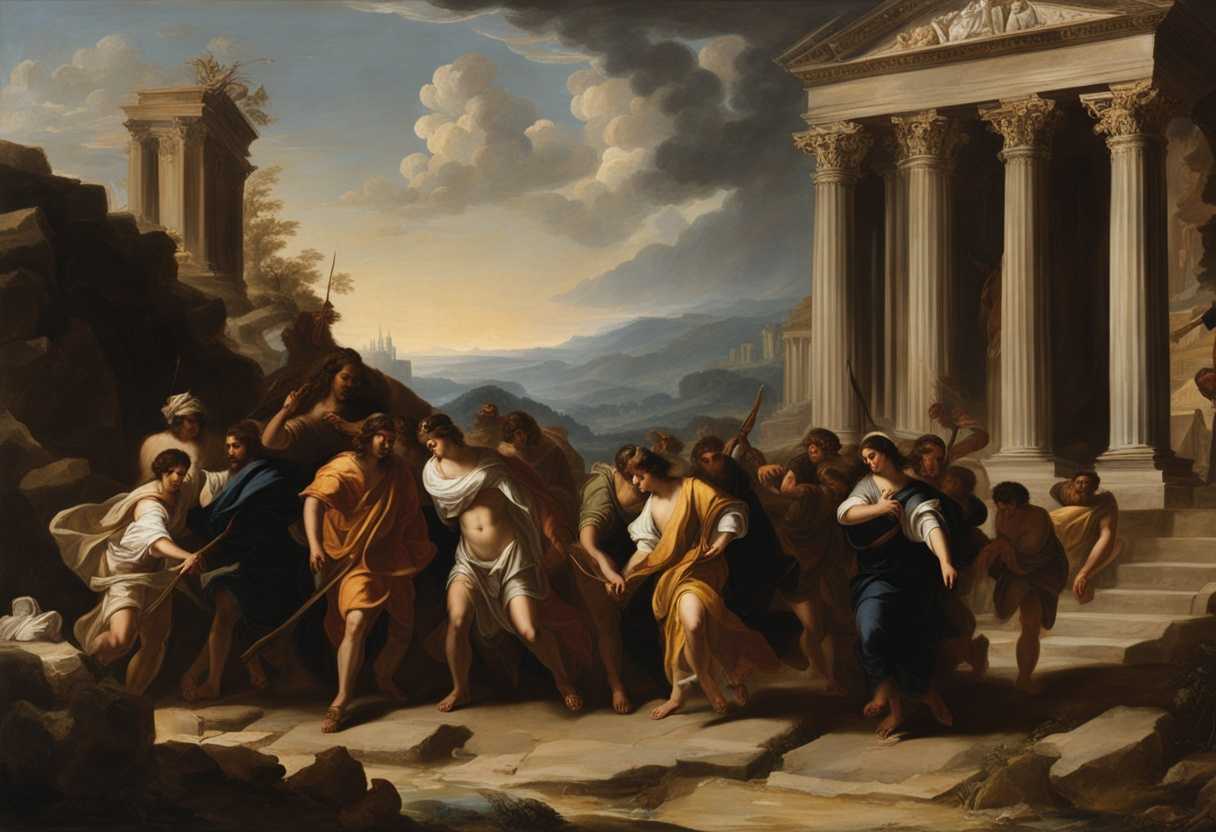
The True Meaning of Ezra 8
The Book of Ezra was written by the prophet Ezra, a scribe and priest who played a crucial role in the restoration of the Jewish people after their exile in Babylon. Ezra recounts the journey of a group of exiles returning to Jerusalem in this chapter, highlighting the importance of maintaining faith and obedience to God during times of transition and uncertainty. Ezra and his companions make careful preparations to ensure a safe and successful return to their homeland as we delve into this chapter. The chapter also sheds light on the challenges they faced, both physical and spiritual, and how they relied on God’s guidance and protection to overcome them.
Throughout this passage, we will see echoes of other biblical narratives, such as the Exodus and the rebuilding of the temple under Zerubbabel. These connections serve to remind us of the continuity of God’s plan for His people and the importance of learning from the experiences of those who have gone before us.
Ezra 8:1-14
The passage in Ezra 8:1-14 begins by listing the heads of the families who returned with Ezra to Jerusalem. This is significant because it shows the organization and orderliness of the return from exile. It emphasizes the idea of lineage and tribal connections, highlighting the importance of heritage and ancestry in Jewish culture by mentioning the heads of the families. This also serves as a reminder of the covenant God made with their forefathers, tying their return to the promised land to their faithfulness to God’s commands.
One notable figure mentioned in this section is Ezra himself, who was a scribe skilled in the Law of Moses. Ezra’s expertise in the Law was crucial for the restoration of religious practices among the returned exiles. His leadership and commitment to upholding the teachings of the Torah played a vital role in guiding the community back to God. This demonstrates the significance of having knowledgeable and faithful leaders to guide the people in their spiritual journey. Ezra gathers the people by the Ahava Canal for their journey to Jerusalem as the passage continues. The Ahava Canal was located in Babylon, and it was from here that Ezra led the exiles back to the land of Judah. This moment is symbolic of leaving behind the pagan influences of Babylon and returning to the homeland where they could worship God freely. It signifies a turning point for the Israelites, leaving their exile behind and looking towards a new beginning in Jerusalem.
The mention of the Levites in this passage is also significant. The Levites were responsible for the religious rituals and ceremonies in Israel. Their inclusion in the return to Jerusalem highlights the importance of worship and sacrifice in the life of the community. The Levites carried the responsibility of maintaining the spiritual life of the people and ensuring that the laws of God were upheld. This emphasizes the central role of worship and obedience in the lives of the returned exiles. This passage in Ezra sets the stage for the journey back to Jerusalem and underscores the themes of leadership, faithfulness, and worship. It shows the importance of being rooted in one’s heritage, having knowledgeable spiritual leaders, and maintaining a commitment to God’s teachings. Through the example of Ezra and the returned exiles, we see the importance of faithfulness to God and the restoration that comes from returning to Him. This narrative echoes throughout the Bible, emphasizing the importance of returning to God in times of exile or spiritual wandering, and the blessings that come as a result of obedience.
Ezra 8:15-20
An important section detailing the gathering of the exiles before their journey back to Jerusalem is seen in Ezra 8:15-20. Ezra assembles all the exiles by the Ahava Canal and finds that there were no Levites among them. This was concerning because the Levites were essential for the proper functioning of the religious practices and ceremonies prescribed by the law of Moses.
Ezra then takes action by sending for Levites, specifically those skilled in serving in the temple. It’s worth noting that the Levites had a special role in the Israelite community as they were set apart for service to the Lord. They were responsible for the tabernacle and later the temple, including the sacrifices, worship, and religious education. The absence of Levites in the initial group heading back to Jerusalem was a significant oversight, as their presence was crucial for the spiritual well-being of the community.
This passage teaches us about the importance of having the right people in place for the effective functioning of God’s work. It also emphasizes the significance of careful planning and paying attention to details when undertaking important tasks. Passages like 1 Corinthians 14:40 underscore the biblical principle of order and organization in the service of God. The inclusion of this episode in the narrative of Ezra reflects the overarching theme of restoration and return. The return of the exiles to Jerusalem was not just a physical journey but a spiritual one as well, as they sought to reestablish their relationship with God and rebuild their community according to His will. The need for Levites highlights the importance of preserving the religious practices and traditions that were central to the identity of the Jewish people. The intricate tapestry of roles and responsibilities within the community of believers reminds us as we reflect on this passage. Each person has a unique part to play in the body of Christ, and when one essential role is missing, the entire community can be affected. This serves as a call for us to discern our gifts and how they can be used to honor God and serve His people, as Paul mentions in Romans 12:4-6, “For as in one body we have many members, and the members do not all have the same function, so we, though many, are one body in Christ, and individually members one of another. Having gifts that differ according to the grace given to us, let us use them.”
Ezra 8:21-23
Ezra proclaims a fast before the journey back to Jerusalem with the exiles in Ezra 8:21-23. This section provides insight into the reverence and dependence on God that the Israelites had as they embarked on this important mission towards restoration and rebuilding. Ezra begins verse 21 by proclaiming a fast by the Ahava River.” This act of fasting was not just an empty ritual but a way to humble themselves before God, seeking His guidance and protection for the hazardous journey ahead. Fasting was a common practice in the Old Testament to demonstrate repentance, seek God’s will, and show dependence on Him alone. They acknowledged their reliance on God’s providence and wisdom, showing their faith and humility in fasting.
Next, in verse 22, Ezra acknowledges the dangers of the journey they were about to undertake, “For I was ashamed to request of the king an escort of soldiers and horsemen to help us against the enemy on the road, because we had spoken to the king, saying, ‘The hand of our God is upon all those for good who seek Him, but His power and His wrath are against all those who forsake Him.’” Here, Ezra’s faith shines through as he hesitates to ask for a military escort, choosing instead to rely on the protection of God. His decision showed a strong belief that God’s hand was upon them for good. This verse highlights the importance of trusting in God’s promises and believing that His protection supersedes any human aid.
Finally, in verse 23, we see the culmination of their prayers and fasting as God answered their plea, “So we fasted and entreated our God for this, and He answered our prayer.” God heard their prayers and honored their fasting by granting them safety on their journey. This manifestation of God’s faithfulness and responsiveness to their prayers reinforced the notion of seeking God earnestly and trusting in His guidance. It serves as a reminder to all believers of the power of prayer and fasting in seeking God’s will and provision. Believers are instructed to trust in the Lord with all their heart and lean not on their own understanding, acknowledging Him in all their ways so He will direct their paths, aligning with verses such as Proverbs 3:5-6 in the broader context of the Bible. The story of Ezra and the exiles mirrors the theme of God’s faithfulness in protecting and guiding His people throughout the Bible. This passage underscores the importance of faith, prayer, and humility when seeking God’s direction and intervention in our lives.
Ezra 8:24-30
Ezra set apart twelve of the leading priests, Sherebiah, Hashabiah, and ten of their kinsmen with them, entrusting them with a significant responsibility within the community. And I weighed out to them the silver and the gold and the vessels, the offering for the house of our God that the king and his counselors and his lords and all Israel there present had offered. I weighed out into their hand 650 talents of silver, and silver vessels worth 200 talents, and 100 talents of gold, 20 bowls of gold worth 1,000 darics, and two vessels of fine bright bronze as precious as gold. And I said to them, ‘You are holy to the Lord, and the vessels are holy, and the silver and the gold are a freewill offering to the Lord, the God of your fathers. Guard them and keep them until you weigh them before the chief priests and the Levites and the heads of fathers’ houses in Israel at Jerusalem, within the chambers of the house of the Lord.’ So the priests and the Levites took over the weight of the silver and the gold and the vessels, to bring them to Jerusalem to the house of our God.”
Ezra’s meticulous attention to detail in assigning this task demonstrates his commitment to honoring and preserving the sacred offerings for the Lord. The mention of specific individuals such as Sherebiah and Hashabiah highlights the importance of faithful leadership within the religious community. These leaders were entrusted not only with physical valuables but also with spiritual significance, as Ezra emphasized that they were “holy to the Lord.”
This passage underscores the principles of stewardship and trust in God’s provision. Ezra exemplifies the importance of accountability and responsibility in handling God’s resources by entrusting the valuable offerings to these chosen priests and Levites. This act also reflects the broader theme of unity and collaboration among the people of Israel, as different groups work together to fulfill a common purpose of honoring and worshiping God.
The idea of presenting offerings to the Lord is consistent throughout the Bible. Believers in Malachi 3:10 are encouraged to bring their tithes and offerings to God’s house, with the promise of His blessings in return. This act of giving sacrificially is not only a means of supporting the work of the ministry but also an expression of gratitude and obedience to God. Ezra 8:24-30 serves as a reminder of the reverence and significance attached to offerings presented to God. It underscores the importance of faithful administration and stewardship, as well as the value of working together in unity for the glory of the Lord.
Ezra 8:31-34
Ezra gathered with the people who had returned from exile in Babylon in Ezra 8:31-34. This section of the verse is a reflection of Ezra’s commitment to the Word of God and his leadership qualities as a spiritual figure among the Israelites. Ezra declares a fast in these verses to seek God’s protection for their journey from Babylon to Jerusalem. This act demonstrates Ezra’s deep faith in God’s providence and his reliance on prayer as a source of guidance and protection. Fasting was a common practice among the Israelites to show repentance, seek God’s favor, or receive guidance in times of need. Ezra initiates this fast, setting a precedent for the people to prioritize seeking God’s will and protection above all else, illustrating the importance of prayer and seeking God’s guidance in times of uncertainty.
Furthermore, the decision to seek God’s protection was not merely a formality, but a sincere act of faith. Ezra’s acknowledgment of God’s hand upon those who seek Him is a powerful reminder of God’s faithfulness to His people throughout history. This act of faith also reflects the biblical principle of putting trust in God rather than relying solely on human effort or resources. Proverbs 3:5-6 says, “Trust in the Lord with all your heart and lean not on your own understanding; in all your ways submit to him, and he will make your paths straight.”” This resonates with Ezra’s actions and serves as a timeless lesson for believers to trust in God wholeheartedly and seek His guidance in all their endeavors.
Additionally, the success of their journey and the safe arrival in Jerusalem after the fast and prayer reaffirmed the Israelites’ faith in God’s protection and provision. This event further solidified Ezra’s authority as a spiritual leader and emphasized the importance of seeking God’s guidance and protection in all aspects of life. It serves as a reminder to believers of the power of prayer, fasting, and faith in God’s faithfulness even in challenging circumstances. Ezra 8:31-34 highlights the significance of seeking God’s guidance, protection, and provision through prayer and fasting. It showcases Ezra’s leadership in leading the people to rely on God rather than their own strength. This narrative underscores the timeless message of trusting in God’s faithfulness, seeking His will in all circumstances, and the power of prayer and fasting as means of drawing closer to God.
Ezra 8:35-36
Ezra 8:35-36 states, “The exiles who had returned from captivity offered burnt offerings to the God of Israel: twelve bulls for all Israel, ninety-six rams, seventy-seven male lambs and, as a sin offering, twelve male goats. All this was a burnt offering to the Lord.” This passage in Ezra highlights the importance of worship and sacrifice in the life of the returning exiles to Jerusalem. The exiles who had returned from Babylon in this section were shown offering burnt offerings to the God of Israel. These offerings were not just simple gestures; they were symbolic acts of devotion, repentance, and thanksgiving to God. The specific numbers and types of animals offered showcase the obedience and attention to detail the Israelites displayed in their worship. For instance, the twelve bulls for all Israel could symbolize the twelve tribes of Israel, emphasizing unity and solidarity among God’s chosen people. Additionally, the sin offering of twelve male goats signifies the atonement for the sins of the people, in line with the Levitical laws of sacrifice in the Old Testament.
The act of offering burnt sacrifices was a significant part of Israel’s worship practices outlined in the Mosaic law. Leviticus 1 details the instructions for burnt offerings, where the entire animal was burnt on the altar as an offering to God. This act symbolized complete surrender and dedication to the Lord. Through these sacrifices, the Israelites acknowledged God’s sovereignty, sought forgiveness for their sins, and expressed gratitude for His faithfulness.
The burnt offerings presented by the returning exiles in Ezra 8:35-36 serve as a powerful reminder of the importance of genuine worship and sacrifice in the life of believers. While the sacrificial system of the Old Testament has been fulfilled in the ultimate sacrifice of Jesus Christ, the principles of devotion, repentance, and thanksgiving remain timeless truths for Christians today. Romans 12:1 urges believers to present their bodies as living sacrifices, holy and pleasing to God, as an act of spiritual worship. Christians are called to offer their lives as sacrifices, fully dedicated to God’s service and glory, just as the Israelites offered sacrifices in Ezra’s time.
After Ezra 8
The people had returned to Jerusalem, but their work was far from over. They had rebuilt the temple, but the city itself still lay in ruins. The people were weary, and the task ahead seemed daunting. Yet, as the reverend, I knew that with God’s guidance and the people’s determination, they would rise to the challenge. Ezra and the people worked tirelessly to restore the city and its walls in the next chapter, testing their faith and perseverance once again.

Reverend Michael Johnson is an experienced Church Minister with a profound expertise in spirituality and guidance. With a serene presence and a compassionate heart, he has faithfully served his congregation for over 20 years, leading them on a spiritual journey towards inner peace and enlightenment. Reverend Johnson’s extensive knowledge of religious philosophies and profound understanding of human nature have made him a trusted confidant and mentor to many, as he seamlessly weaves his profound wisdom into life teachings. Reverend Johnson’s calming demeanor and empathetic nature continue to uplift and heal souls, nurturing a sense of unity and tranquility within his community.