
Galatians 1:17 is about Paul’s acknowledgment that after encountering Jesus Christ, he did not immediately confer with human authorities, emphasizing the direct revelation he received from God.
17 nor did I go up to Jerusalem to those who were apostles before me, but I went away into Arabia, and returned again to Damascus.
Setting the Scene for Galatians 1:17
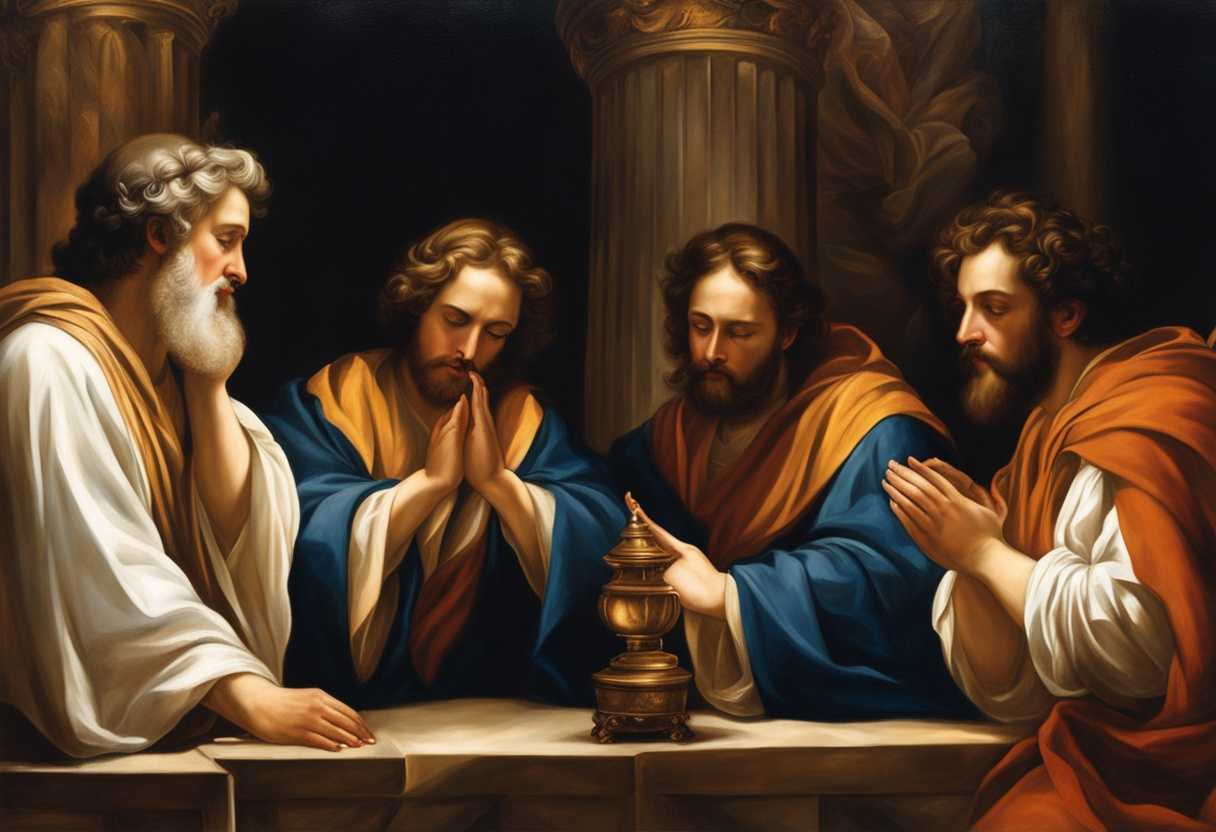
In Galatians chapter 1, we find the apostle Paul recounting his conversion and early ministry. One particular scene that stands out is when Paul visits Jerusalem to meet with Cephas (Peter). The setting is a humble room in Jerusalem, with simple wooden furniture and the smell of incense lingering in the air. Paul had been a persecutor of the early Christians but had a dramatic encounter with Jesus on the road to Damascus, which led to his conversion.
As Paul and Cephas sit across from each other, there is a sense of tension in the room. Paul, once a fierce opponent of the Christian faith, now sits before one of its most prominent leaders. Yet, Cephas welcomes him with open arms, recognizing the transformative power of God in Paul’s life. The conversation between the two men is deep and meaningful, as they share their experiences and revelations from God. This meeting marks a significant moment in the early Christian church, as Paul’s ministry is affirmed by Cephas and the other apostles.
Surrounded by the ancient walls of Jerusalem, Paul and Cephas discuss the gospel message and the importance of preaching the true word of God. The room is filled with a sense of awe and reverence as these two men, who have been chosen by God for a special purpose, come together to further the kingdom of heaven. This encounter serves as a powerful reminder of God’s grace and the transformative power of His love.
What is Galatians 1:17 about?
The apostle Paul is reflecting on his dramatic conversion experience on the road to Damascus in this verse. Previously known as Saul, he was a zealous persecutor of early Christians, but a sudden encounter with the risen Christ transformed his life completely. This event marked the beginning of Paul’s journey in spreading the message of the gospel to the Gentiles and becoming one of the most influential figures in early Christianity.
Paul’s conversion signifies the power of God’s grace and the transformative impact of encountering Jesus Christ. It emphasizes that no one is beyond redemption and that God can use even the most unlikely individuals for His divine purpose. Paul’s calling to preach the gospel serves as a reminder of the importance of sharing the Good News with others and the calling that each believer has to be a witness for Christ in the world.
Reflecting on Paul’s conversion and calling can challenge us to consider how God might be working in our own lives and what missions He might be calling us to fulfill. It prompts us to think about the ways in which we can be instruments of God’s grace and share the message of hope and salvation with those around us. This verse invites us to reflect on how encountering Jesus can lead us to a life of purpose, service, and discipleship, just as Paul’s encounter with Christ transformed his life.
Understanding what Galatians 1:17 really means
The verse Galatians 1:17 provides a glimpse into the early days of the Apostle Paul’s ministry, shedding light on his unique path to apostleship. In this verse, Paul recounts his post-conversion journey, highlighting a period of solitude and revelation in Arabia before returning to Damascus. This narrative serves as a testament to the personal nature of faith and the significance of individual spiritual growth.
Paul’s decision not to immediately seek counsel from others after his conversion speaks to the value of personal revelation and introspection in one’s spiritual journey. In a world filled with noise and distractions, taking time for solitude and reflection can allow individuals to deepen their understanding of their faith and calling. Just as Paul retreated to Arabia to commune with God and receive divine insight, modern-day believers can also benefit from moments of quiet contemplation to discern their purpose and direction.
Moreover, Paul’s independence in seeking God’s guidance underscores the importance of cultivating a personal relationship with the divine. While community and fellowship are vital aspects of the Christian faith, there is a profound need for individuals to develop a direct connection with God, free from external influences. By nurturing a personal faith grounded in prayer, study, and reflection, believers can experience a deeper intimacy with the divine and a clearer sense of their spiritual path.
The transformation of Paul from a zealous persecutor of Christians to a devoted apostle exemplifies the profound impact of God’s grace on human lives. His journey serves as a powerful reminder of the redemptive power of faith and the potential for radical change through divine encounters. Just as Paul’s encounter with Christ on the road to Damascus altered the course of his life, individuals today can experience transformative moments that propel them towards new beginnings and missions.
Consider the parallel of a contemporary individual who, faced with a significant life event, chooses to step back from the busyness of life to seek clarity and direction. This intentional period of reflection and seeking mirrors Paul’s time in Arabia, where he immersed himself in solitude to prepare for the ministry ahead. By creating space for God to work in their lives, individuals can emerge from such seasons with a renewed sense of purpose and conviction, ready to embark on their own unique journeys of faith.
In essence, Galatians 1:17 invites readers to contemplate the value of personal spiritual growth, the significance of divine encounters in shaping one’s path, and the transformative power of God’s grace. Through Paul’s example, we are encouraged to embrace moments of solitude and reflection, to cultivate a personal relationship with God, and to remain open to the profound changes that faith can bring about in our lives. As we navigate our own spiritual journeys, may we find inspiration in Paul’s story and trust in the guiding hand of the divine in our quest for purpose and fulfillment.
How can we discern true spiritual revelations?
True spiritual revelations come from God Himself. They are not mere human constructs or teachings but are directly from God. These revelations are in line with His will and purpose for our lives and are meant to bring us closer to Him. A sense of divine truth and wisdom characterizes them, going beyond human understanding. We must discern the source of these messages in our search for true spiritual revelations. Messages that lead us away from God or contradict His word are not from Him. We must test all revelations against the teachings of the Bible to ensure they align with God’s character and plan for our lives. True spiritual revelations will ultimately glorify God and draw us into a deeper relationship with Him.
Application
Imagine rebooting your life’s software like Paul did on the road to Damascus. Christ’s transformative power gave him a new mission, just as it can with you. Ditch your outdated patterns and update to the life Christ offers. Are you prepared to make that crucial upgrade and embrace your divine purpose?

Reverend Michael Johnson is an experienced Church Minister with a profound expertise in spirituality and guidance. With a serene presence and a compassionate heart, he has faithfully served his congregation for over 20 years, leading them on a spiritual journey towards inner peace and enlightenment. Reverend Johnson’s extensive knowledge of religious philosophies and profound understanding of human nature have made him a trusted confidant and mentor to many, as he seamlessly weaves his profound wisdom into life teachings. Reverend Johnson’s calming demeanor and empathetic nature continue to uplift and heal souls, nurturing a sense of unity and tranquility within his community.