
Galatians 4:8-9 is about the transition from a life of spiritual bondage, worshipping false idols, to a life of freedom and grace through knowing God.
Formerly, when you did not know God, you were enslaved to those that by nature are not gods.
9 But now that you have come to know God, or rather to be known by God, how can you turn back again to the weak and worthless elementary principles of the world, whose slaves you want to be once more?
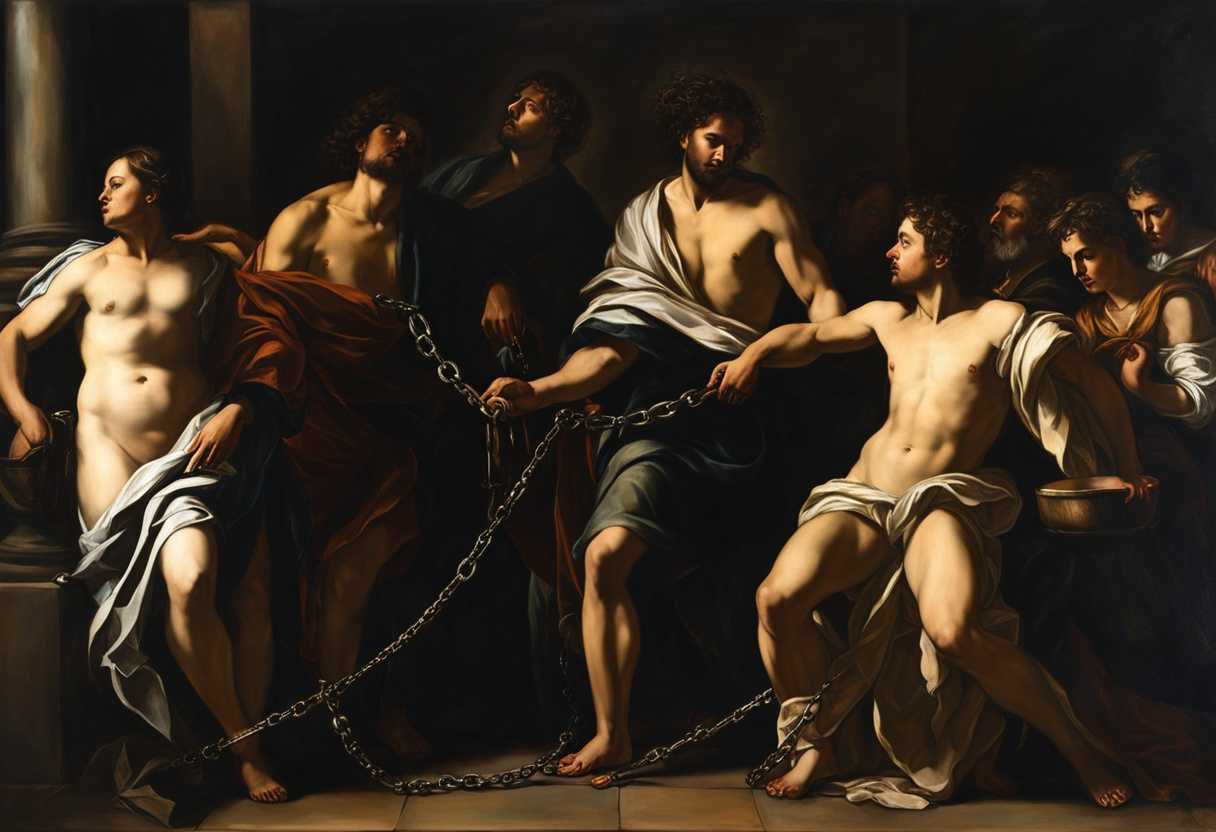
Setting the Scene for Galatians 4:8-9
In Galatians chapter 4, the apostle Paul is writing to the churches in Galatia, addressing the issue of the Galatian believers turning back to legalistic practices after initially receiving the message of salvation through faith in Christ. The scene Paul sets is one of a group of believers gathered together in a meeting place, likely a house church or a communal space where they would come together to study the Scriptures and encourage one another in their faith.
Among those present are the Galatian believers themselves, who had been influenced by false teachers promoting a works-based salvation. Paul, who had originally brought them the message of grace and freedom in Christ, is also present in spirit through his letter, urging them to return to the true gospel they had initially embraced. The atmosphere is tense as the believers grapple with the weight of Paul’s words, realizing the danger of straying from the foundational truth of salvation by grace through faith.
The room is dimly lit by oil lamps, casting a warm glow on the faces of the believers as they listen intently to the words being read aloud from Paul’s letter. The scent of incense lingers in the air, creating a sense of reverence and solemnity. Outside, the sounds of the bustling city of Galatia can be heard faintly through the open windows, a reminder of the world outside that seeks to pull them away from the truth. In this moment, the believers are faced with a choice – to either heed Paul’s warning and return to the freedom of grace, or continue down the path of legalism and bondage.
What is Galatians 4:8-9 about?
The speaker in this verse is questioning why one would turn back to worshiping false idols after being liberated from them and coming to know the one true God. It conveys a sense of disbelief and disappointment at the idea of returning to something that is considered worthless and deceitful after experiencing the truth and freedom that comes from knowing God. The verse highlights the folly of reverting to old habits or beliefs that do not align with one’s newfound knowledge or understanding.
Imagine the sense of betrayal and confusion that comes with witnessing someone willingly choose to return to a state of bondage after being set free. The speaker’s incredulity at the thought of forsaking the true God for false idols encourages reflection on the power of faith, trust, and devotion. It serves as a reminder to stay true to one’s beliefs, values, and principles, especially when faced with temptation or distraction. The verse prompts introspection on the significance of loyalty, gratitude, and perseverance in one’s spiritual journey.
Understanding what Galatians 4:8-9 really means
The Apostle Paul’s letter to the Galatians delves into the themes of legalism and justification by faith, aiming to guide believers in their understanding of these crucial doctrines. In Galatians 4:8-9, Paul draws a stark contrast between the Galatians’ past life of ignorance and bondage to false gods and their current state as believers in Christ. The phrase “When you did not know God” encapsulates a time when the Galatians lived in spiritual darkness, unaware of the true God’s grace and power. They were once enslaved to idols devoid of any genuine divinity, as highlighted by the phrase “You were slaves to those who by nature are not gods.”
Now, as believers, the Galatians have entered into a transformative relationship with the true God. The phrase “Now that you know God—or rather are known by God” underscores the intimacy and depth of this newfound connection. Paul’s concern is palpable when he questions, “How is it that you are turning back to those weak and miserable forces?” He is troubled by the Galatians’ potential regression to their former powerless and unfulfilling ways, akin to reverting to a life of spiritual bondage.
Drawing parallels, Romans 6:6 reinforces the concept of liberation from sin and false gods, emphasizing the crucifixion of the old self to break free from sin’s dominion. Similarly, 1 Corinthians 8:5-6 underscores the supremacy of the one true God over all so-called gods, mirroring Paul’s message in Galatians and emphasizing the importance of discerning between the genuine and the counterfeit in matters of faith.
The relevance of these verses extends to contemporary society, where many individuals unknowingly serve modern-day idols like materialism, career success, or societal approval. The cautionary tale of the Galatians serves as a poignant reminder for us to assess our priorities and ensure that our focus remains steadfast on our relationship with God. Just as a rehabilitated individual tempted to return to addiction faces a critical decision point, the Galatians’ struggle resonates with the ongoing battle to resist the allure of past vices and false beliefs.
In conclusion, Galatians 4:8-9 serves as a poignant reminder of the transformative power of knowing and being known by God. It challenges believers to stand firm in their faith, resisting the pull of former ways that offer no true fulfillment. By reflecting on these verses, we find encouragement to deepen our relationship with God and guard against the allure of contemporary idols that seek to distract us from the path of spiritual growth and fulfillment.
How can we guard against turning back to idols?
We can guard against turning back to idols by understanding that when we did not know God, we were slaves to those who by nature are not gods. Now that we know God, or rather are known by God, we should not return to the weak and miserable forces of the world. This means recognizing that idols are mere creations and not the true source of power or fulfillment. We can resist the temptation to turn back to idols by keeping our focus on God and remembering His love and grace towards us.
Furthermore, we can guard against turning back to idols by deepening our relationship with God through prayer, studying the Bible, and fellowship with other believers. We can stay grounded in our faith and less likely to be swayed by the false promises of idols by seeking and following God’s will for our lives. It is important to constantly remind ourselves of God’s faithfulness, provision, and sovereignty, so that we do not allow idols to take His rightful place in our hearts.
Lastly, we can guard against turning back to idols by being aware of the subtle ways they can creep back into our lives. Idols can take many forms, such as material possessions, relationships, achievements, or even our own desires and ambitions. We can identify any idols that may be taking precedence over our relationship with God by regularly examining our hearts and motives. Through repentance, surrender, and reliance on the Holy Spirit, we can overcome the pull of idols and remain steadfast in our devotion to God.
Application
Think about the times you’ve worked tirelessly, only to feel unfulfilled. Reflect on your journey and avoid falling back into old habits that drain your spirit. Embrace the freedom and grace that Christ offers, much like finding new, fulfilling ways to connect with loved ones. Stay strong in your faith and reject the empty traditions that burden you. Will you choose the freedom and grace of Christ and leave behind what hinders your spiritual growth?

Reverend Michael Johnson is an experienced Church Minister with a profound expertise in spirituality and guidance. With a serene presence and a compassionate heart, he has faithfully served his congregation for over 20 years, leading them on a spiritual journey towards inner peace and enlightenment. Reverend Johnson’s extensive knowledge of religious philosophies and profound understanding of human nature have made him a trusted confidant and mentor to many, as he seamlessly weaves his profound wisdom into life teachings. Reverend Johnson’s calming demeanor and empathetic nature continue to uplift and heal souls, nurturing a sense of unity and tranquility within his community.