
6 We know that our old self was crucified with him in order that the body of sin might be brought to nothing, so that we would no longer be enslaved to sin.
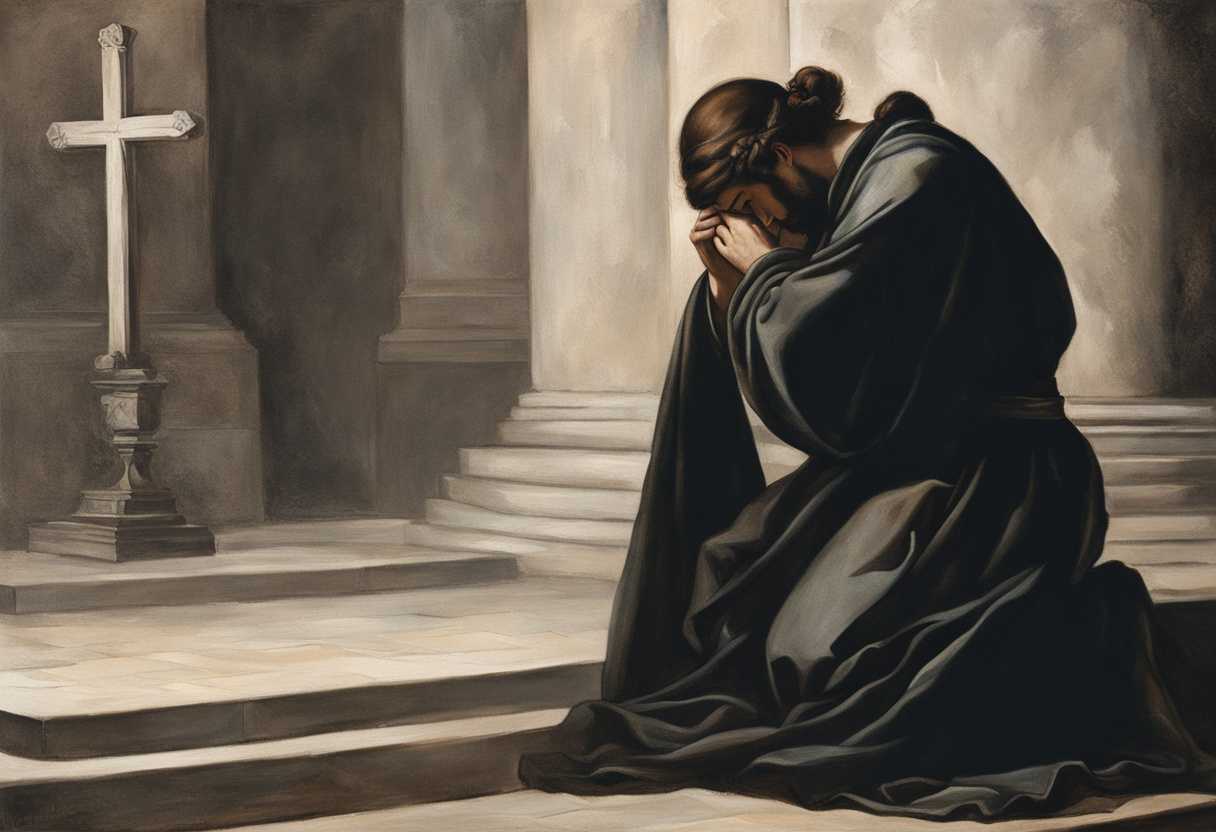
Setting the Scene for Romans 6:6
In Romans chapter 6, the apostle Paul is addressing the believers in Rome, explaining to them the significance of their new life in Christ. The scene unfolds in a small house church in Rome, where a diverse group of believers has gathered to hear Paul’s teachings. The room is dimly lit by oil lamps, casting a warm glow on the faces of those present.
Among the attendees are Lydia, a wealthy merchant who was converted by Paul’s preaching, and Aquila and Priscilla, a husband and wife team who are known for their hospitality and dedication to the gospel. As Paul speaks, his words are met with nods of understanding and murmurs of agreement from the group. The atmosphere is one of reverence and anticipation as they listen intently to his words about dying to sin and being raised to new life in Christ.
The believers in the room come from different backgrounds and walks of life, but they are united in their faith and commitment to following Christ. As Paul continues to expound on the transformative power of the gospel, a sense of awe and gratitude fills the room, reminding them of the profound impact that Christ’s sacrifice has had on their lives.
What is Romans 6:6 about?
This powerful verse teaches us about the transformation that occurs within us when we accept and follow Jesus Christ. When it mentions our old self being crucified with Christ, it symbolizes the death of our sinful nature and our old way of living. This means that our past mistakes, wrongdoings, and desires that go against God’s will are nailed to the cross with Jesus, making room for a new beginning and a new life with Him.
Furthermore, the verse highlights the victory we have over sin through Jesus. The imagery of the body ruled by sin being done away with demonstrates that we are no longer bound to our sinful nature but are set free to live a life that pleases God. We are no longer slaves to sin but are empowered to live in righteousness because of the sacrifice and resurrection of Jesus.
Reflecting on this verse, let’s ask ourselves: are we truly living in the freedom and victory that Christ has given us? Are we still allowing our old self to have control over our thoughts, actions, and decisions? Let this verse remind us of the power and grace of Jesus that enables us to break free from sin and live a life that honors Him.
Understanding what Romans 6:6 really means
Introduction and Context
Romans 6:6 speaks to the transformative power of faith in Jesus Christ. This verse is a cornerstone for understanding the concept of sanctification in Christian theology. It’s essential to grasp the context in which Apostle Paul wrote this letter to the Romans. Paul was addressing both Jewish and Gentile believers, aiming to unify them under the gospel’s truth. This particular verse speaks to the idea of our old self being crucified with Christ so that our sinful body might be done away with, and we are no longer slaves to sin.
Key Phrases and Their Meaning
The phrase “our old self was crucified with him” points to the believer’s identification with Jesus’ death. This isn’t just a symbolic gesture; it’s a profound spiritual reality. Paul reiterates this in Galatians 2:20 by saying, “I have been crucified with Christ and I no longer live, but Christ lives in me.”” This means that the sinful nature we were born with is put to death, making way for a new, Christ-like nature to emerge.
Another critical phrase is “so that the body ruled by sin might be done away with.” Here, Paul emphasizes the totality of the transformation. The “body ruled by sin” refers to our inherent sinful tendencies and the power that sin holds over our actions and thoughts. Through Christ’s sacrifice, this power is nullified, allowing us to live in freedom and righteousness. This is echoed in 2 Corinthians 5:17, where Paul writes, “Therefore, if anyone is in Christ, the new creation has come: The old has gone, the new is here!”
Relevance Today
Many people today struggle with feelings of guilt and unworthiness. This verse offers profound hope and assurance that through Christ, we are made new. It tells us that our past mistakes and sins do not define us; instead, our identity is rooted in Christ’s sacrifice and resurrection. This is incredibly liberating in a world that often holds us captive to our past. John, a man who battled addiction for many years, is the subject of the story. He felt trapped by his sinful habits and believed change was impossible. However, upon embracing the truth of Romans 6:6, John understood that his old self was crucified with Christ. This realization empowered him to seek help, pray earnestly, and eventually, he found freedom from his addiction. His life became a testimony to the transformative power of this verse.
Further Reflection
How does this verse challenge you to view your own life? Are there aspects of your old self that you need to let go of to fully embrace your new identity in Christ? Reflect on these questions and consider praying for the strength to live out this truth daily.
Conclusion
Romans 6:6 is a powerful reminder of the new life we have in Christ. It’s a call to leave behind our sinful nature and embrace the freedom offered through Jesus’ sacrifice. We can experience true transformation and live a life that reflects God’s love and grace by understanding and applying this verse. May you find the courage and strength to walk in the newness of life that Christ has given you as you meditate on this scripture.
What must we die to in order to live?
We must die to our old self, our sinful nature, in order to live a new life in Christ. The verse points to the concept of crucifying our old self with Christ so that we are no longer slaves to sin. We can experience true freedom and new life in Him by surrendering our old ways and allowing Christ to reign in our lives. This process of dying to self is essential in the Christian faith, as it signifies a transformation and renewal of our hearts and minds.
When we die to our old self, we are essentially letting go of our selfish desires, sinful habits, and worldly attachments. This act of surrender is a turning point where we choose to follow Christ wholeheartedly and live according to His will. Dying to self is a continual process that involves daily denying our own desires and seeking to align our lives with God’s purposes. Through this process, we can experience the abundant life that Christ promises to all who believe in Him.
Application
You’re at the crossroads between your old habits and a fresh start. Romans 6:6 tells us to nail our old selves to the cross, just like Christ did. Imagine shedding outdated routines for new, energized ways of living in His grace. Take this verse as your wake-up call. Are you ready to leave your old self behind and embrace a new life in Christ?

Reverend Michael Johnson is an experienced Church Minister with a profound expertise in spirituality and guidance. With a serene presence and a compassionate heart, he has faithfully served his congregation for over 20 years, leading them on a spiritual journey towards inner peace and enlightenment. Reverend Johnson’s extensive knowledge of religious philosophies and profound understanding of human nature have made him a trusted confidant and mentor to many, as he seamlessly weaves his profound wisdom into life teachings. Reverend Johnson’s calming demeanor and empathetic nature continue to uplift and heal souls, nurturing a sense of unity and tranquility within his community.