
20 I have been crucified with Christ. It is no longer I who live, but Christ who lives in me. And the life I now live in the flesh I live by faith in the Son of God, who loved me and gave himself for me.
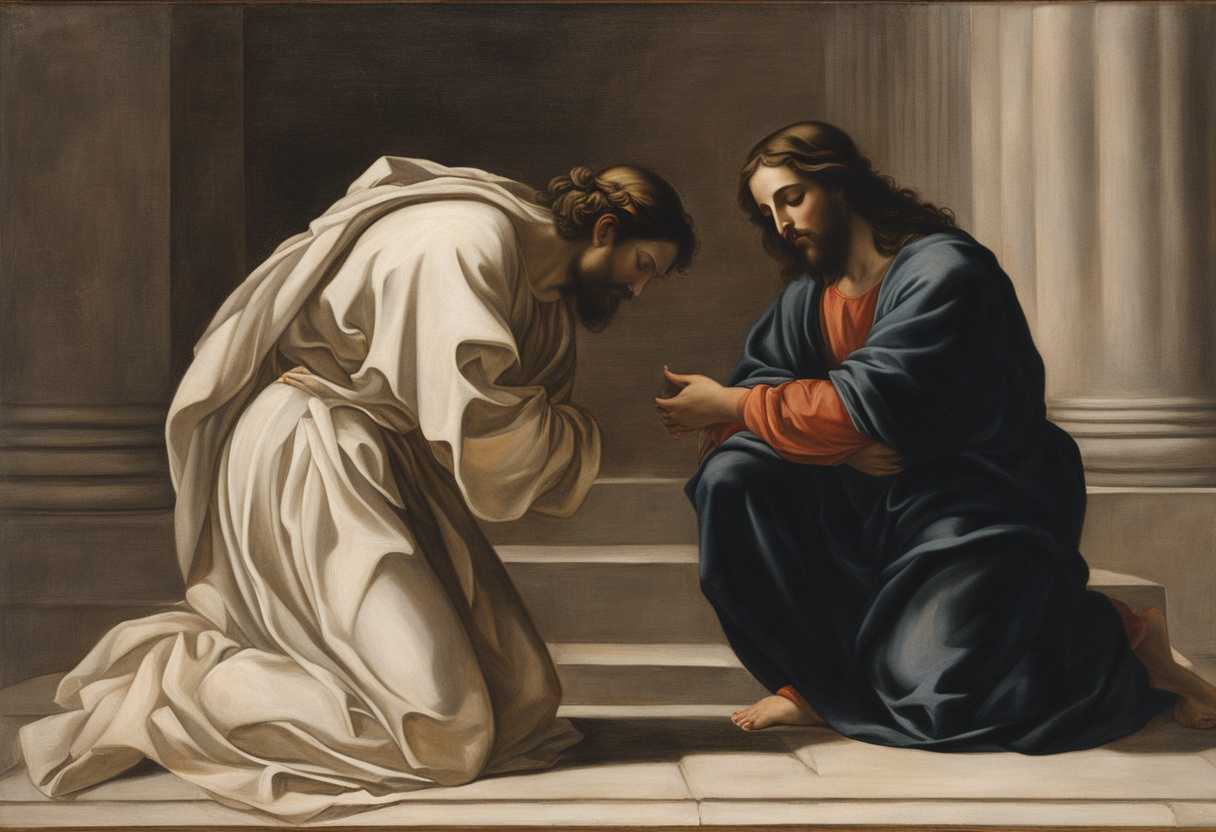
Setting the Scene for Galatians 2:20
In Galatians chapter 2, we find the apostle Paul reflecting on a crucial moment in his life and ministry. The scene takes place in Antioch, a bustling city in ancient Syria where Paul and other early Christian leaders had gathered to discuss matters of faith and practice. Among those present are Paul himself, Peter (also known as Cephas), and Barnabas, all prominent figures in the early Christian church.
The atmosphere is tense as Paul recounts a confrontation he had with Peter in Antioch. The issue at hand is the inclusion of Gentile believers in the Christian community and whether they should adhere to Jewish customs, particularly regarding food laws. Paul, a staunch advocate for the inclusion of Gentiles without imposing Jewish laws on them, challenges Peter’s behavior, accusing him of hypocrisy for withdrawing from eating with Gentile believers out of fear of the circumcision party. The discussion is heated, reflecting the deep theological and cultural tensions present in the early church as it navigated the complexities of a diverse and growing community of believers.
The setting is likely a communal meal or gathering where these leaders would have come together to share fellowship and discuss matters of faith. The clash between Paul and Peter underscores the challenges of unity and diversity within the early Christian community, highlighting the ongoing struggle to live out the principles of grace, faith, and inclusion that were central to the message of Jesus Christ.
What is Galatians 2:20 about?
This powerful verse from Galatians 2:20 highlights the profound transformation that occurs in a person’s life when they believe in Christ. It emphasizes the idea of dying to one’s old self and being reborn in a new spiritual identity that is united with Christ. When we accept Christ into our lives, we are essentially letting go of our selfish desires, worldly passions, and sinful nature, and allowing His presence to dwell within us. This spiritual rebirth signifies a radical change in our priorities, values, and behaviors as we strive to live in accordance with Christ’s teachings.
When we proclaim that “I no longer live, but Christ lives in me,” we are acknowledging that our lives are no longer centered on ourselves, but on God. We find our purpose, meaning, and identity in Christ, and our thoughts, actions, and decisions are now guided by His love and grace. This verse challenges us to surrender control of our lives to Christ, trust in His plan for us, and allow His transformative power to work within us. It prompts us to reflect on how fully we are allowing Christ to live through us and inspire us to deepen our relationship with Him.
Understanding what Galatians 2:20 really means
To unpack Galatians 2:20, let’s follow a structured approach. We’ll start with the context of the verse.
Context and Overview
Galatians 2:20 is a profound statement by Paul the Apostle, summarizing the essence of Christian identity and transformation. This verse is pivotal in understanding the concept of living a life in Christ, contrasting the old self with the new creation in Jesus. Paul speaks from personal experience, making it a powerful testament to the transformative power of faith.
Key Phrases and Their Meanings
-
“I have been crucified with Christ”: This phrase signifies a complete and total identification with Jesus’ death. Paul is saying that his old self, with its sinful nature and desires, has been put to death. It’s a strong image of dying to one’s previous ways of living.
-
“It is no longer I who live, but Christ lives in me”: Here, Paul emphasizes that his life is now driven by Christ within him. His identity and actions are not his own but are influenced and guided by Jesus.
-
“The life I now live in the flesh I live by faith in the Son of God”: This indicates that although Paul still lives a human life, his mode of living is fundamentally changed. Faith in Jesus is the guiding principle of his existence.
-
“Who loved me and gave Himself for me”: Paul personalizes Jesus’ sacrifice, underscoring that the motivation behind this new life is rooted in the love and sacrifice of Christ.
Cross-References
Romans 6:6 echoes this thought, stating, “Our old self was crucified with Him.” This reinforces the idea of dying to the old self. Additionally, Colossians 3:3 says, “For you died, and your life is now hidden with Christ in God,” which parallels the notion of a new identity in Christ. Galatians 2:20 calls us to a radical shift in perspective in today’s fast-paced and often self-centered world. It challenges us to examine who we are living for. Are we driven by personal ambitions, or are we allowing Christ to work through us? Jane, a woman who worked tirelessly, climbed the corporate ladder. She was successful but felt an emptiness inside. After a profound spiritual encounter, she realized that her drive was self-serving. Inspired by Galatians 2:20, she began volunteering her time and skills to help others. Jane’s life became a testament to living by faith, motivated by Christ’s love.
Reflection and Engagement
This verse invites us to reflect deeply on our own lives. Are we living in a way that reflects Christ’s presence within us? How can we allow our actions, decisions, and interactions to be shaped by our faith in Jesus and His love for us?
Conclusion
Galatians 2:20 offers a powerful blueprint for Christian living. It calls for a transformation that goes beyond surface-level changes, urging us to embrace a new identity rooted in Christ. We can navigate our lives with a sense of purpose and direction that comes from a profound connection with Jesus by internalizing this verse.
Am I truly living for Christ or myself?
Reflecting on the message conveyed in Galatians 2:20 is important in considering whether you are truly living for Christ or yourself. This verse emphasizes the concept of dying to oneself and allowing Christ to live through you. It speaks to the idea that our old selves are crucified with Christ, and it is no longer us who live, but Christ who lives in us. This highlights the significance of surrendering our desires, ambitions, and will to align with God’s purpose and will for our lives.
When examining your life in light of this verse, ask yourself whose desires and motives are driving your actions and decisions. Are you seeking to please yourself or to serve and honor Christ? A life lived for Christ is characterized by selflessness, humility, and a deep desire to glorify God in all that you do. It involves prioritizing God’s will above your own, seeking to be obedient to His Word, and being willing to sacrifice personal desires for the sake of furthering His kingdom. Living for Christ ultimately means embracing a lifestyle that reflects His love, grace, and truth to the world around you. It involves seeking daily to walk in the footsteps of Jesus, to love others as He loves, and to serve selflessly in His name. You can be assured that you are truly living for Him, rather than for yourself, by remaining rooted in Christ and allowing His Spirit to guide and transform you.
Application
Think of life like a busy workday or a bustling family home. You juggle tasks, responsibilities, and decisions. Imagine having a divine guide, lighting the way and making things smoother. Galatians 2:20 calls us to let Christ steer our course, replacing our will with His. Are you ready to let go and let Him lead, bringing peace and purpose to every part of your life?

Reverend Michael Johnson is an experienced Church Minister with a profound expertise in spirituality and guidance. With a serene presence and a compassionate heart, he has faithfully served his congregation for over 20 years, leading them on a spiritual journey towards inner peace and enlightenment. Reverend Johnson’s extensive knowledge of religious philosophies and profound understanding of human nature have made him a trusted confidant and mentor to many, as he seamlessly weaves his profound wisdom into life teachings. Reverend Johnson’s calming demeanor and empathetic nature continue to uplift and heal souls, nurturing a sense of unity and tranquility within his community.