
13 Arpachshad fathered Shelah, and Shelah fathered Eber.
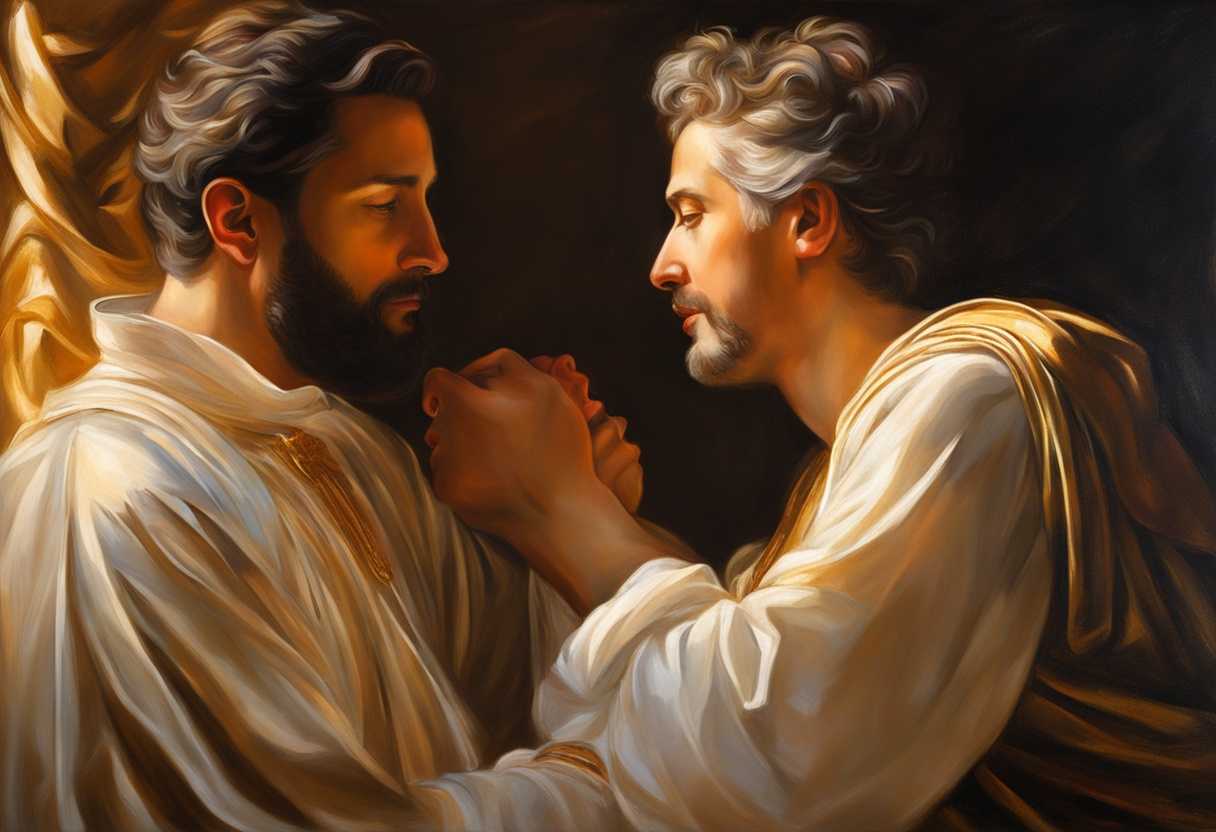
Setting the Scene for Genesis 11:13
In Genesis chapter 11, we find ourselves in the ancient city of Ur in Mesopotamia, a bustling metropolis known for its advanced civilization and towering ziggurats. The scene unfolds with Terah, a descendant of Shem, who has gathered his family together in their home. Terah’s family includes his three sons: Abram, Nahor, and Haran. They are surrounded by the sights and sounds of Ur, with its busy markets, clay-brick buildings, and the Euphrates River flowing nearby.
As the family sits together, Terah shares with them his desire to journey to the land of Canaan. He speaks of a calling he has received from God to leave their familiar surroundings and embark on a journey to a new land. Abram, the eldest son, listens intently as Terah explains the significance of this divine calling and the promise of blessings that await them in Canaan. The family is faced with a decision to leave behind the comforts of Ur and set out on a journey into the unknown, guided by faith and trust in God’s plan for their future.
The atmosphere is filled with a mix of anticipation, uncertainty, and faith as Terah and his family prepare to set out on a journey that will ultimately shape the course of their lives and the history of their descendants. The scene captures a pivotal moment of obedience and faith as they step out in response to God’s call, setting the stage for the remarkable journey of faith that Abram, later known as Abraham, will continue in the chapters to come.
What is Genesis 11:13 about?
Genesis 11:13 introduces us to the lineage of Arphaxad, a descendant of Noah after the great flood. This verse highlights the continuation of humanity and the expansion of civilization following the catastrophic event of the flood. Through the simple statement that Arphaxad became the father of Shelah, we see the transmission of life, culture, and history from one generation to the next. It is a reminder of the resilience of the human spirit, the importance of family ties, and the passage of time. We may ponder on the significance of lineage and ancestry as we reflect on this verse. How does knowing our roots and understanding our familial connections shape our identity and experiences? What lessons can we draw from the stories of our ancestors and apply to our own lives? This verse in the text connects us to the past and serves as a guide for the future. It inspires us to cherish our heritage, embrace our responsibilities as part of a larger narrative, and strive to leave a positive legacy for generations to come.
Understanding what Genesis 11:13 really means
We need to follow a structured approach that allows us to delve deeply into the text, its context, and its implications for us today to provide meaningful commentary on Genesis 11:13.
Structure:
- Context and Background
- Key Phrases Explained
- Biblical Cross-References
- Relevance to Modern Life
- Reflection and Application
Commentary:
1. Context and Background
Genesis 11:13 sits within the genealogical records following the Tower of Babel incident. This section of Genesis chronicles the lineage from Shem, one of Noah’s sons, down to Abram (later Abraham). These genealogies are essential as they establish the foundation for God’s covenantal relationship with humanity.
2. Key Phrases Explained
The genealogical listings in this verse, specifically the names mentioned and the years lived, serve as more than historical records. They demonstrate God’s ongoing involvement with His creation and the fulfillment of His promises through specific family lines. The repeated mention of years and the lineage highlights the continuity of God’s plan.
3. Biblical Cross-References
This genealogical tradition echoes back to Genesis 5, where the lineage from Adam to Noah is outlined. The importance of genealogies is also emphasized in the Gospels. For instance, Matthew 1 traces Jesus’ genealogy, reinforcing the fulfillment of prophecies and God’s faithfulness.
Furthermore, in the New Testament, Hebrews 11 celebrates the faith of these patriarchs, emphasizing that their lives were significant not just for their actions but for their roles in God’s overarching plan. These genealogies aren’t mere records; they are testaments to divine promise and provision.
4. Relevance to Modern Life
Today, we may find genealogies tedious, but they teach valuable lessons about heritage and purpose. These records remind us of the importance of legacy and long-term faithfulness in a world often obsessed with the immediate. They show us that we are part of a bigger narrative. Someone considers the story of tracing their ancestry only to discover a forgotten but significant family heritage. This often brings a sense of identity and purpose. Similarly, understanding our spiritual lineage can ground us and provide perspective on our place in God’s plan.
5. Reflection and Application
Reflecting on Genesis 11:13, we should contemplate our role in the ongoing story of God’s people. Do we see ourselves as part of a larger narrative? How might our actions today impact future generations in faith? These genealogies prompt us to consider our legacy.
Imagine a young boy named Tim, who discovers his grandfather was a missionary. This revelation could inspire Tim to explore his faith more deeply, seeing his own life as part of a divine calling. Just as those ancient names carried a divine purpose, so too do our lives today. Genesis 11:13 is more than a historical footnote in conclusion. It’s a reaffirmation that God’s plans span generations, weaving individual threads into His grand tapestry. We are invited to participate actively in God’s redemptive work in the world as we meditate on our place in this lineage. Let this understanding inspire and challenge us to consider our enduring impact within God’s eternal story.
How can we strive for unity without sacrificing diversity?
The story of the Tower of Babel in Genesis 11 discusses how a united humanity attempted to build a tower that reached the heavens, seeking to make a name for themselves. However, their unity was founded on pride and disobedience, leading to their dispersion and the confusion of languages. This story warns against the dangers of unity built on selfish intentions and disobedience towards God.
To strive for unity without sacrificing diversity, it is important to focus on unity that is rooted in love, respect, and mutual understanding. Unity that celebrates diversity and embraces different perspectives can lead to a harmonious and inclusive community. Instead of seeking uniformity, we should celebrate the unique gifts and talents that each individual brings to the table, fostering an environment where all voices are valued and heard. We can achieve true unity without sacrificing diversity by acknowledging and respecting our differences while working towards a common goal. Embracing diversity enhances our collective strength and enriches our understanding of each other, ultimately leading to a more unified and inclusive society.
Application
Reflect on the demands of your busy work life and family responsibilities. Imagine your life as a GPS, guiding you through countless tasks and connections. Wouldn’t it be easier to have a map straight from the ultimate Navigator? Align your life with God’s plan, and watch how purpose and fulfillment unfold, just like a finely tuned schedule. Don’t you want to experience the blessings of following a divine path every day? How will you respond to this opportunity to truly live with purpose?

Reverend Michael Johnson is an experienced Church Minister with a profound expertise in spirituality and guidance. With a serene presence and a compassionate heart, he has faithfully served his congregation for over 20 years, leading them on a spiritual journey towards inner peace and enlightenment. Reverend Johnson’s extensive knowledge of religious philosophies and profound understanding of human nature have made him a trusted confidant and mentor to many, as he seamlessly weaves his profound wisdom into life teachings. Reverend Johnson’s calming demeanor and empathetic nature continue to uplift and heal souls, nurturing a sense of unity and tranquility within his community.