
3 And they said to one another, “Come, let us make bricks, and burn them thoroughly.” And they had brick for stone, and bitumen for mortar.
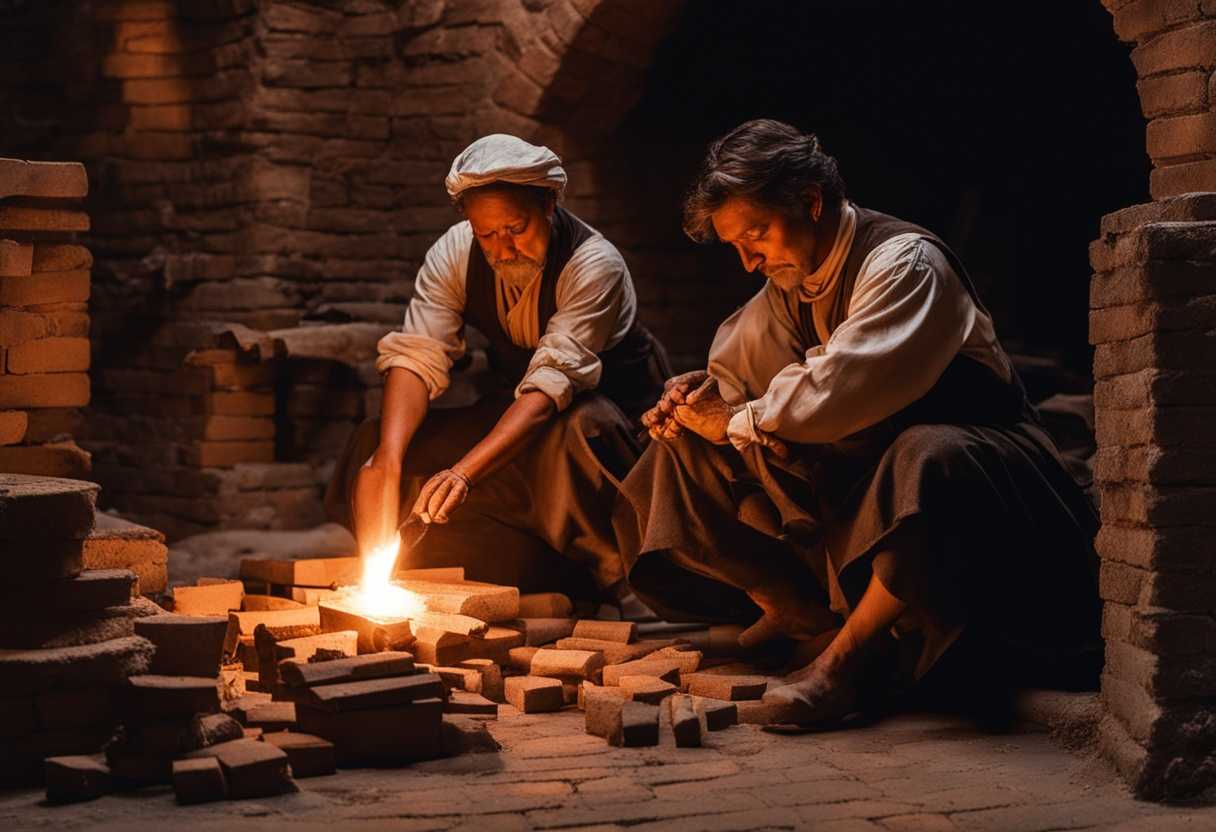
Setting the Scene for Genesis 11:3
In Genesis chapter 11, we find a bustling scene in the land of Shinar where a group of people have gathered together with a common goal in mind. Among them are skilled craftsmen, laborers, and families who have journeyed from various regions to this fertile plain. The air is filled with the sounds of hammers striking stone and the chatter of different languages as they work on a massive construction project.
At the center of the activity stands a towering ziggurat, a grand temple that the people are building to reach the heavens and make a name for themselves. The leader of this ambitious endeavor is a man named Nimrod, known for his prowess as a mighty hunter and a charismatic figure who has united the people in this monumental task. The workers toil under the scorching sun, their faces determined as they lay bricks and mortar, each layer bringing them closer to their lofty goal.
As the ziggurat rises higher and higher, the people’s pride and ambition grow with it. They believe that their unity and ingenuity will allow them to ascend to the realm of the gods themselves. However, little do they know that their actions will soon incur the wrath of the Almighty, leading to a divine intervention that will scatter them across the earth and confound their language, giving rise to the diversity of tongues we know today.
What is Genesis 11:3 about?
This verse reflects the story of the Tower of Babel found in the Bible, where humanity sought to build a tower to reach the heavens and make a name for themselves. However, God scattered them by confusing their languages, causing them to be unable to understand each other and work together. This story serves as a cautionary tale about the consequences of pride, arrogance, and the desire for power that can lead to disharmony and division among people.
Have you ever thought about the implications of trying to surpass our limits and reach for things that are beyond our grasp? This verse reminds us of the importance of humility and cooperation, rather than striving for individual greatness at the expense of unity. It encourages us to reflect on our motivations and the impact of our actions on others, emphasizing the value of working together towards common goals rather than selfish ambitions. We should learn from the lessons of the Tower of Babel and strive for harmony, understanding, and collaboration in all that we do.
Understanding what Genesis 11:3 really means
Structure for Commentary:
- Introduction – Introduction to the verse, providing context.
- Detailed Analysis – Breakdown of significant phrases and their meanings.
- Connection to Other Scriptures – References to other biblical passages that add depth to this verse.
- Relevance Today – Why this verse matters in today’s context.
- Anecdote and Application – A practical example or story to illustrate the verse’s meaning.
Commentary:
Introduction
Genesis 11:3 offers a fascinating insight into human ingenuity and collective action in the early days of civilization. It recounts the preparations made by the people before attempting to build the Tower of Babel. The verse speaks directly to their initiative and technological advancements, which resonate deeply even today.
Detailed Analysis
One of the key phrases in the passage is “Come, let us make bricks and bake them thoroughly.” This indicates a critical moment in human innovation. Bricks, unlike stones, could be manufactured and standardized, leading to more ambitious construction projects. The act of baking them “thoroughly” also emphasizes a commitment to quality and durability. However, this also serves as a precursor to the impending hubris that follows.
The mention of using brick instead of stone and tar for mortar not only highlights a new technology but also reveals a deeper intention. The people aimed for uniformity and practicality, qualities necessary for their dream project – the tower. This can signify humankind’s perpetual quest to improve and ascend, which can be both admirable and dangerous.
Connection to Other Scriptures
This verse finds an echo in Ecclesiastes 1:9, which states, “There is nothing new under the sun.” The human drive for innovation and dominance has been evident from ancient times and continues today. Proverbs 16:18 also resonates here: “Pride goes before destruction, a haughty spirit before a fall.” The technological advances described in Genesis 11:3 eventually set the stage for divine intervention, reminding us that human efforts are limited and should align with divine will.
Relevance Today
This verse is incredibly relevant as it speaks to the balance between human innovation and humility. Technological advancements are at their peak in today’s world, ranging from artificial intelligence to space travel. While these breakthroughs are impressive, they often come with ethical and moral dilemmas. How do we ensure that our innovations serve the greater good rather than leading us to collective hubris? The development of social media platforms should be considered. Initially created to connect people, they now face widespread criticism for fostering division, misinformation, and mental health issues. This modern example mirrors Genesis 11:3. The creation of “bricks” and “mortar” was a groundbreaking achievement, yet it led to an overreach of human ambition, culminating in the scattering of peoples. We find a crucial lesson in this story: It’s not just about what we build but why and how we build it. Are our modern “bricks” — be they technologies, policies, or societal structures — aimed at glorifying God, contributing to human flourishing, and promoting unity? Or are they leading us down a path of pride and unintended consequences? Reflecting on these questions can help us better align our actions with divine wisdom, ensuring that our advancements lead to collective upliftment rather than downfall. So, as we move forward in our endeavors, let us seek to build not just with bricks and mortar, but with integrity and divine purpose.
How does our pride affect our relationship with God?
Our pride can hinder our relationship with God by leading us to exalt ourselves above Him and seek our own glory instead of His. When we become consumed with pride, we start to rely on our own achievements, capabilities, and wisdom, rather than on God’s guidance and provision. This attitude can distance us from God, as it reflects a lack of humility and reliance on Him as the ultimate source of power and wisdom.
Additionally, pride can lead us to prioritize our own desires and ambitions over God’s will for our lives. This can result in disobedience, rebellion, and a refusal to submit to God’s authority. When we allow pride to dictate our actions and decisions, we may find ourselves straying away from God’s plan and purposes for us, ultimately hindering our spiritual growth and intimacy with Him. Pride can ultimately create a barrier between us and God by fostering a mindset of self-sufficiency and independence that is contrary to the dependence and trust that God desires from us. It is important for us to humble ourselves before God, acknowledge His sovereignty and lordship in our lives, and seek His will above our own desires in order to cultivate a deep and meaningful relationship with Him.
Application
Think of your workplace or family—when everyone pools their strengths, amazing things happen. Genesis 11:3 teaches us the power of unity. Are you ready to set aside differences to build something remarkable together? Imagine the incredible impact we can make when we focus on a common goal. Let’s take that step and unite for greatness. Will you join the effort to achieve extraordinary feats for the glory of God?

Reverend Michael Johnson is an experienced Church Minister with a profound expertise in spirituality and guidance. With a serene presence and a compassionate heart, he has faithfully served his congregation for over 20 years, leading them on a spiritual journey towards inner peace and enlightenment. Reverend Johnson’s extensive knowledge of religious philosophies and profound understanding of human nature have made him a trusted confidant and mentor to many, as he seamlessly weaves his profound wisdom into life teachings. Reverend Johnson’s calming demeanor and empathetic nature continue to uplift and heal souls, nurturing a sense of unity and tranquility within his community.