
35 the days of Terah were 205 years, and Terah died in Haran.
Setting the Scene for Genesis 11:35
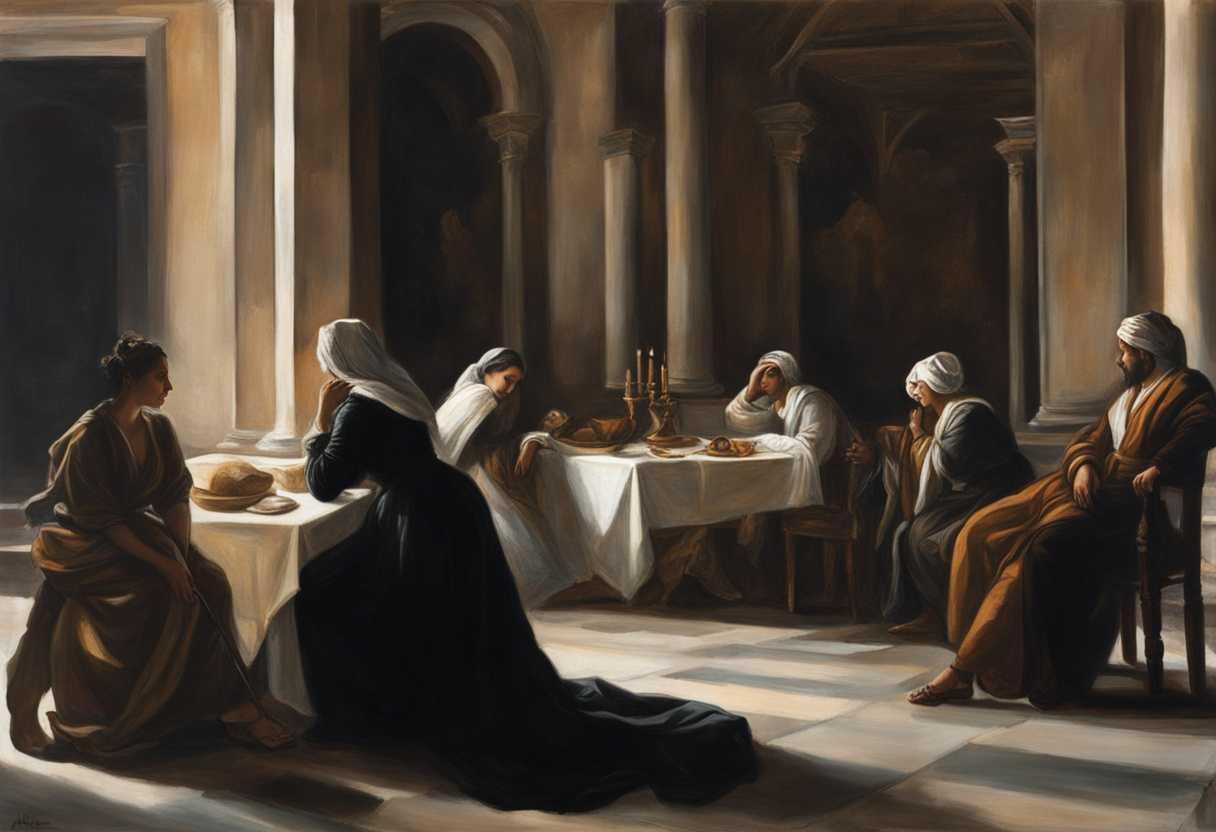
In Genesis chapter 11, we find ourselves in the midst of the genealogy of Terah, who was the father of Abram (later known as Abraham), Nahor, and Haran. The scene unfolds in the ancient city of Ur in Mesopotamia, a bustling metropolis known for its advanced civilization and towering ziggurats. Terah, a descendant of Shem, the son of Noah, has gathered his family together in their home to discuss their future.
Terah, a wealthy and respected man in Ur, has been contemplating a significant decision that will shape the destiny of his family. With his sons Abram, Nahor, and Haran by his side, he reveals his intention to uproot their lives and embark on a journey to the land of Canaan. The family members listen intently as Terah shares his vision of a new beginning in a foreign land, guided by a calling from the divine.
As the flickering light of oil lamps illuminates the room, Terah’s words hang in the air, stirring a mix of emotions among his family members. The scene is filled with a sense of anticipation and uncertainty as they grapple with the weight of leaving behind the familiar comforts of Ur for an unknown future in a distant land. And so, the stage is set for a pivotal moment in the biblical narrative, as the journey of faith and obedience of one man will set the course for the unfolding story of God’s redemptive plan for humanity.
What is Genesis 11:35 about?
This verse may appear like a simple list of names in a genealogy, but it holds significant importance in understanding the lineage of Abraham, who plays a crucial role in the history of monotheistic religions. Through tracing back the generations from Terah to Abraham, we can see the foundations of faith being laid out and the fulfillment of divine promises unfolding. This passage sets the stage for the emergence of Abraham as a pivotal figure chosen by God to lead a new covenant and a new community of believers.
Through this verse, we are invited to reflect on the intricate tapestry of ancestry that shapes our identities and beliefs. It prompts us to ponder how the actions and decisions of our forebears can influence our own paths and spiritual journeys. Studying and understanding the genealogy of Terah gives us insights into the interconnectedness of past, present, and future, and how each individual plays a part in the larger story of faith and redemption. Just like how every thread is essential to weaving a beautiful tapestry, every name in this genealogy contributes to the grand narrative of God’s plan for humanity.
Understanding what Genesis 11:35 really means
It appears there is no Genesis 11:35; Genesis chapter 11 contains only 32 verses. Therefore, I will proceed by providing a commentary structure and an explanation for Genesis 11:1-9, the account of the Tower of Babel, since it is a commonly referenced story with much theological significance.
Commentary Structure:
- Introduction to the Passage
- Context and Historical Background
- Detailed Examination of Key Phrases
- Theological Implications
- Application to Contemporary Life
- Reflection and Anecdote
Introduction to the Passage
Genesis 11:1-9 narrates the story of the Tower of Babel. This passage explains why humanity is spread across the earth with diverse languages. It is a story deeply rooted in themes of human pride, unity, and divine intervention.
Context and Historical Background
Prior to this event, Genesis describes a united humanity speaking a single language. After the Flood, Noah’s descendants were told to “fill the earth” (Genesis 9:1). However, they settled in Shinar and decided to build a city and a tower reaching to the heavens. Cities and architectural feats like ziggurats were common in Mesopotamian culture, symbolizing human accomplishment and communal identity.
Detailed Examination of Key Phrases
The phrase “let us build ourselves a city, with a tower that reaches to the heavens” reveals humanity’s collective ambition and desire for self-glorification. The intention “so that we may make a name for ourselves” reflects a stark contrast to living for God’s glory. Additionally, God’s response, “Come, let us go down and confuse their language,” shows the divine deliberation and action against human pride.
Theological Implications
God’s intervention by confounding their language symbolizes a foundational shift in human history. Theologically, it underscores the principle that human pride and self-sufficiency are at odds with divine sovereignty. It illustrates that true unity and greatness must align with God’s purposes and not human agendas.
Application to Contemporary Life
Today’s world is filled with “modern towers of Babel,” where technological advancements and human achievements sometimes lead to a sense of independence from God. This passage reminds us of the importance of humility and aligning our pursuits with divine will. Unity and collaborative efforts should honor God rather than self-exalt. A corporate leader, driven by ambition, builds a colossal enterprise. Initially, success seems unceasing, but ethical compromises lead to eventual downfall, paralleled by internal discord. This modern-day Babel echoes that human enterprises, however grand, falter without integrity and alignment with higher principles.
Reflect on your endeavors—are they built to glorify God or to “make a name” for yourself? Like the people of Babel, we must seek unity in purpose aligned with divine principles, ensuring that our collective and individual lives honor and reflect God’s will.
How can we ensure our actions honor God’s plan?
To ensure our actions honor God’s plan, we must seek His guidance through prayer and reflection on His Word. We can align our actions with God’s will by studying the Bible and understanding the principles and values it teaches. Reflecting on the story within the verse can help us see the consequences of going against God’s plan and serve as a reminder to stay faithful to His teachings.
Additionally, seeking wisdom and counsel from fellow believers can help us discern God’s plan and make decisions that honor Him. Surrounding ourselves with a community of faith can provide support, accountability, and guidance as we navigate through life’s challenges. We can trust that our actions are in line with His divine purpose for our lives by submitting to God’s authority and seeking His will in all that we do.
Application
Life is short, and tomorrow isn’t guaranteed. Think of your relationships like your work or family: they need attention and care. Why wait to mend a broken bond or apologize? Isn’t it time to live meaningfully, making real impacts today? What are you waiting for?

Reverend Michael Johnson is an experienced Church Minister with a profound expertise in spirituality and guidance. With a serene presence and a compassionate heart, he has faithfully served his congregation for over 20 years, leading them on a spiritual journey towards inner peace and enlightenment. Reverend Johnson’s extensive knowledge of religious philosophies and profound understanding of human nature have made him a trusted confidant and mentor to many, as he seamlessly weaves his profound wisdom into life teachings. Reverend Johnson’s calming demeanor and empathetic nature continue to uplift and heal souls, nurturing a sense of unity and tranquility within his community.