
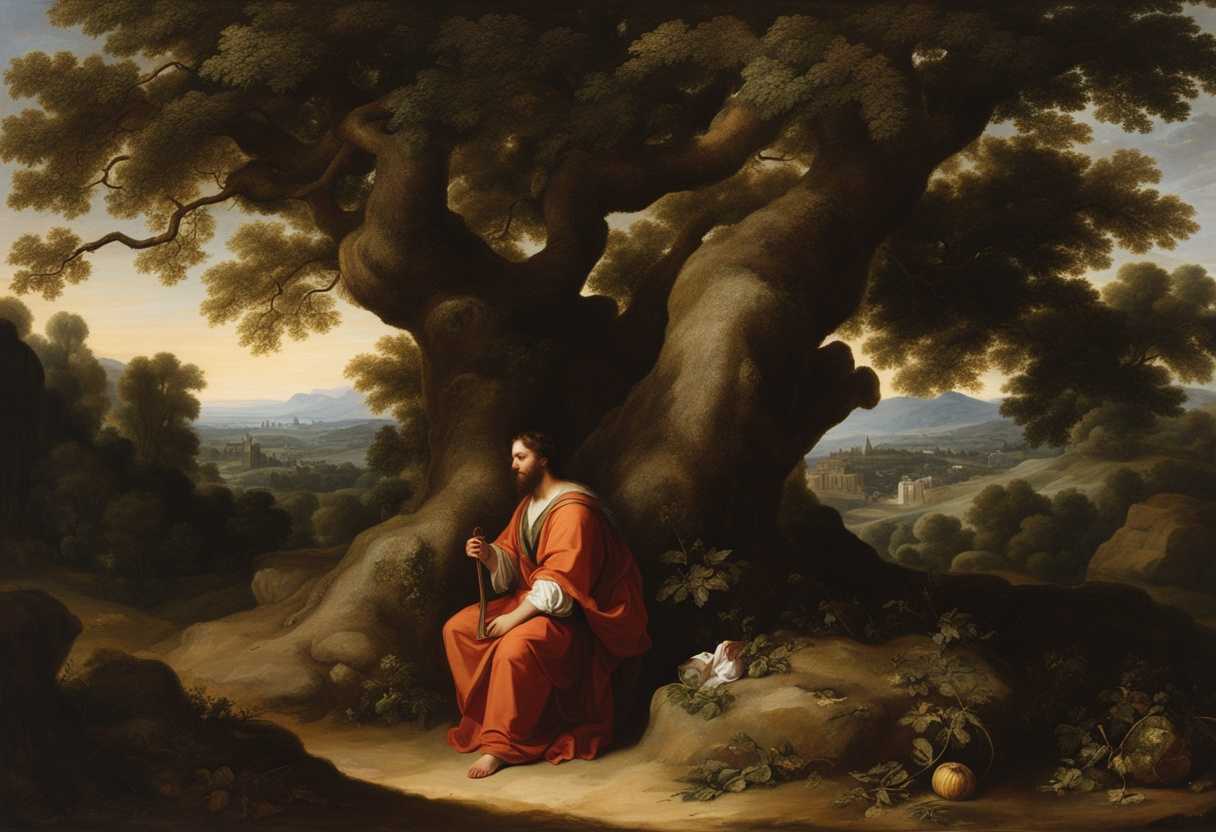
6 Abram passed through the land to the place at Shechem, to the oak of Moreh. At that time the Canaanites were in the land.
Setting the Scene for Genesis 12:6
In Genesis chapter 12, we find Abram, later known as Abraham, at a crucial moment in his life. Following God’s command, Abram sets out from his homeland with his wife Sarai and his nephew Lot. They leave behind the familiar sights and sounds of Haran, embarking on a journey to the land of Canaan. As they traverse the rugged terrain, the sun beats down on them, casting long shadows across the dusty path.
Finally, they arrive at the oak of Moreh in Shechem. The ancient oak tree stands tall and majestic, providing shade and respite for the weary travelers. Surrounded by the lush greenery of the region, Abram pauses to reflect on the significance of this moment. It is here, under the sprawling branches of the oak tree, that God appears to Abram once more, reaffirming His promise to bless him and make his descendants into a great nation. In this sacred setting, with the rustling leaves overhead and the gentle breeze whispering through the branches, Abram’s faith is tested and strengthened as he continues to follow God’s leading into the unknown.
What is Genesis 12:6 about?
Abram, who later becomes known as Abraham, embarks on a journey to the land of Canaan in this verse. It is a significant moment in the history of faith, as God promises this land to Abram and his descendants. This promise shows God’s faithfulness and his plan to establish a covenant with Abram’s descendants.
Think about the courage and faith Abram must have had to leave his homeland and go to a place he did not yet possess, solely based on God’s promise. This verse teaches us about trust, obedience, and the importance of following God’s guidance even when we may not fully understand where it will lead us. It prompts us to reflect on our own journeys of faith and how we respond to God’s promises in our lives. How can we emulate Abram’s faith and trust in God’s plan for us, even when the path ahead may seem uncertain?
Understanding what Genesis 12:6 really means
Structure of the Commentary
- Context and Background
- Detailed Analysis of Key Phrases
- Cross-References with Other Biblical Passages
- Relevance to Modern Readers
- Anecdotal Illustration
- Invitation to Reflection
Context and Background
Genesis 12:6 details a moment during Abram’s journey to the land that God promised to him and his descendants. This setting marks a significant point in the narrative, as Abram begins to explore the land of Canaan, moving with anticipation and faith in God’s promises. Understanding this backdrop is crucial because it emphasizes themes of faith, obedience, and divine direction.
Detailed Analysis of Key Phrases
The passage mentions “the oak of Moreh,” a specific location within Shechem. This place is significant for several reasons. “Shechem” later becomes a central city in Israelite history, and the “oak of Moreh” suggests a place of teaching or divine revelation. The phrase might invoke curiosity: Why this specific location? Moreh means “teacher,” indicating this place could be a source of divine wisdom or instruction.
The verse also states, “At that time the Canaanites were in the land.” This phrase sets the historical context, indicating that the land was not empty but inhabited by a people. This fact foreshadows future conflicts and the eventual possession of the land by Abram’s descendants. It’s a reminder of God’s promises that often involve complexities and challenges.
Cross-References with Other Biblical Passages
Joshua 24:1 references Shechem as the place where Joshua assembled all the tribes of Israel, reinforcing its importance. Similarly, Deuteronomy 11:30 mentions the oaks of Moreh in connection with blessings and curses, indicating a place of significant covenantal events.
Relevance to Modern Readers
Even today, the themes encapsulated in this verse resonate deeply. We often find ourselves journeying through “unknown lands” in life—perhaps moving to a new city, starting a new job, or facing unexpected challenges. Like Abram, our path might be filled with existing “inhabitants,” symbolizing the obstacles that can stand in our way. The message here is of faith and trust in God’s plan, even amid uncertainty and difficulty. A young family I knew decided to relocate to a different country. With unfamiliar customs and language barriers, they faced significant challenges. Yet, they felt divinely guided to make this move and trusted in God’s plan. Over time, they found community, purpose, and blessings that they hadn’t anticipated. Their story parallels Abram’s journey and serves as a modern example of faith and perseverance. Delve into the deeper meanings of Genesis 12:6 as we consider your own life journey. What are the “lands” God is guiding you to? What challenges do you face that seem like “Canaanites” in your life? Reflect on how faith and trust in God’s promises can help you navigate these uncharted territories. How does knowing the historical and biblical significance of places like Shechem and the oak of Moreh enhance your understanding of God’s continuous narrative in your life? Let’s draw strength and encouragement from Abram’s journey by embracing these reflections, understanding that every step guided by faith is a step towards the fulfillment of divine promises.
Why does God sometimes ask us to leave our comfort zones?
God may ask us to leave our comfort zones in order to fulfill His plans for our lives. Moving out of our familiar environment and routines can help us grow spiritually, deepen our faith, and develop a greater dependence on God. By stepping out in faith and trusting in His guidance, we open ourselves up to new opportunities and experiences that can ultimately lead to blessings beyond what we can imagine.
Leaving our comfort zones can also be a way for God to refine our character and strengthen our resolve. It challenges us to rely on His strength and provision, teaching us to be more courageous, resilient, and reliant on His leading. Although it may be intimidating or difficult at times, stepping out in faith ultimately allows us to experience the fullness of God’s purposes for our lives and brings glory to Him in the process.
Application
Imagine your job asks you to relocate for a dream position, or you’re making tough choices for your family. Just like Abram in Genesis 12:6, sometimes life calls for bold steps into the unknown. Reflect on how God might be pushing you to new heights. Are you ready to leave your comfort zone and trust in a bigger plan? What secure ground do you need to depart from today? Can you take that leap of faith right now?

Reverend Michael Johnson is an experienced Church Minister with a profound expertise in spirituality and guidance. With a serene presence and a compassionate heart, he has faithfully served his congregation for over 20 years, leading them on a spiritual journey towards inner peace and enlightenment. Reverend Johnson’s extensive knowledge of religious philosophies and profound understanding of human nature have made him a trusted confidant and mentor to many, as he seamlessly weaves his profound wisdom into life teachings. Reverend Johnson’s calming demeanor and empathetic nature continue to uplift and heal souls, nurturing a sense of unity and tranquility within his community.