
7 Then the Lord appeared to Abram and said, “To your offspring I will give this land.” So he built there an altar to the Lord, who had appeared to him.
8 From there he moved to the hill country on the east of Bethel and pitched his tent, with Bethel on the west and Ai on the east. And there he built an altar to the Lord and called upon the name of the Lord.
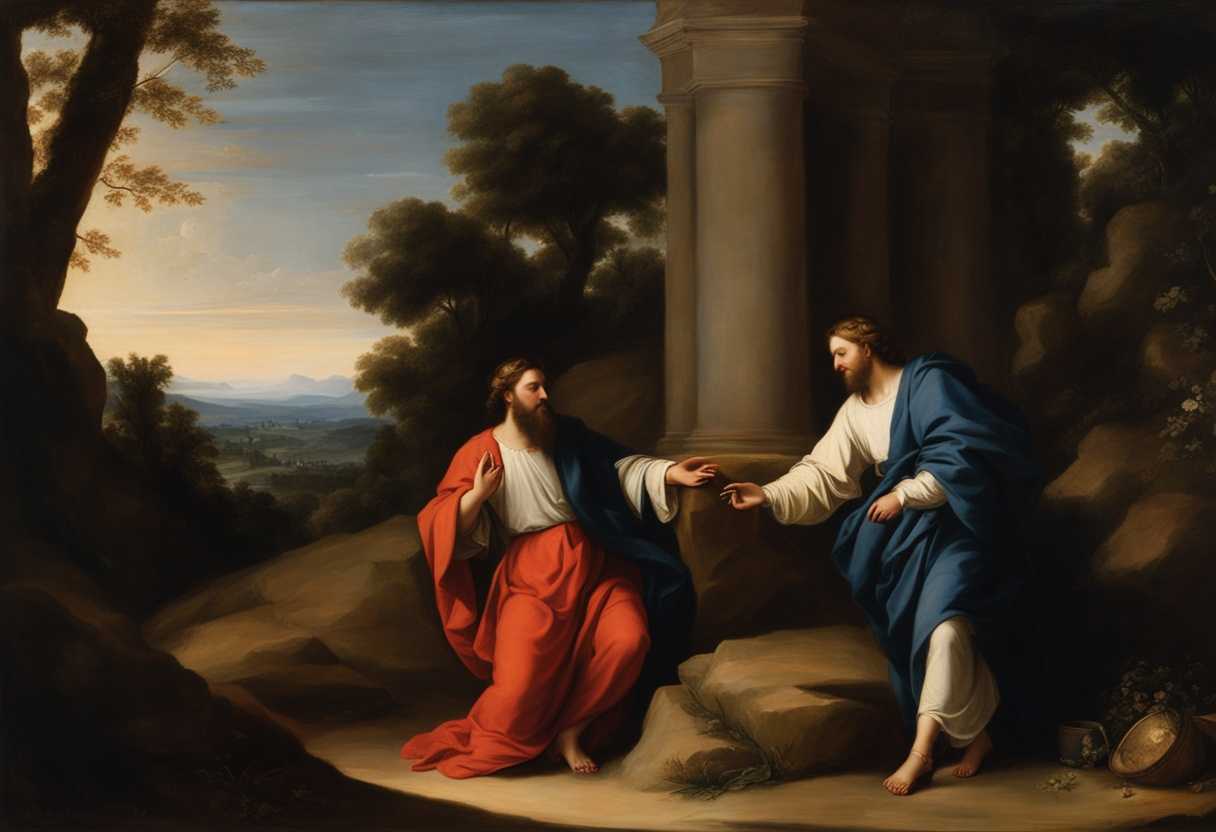
Setting the Scene for Genesis 12:7-8
In Genesis chapter 12, we find Abram (later known as Abraham) at a pivotal moment in his life. God has called him to leave his homeland and journey to a new land that God will show him. In this particular scene, Abram has just arrived in the land of Canaan with his wife Sarai (later known as Sarah) and his nephew Lot. They have traveled a long and arduous journey, leaving behind everything they knew to follow God’s command.
As they set up camp in the unfamiliar land, the sun begins to set, casting a warm golden glow over the rolling hills and valleys of Canaan. The air is filled with the sounds of birds chirping and the rustling of leaves in the gentle breeze. Abram stands outside his tent, gazing out at the vast expanse before him, contemplating the promise that God has made to him – that his descendants will inherit this land.
In this moment, Abram builds an altar to the Lord, a symbol of his faith and dedication to the God who has called him. As the flames of the altar flicker in the fading light, Abram and his family bow their heads in prayer, giving thanks for the journey thus far and seeking God’s guidance for the path ahead. It is a scene of faith, obedience, and trust in the promises of God, setting the stage for the incredible journey that Abram and his descendants will undertake.
What is Genesis 12:7-8 about?
Abram’s action of building an altar to the Lord in Canaan symbolizes his deep faith and reverence towards God in this verse. Abram is not only expressing his devotion and worship but also establishing a physical place for his spiritual connection with the divine by constructing this altar. The act of building an altar has significant spiritual connotations as it denotes offering oneself to God, seeking forgiveness, or expressing gratitude. It shows that Abram acknowledges the presence and power of the Lord in his life and is committed to honoring and serving Him.
Through this verse, we can reflect on the importance of creating sacred spaces in our own lives for worship and prayer. Just as Abram built an altar to the Lord, we too can carve out moments in our daily routines to connect with the divine, show our reverence, and seek guidance. It prompts us to ponder on how we can cultivate a deeper spiritual relationship with God and how we can demonstrate our faith through tangible actions. So, let’s take inspiration from Abram’s example and consider how we can build our own altars in our hearts and lives to honor and worship the Lord.
Understanding what Genesis 12:7-8 really means
Abram, soon to be known as Abraham, stands at the inception of a profound relationship with God in Genesis 12:7-8, underscoring not only the biblical narrative but also the ethos of faith, obedience, and promise that permeates the lives of believers today. Let’s delve deeper into the significance of these verses and their implications for us in the contemporary world.
The first aspect to consider is the appearance of the Lord to Abram and the subsequent promise made to him, that his offspring would inherit the land. This moment marks a divine endorsement of Abram’s journey, begun in faith. It’s essential to ponder, why does God choose to appear at this particular moment? It highlights a theme that resonates deeply throughout the Bible: God reveals Himself and His plans at pivotal moments in human history—moments that often require a leap of faith. How does the theme of divine revelation inspire you in moments of uncertainty in your own life? God’s promise to Abram establishes a covenantal relationship that is foundational to the narrative of the Scriptures and to understanding our own relationship with God. Like Abram, we are often called to step out in faith, relying on God’s promises even when the path is unclear. Reflect on moments when you felt called to a path that seemed undefined and how the assurance of God’s presence provided comfort.
Abram’s response to God’s revelation is equally instructive. Upon receiving God’s promise, he builds an altar, which serves as a physical representation of his faith and obedience. This action is a powerful example of how believers should respond to God’s revelations with worship and thanksgiving. How often do we pause to acknowledge God’s workings in our lives through our own “altars” of gratitude and commitment?
Moving from there to the locations mentioned, between Bethel and Ai, where Abram built another altar and called upon the Name of the Lord, we see a demonstration of continuous faithfulness. This spreading of faith practices geographically signifies the spreading of God’s promise and Abram’s acknowledgment of God’s lordship over all places. It’s a reminder to believers that our worship and acknowledgment of God should permeate every aspect of our lives. How does this influence the way you practice your faith both in private and in public? These verses resonate as a call to remember and act upon the promises of God in today’s context. Every believer walking a path of faith encounters moments of both promise and testing. Abram’s journey from receiving promises to establishing altars of worship models a path of active faith that seeks to glorify God in every aspect of life. It’s a poignant reminder that our response to God’s revelations can, and should, transform us, drawing us closer in our relationship with Him.
Finally, the narrative invites you, the reader, to consider your own ‘Bethel’ or ‘Ai’—places or situations in life where you might need to build your altar of faith, recommitting to trust and follow God’s lead. How will you respond to God’s promises and presence in your life today?
How can we follow God’s guidance in uncertainty?
We can seek guidance from God in times of uncertainty by focusing on his promises and trusting in his faithfulness. Just as God spoke to Abram in Genesis 12:7-8 and directed him to a new land, we can also listen for God’s voice through prayer, meditation, and studying the Scriptures. We can align our own decisions with God’s plans for us by staying close to Him and seeking His will.
Furthermore, we can look to the example of Abram’s response – he built an altar to the Lord as an act of worship and gratitude. We can also demonstrate our faith and trust in God by worshipping, thanking Him for His guidance, and committing our ways to Him in times of uncertainty. Through these actions, we acknowledge God’s sovereignty and invite His presence into our lives to lead us on the right path.
Lastly, we can keep our hearts and minds open to God’s leading, even when the way forward may not be immediately clear. We can gain clarity and wisdom to navigate uncertainty with confidence by holding fast to our faith and seeking a deeper relationship with God, knowing that God is with us every step of the way.
Application
Imagine your life as a blueprint, with spaces marked for career milestones and family gatherings. Now, envision adding a special feature—a dedicated altar, not of stone, but of moments and intentions, where you pause to connect with God amidst the rush. Just as Abram built altars wherever he went as a sign of trust and commitment, you too can construct spiritual landmarks in your daily routine. Whether it’s a morning prayer or a quiet moment of gratitude at night, these are your pillars that honor God’s presence. How will you craft these sacred spaces to keep your faith vibrant and visible in your everyday world? What new commitments will you make to show your dedication? Isn’t it time to start building?

Reverend Michael Johnson is an experienced Church Minister with a profound expertise in spirituality and guidance. With a serene presence and a compassionate heart, he has faithfully served his congregation for over 20 years, leading them on a spiritual journey towards inner peace and enlightenment. Reverend Johnson’s extensive knowledge of religious philosophies and profound understanding of human nature have made him a trusted confidant and mentor to many, as he seamlessly weaves his profound wisdom into life teachings. Reverend Johnson’s calming demeanor and empathetic nature continue to uplift and heal souls, nurturing a sense of unity and tranquility within his community.