
14 The Lord said to Abram, after Lot had separated from him, “Lift up your eyes and look from the place where you are, northward and southward and eastward and westward,
15 for all the land that you see I will give to you and to your offspring forever.
16 I will make your offspring as the dust of the earth, so that if one can count the dust of the earth, your offspring also can be counted.
17 Arise, walk through the length and the breadth of the land, for I will give it to you.”
18 So Abram moved his tent and came and settled by the oaks of Mamre, which are at Hebron, and there he built an altar to the Lord.
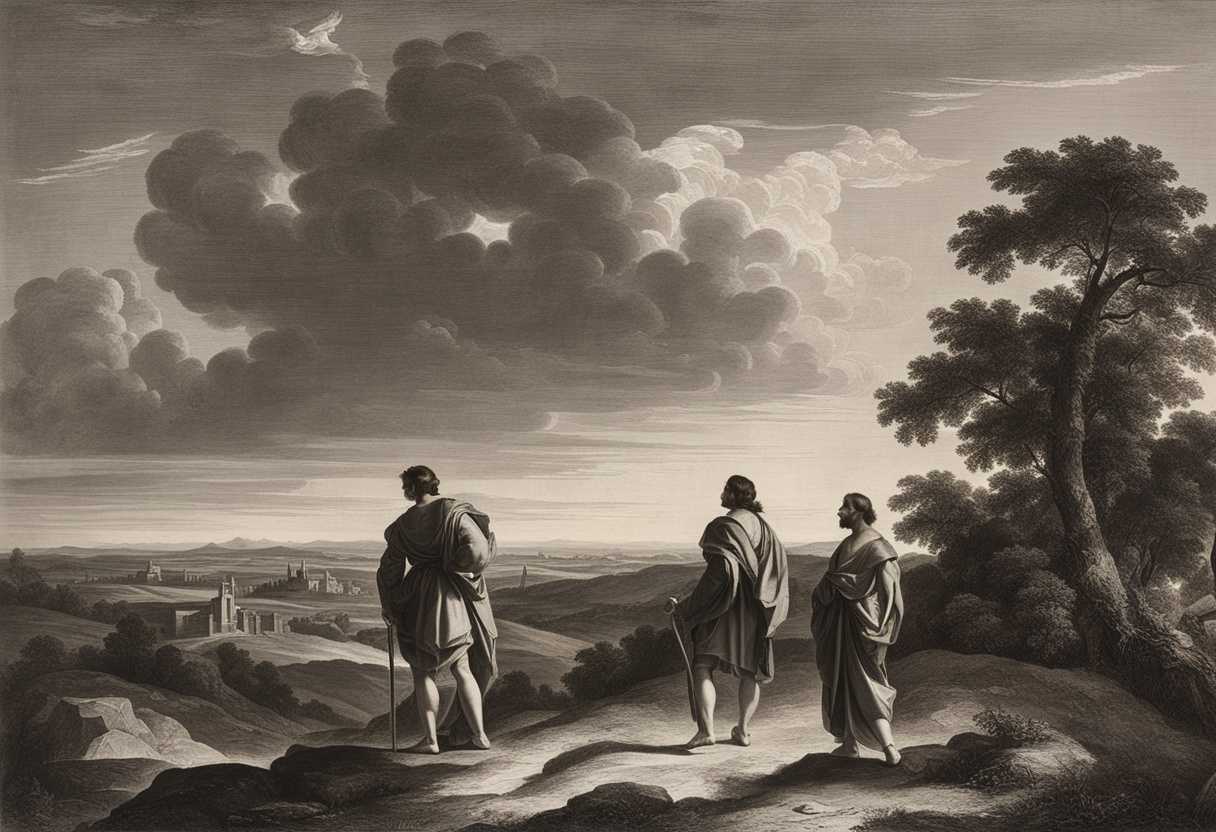
Setting the Scene for Genesis 13:14-18
In Genesis chapter 13, we find Abram (later known as Abraham) and his nephew Lot standing in the land of Canaan. They had just returned from Egypt where they had temporarily sought refuge due to a famine in the land. As they stood there, Abram, being the elder and the one chosen by God, gave Lot the choice of which part of the land he wanted to settle in. Lot looked towards the lush Jordan Valley and chose it for himself, leaving Abram to dwell in the rest of the land.
The scene is set in the early evening, with the golden rays of the setting sun casting a warm glow over the landscape. The land of Canaan is vast and stretches out before them, with its rolling hills and fertile valleys. In the distance, the Jordan River can be seen winding its way through the valley, providing water and sustenance to the land. As Abram and Lot stand there, making their decision, a sense of peace and tranquility fills the air, a reminder of God’s promise to bless Abram and his descendants in this land.
What is Genesis 13:14-18 about?
Both a promise and a response are seen in this verse. God promises Abram land and descendants, a pledge that is significant not only for Abram but for all his future descendants. This promise is a foundational moment in the relationship between God and Abram, setting the stage for the fulfillment of a grand plan that will impact generations to come. It signifies God’s faithfulness and provision, offering a sense of security and purpose to Abram and his descendants.
Abram’s immediate response to this promise is to build an altar to worship God. This act of worship symbolizes Abram’s recognition of God’s sovereignty and generosity, his gratitude for the promise made, and his desire to honor and connect with God. It serves as a reminder that true faith involves not just receiving blessings but also responding with reverence and thanksgiving. Through Abram’s example, we are reminded of the importance of acknowledging God’s presence and faithfulness in our lives, and the significance of expressing our gratitude and devotion through acts of worship. God invites us to consider the promises He has made to us personally and as a community of believers as we reflect on this verse. How do we respond to these promises? Are we quick to offer worship and praise, like Abram, or do we sometimes take God’s blessings for granted? Abram’s example inspires us to worship God wholeheartedly, trusting in His faithfulness, and expressing our gratitude through our actions and words.
Understanding what Genesis 13:14-18 really means
Structure for Commentary:
- Introduction and Context
- Key Phrases and Detailed Explanation
- Cross-Referencing with Other Scriptures
- Relevance to Contemporary Life
- Anecdotal Illustration
- God speaks to Abram in this passage, reaffirming His promise after Lot has separated from him. This segment is pivotal in the story of Abram as it highlights God’s covenant and the future He has in store for Abram and his descendants. Let’s delve deeper into what this means for both Abram and us.
Key Phrases and Detailed Explanation
One of the key phrases here is “Lift up your eyes and look from the place where you are.” This directive isn’t just about physical sight but about enlarging Abram’s vision for his future. God is urging Abram to see beyond his current circumstances. This connection between vision and faith is recurrent in the Bible and crucial for spiritual growth.
Another significant phrase is, “I will make your offspring as the dust of the earth.” This metaphorical language emphasizes not just the multitude but the uncountability of Abram’s descendants, illustrating the vastness of God’s promise. The image of dust is powerful—it’s omnipresent and integral to the earth, drawing a parallel to how Abram’s lineage will be woven into the fabric of human history.
Cross-Referencing with Other Scriptures
This promise to Abram is echoed throughout the Bible and finds further affirmation in Genesis 15:5 where God tells Abram to “count the stars, if you can,” again emphasizing the immensity of His promise. The verse in Hebrews 11:12 reiterates the faithfulness of God’s promise, stating that Abram’s offspring are “as numerous as the stars in the sky and as countless as the sand on the seashore.”” These cross-references underscore the consistency and reliability of God’s word.
Relevance to Contemporary Life
Today, this passage reminds us that God’s promises transcend time. Just as Abram was called to trust and venture into an uncertain future, we too are called to have faith in God’s plans for us. When faced with uncertainties, remembering that God’s vision for our lives is broader and more encompassing than our own can provide immense solace and encouragement. Sarah, a young artist, struggled with recognitions. She felt disheartened because her art didn’t receive much attention. Sarah’s mentor reminded her of Abram’s story, emphasizing that vision and patience are key. Inspired, Sarah continued her work, and over time, her dedication paid off, leading to a breakthrough exhibition. This reflects how God’s plans often require us to look beyond our immediate circumstances, trusting that our current struggles can lead to future blessings.
Concluding Thoughts and Questions for Reflection
Genesis 13:14-18 is a powerful reminder of God’s enduring promises and the importance of lifting our eyes to envision a future filled with His blessings. We might ask ourselves, “In what areas of my life am I being called to trust in God’s broader vision?” as we reflect on this passage.” and “How can I be more patient and faithful in waiting for God’s promises to unfold? We all are on a journey of faith, just like Abram. Let’s encourage one another to keep our hearts and minds open to the expansive plans God has prepared for us. How might you lift your eyes today and see the promise God has laid before you?
What is the significance of the land promised by God?
The promised land in this passage symbolizes God’s faithfulness and provision to His people. It represents a place of blessing and fulfillment of His promises. God is showing His commitment to take care of Abraham and his descendants by promising this land to them, giving them a place where they can thrive and prosper. The promised land also carries a deeper spiritual significance. It is a foreshadowing of the ultimate promised land in heaven, where God’s people will dwell in His presence for eternity. Just as the physical land was a place of rest and abundance for the Israelites, the promised land points to the rest and fulfillment that believers will experience in the eternal kingdom of God. God’s sovereignty and faithfulness are ultimately testified to in the promised land in Genesis 13. It underscores His covenant with His people and His desire to provide for and bless them. It serves as a reminder that God keeps His promises and that His plans for His people are good and secure.
Application
Think of God’s guidance as your GPS through life’s chaos, similar to how it directed Abram’s journey. Trusting in His plan is like believing in a mentor’s wisdom at work or the love of a family member steering you right. Your life, just like Abram’s, has a bigger purpose mapped out. Will you take the leap and follow the path laid out for you? How will you show your faith in God’s promises today?

Reverend Michael Johnson is an experienced Church Minister with a profound expertise in spirituality and guidance. With a serene presence and a compassionate heart, he has faithfully served his congregation for over 20 years, leading them on a spiritual journey towards inner peace and enlightenment. Reverend Johnson’s extensive knowledge of religious philosophies and profound understanding of human nature have made him a trusted confidant and mentor to many, as he seamlessly weaves his profound wisdom into life teachings. Reverend Johnson’s calming demeanor and empathetic nature continue to uplift and heal souls, nurturing a sense of unity and tranquility within his community.