
Genesis 13:5-18 is about Abraham and Lot choosing to separate to avoid conflict and trusting in God’s promise of land and descendants, illustrating the importance of faith, humility, and obedience in relationships and destiny.
5 Now Lot, who went with Abram, also had flocks and herds and tents,
6 The land could not support both of them dwelling together; for their possessions were so great that they could not dwell together,
7 And there was strife between the herdsmen of Abram’s livestock and the herdsmen of Lot’s livestock. At that time the Canaanites and the Perizzites were dwelling in the land.
8 Then Abram said to Lot, “Let there be no strife between you and me, and between your herdsmen and my herdsmen, for we are kinsmen.
9 Is not the whole land before you? Separate yourself from me. If you take the left hand, then I will go to the right, or if you take the right hand, then I will go to the left.”
10 And Lot lifted up his eyes and saw that the Jordan Valley was well watered everywhere like the garden of the Lord, like the land of Egypt, in the direction of Zoar. (This was before the Lord destroyed Sodom and Gomorrah.)
11 So Lot chose for himself all the Jordan Valley, and Lot journeyed east. Thus they separated from each other.
12 Abram settled in the land of Canaan, while Lot settled among the cities of the valley and moved his tent as far as Sodom.
13 Now the men of Sodom were wicked, great sinners against the Lord.
14 The Lord said to Abram, after Lot had separated from him, “Lift up your eyes and look from the place where you are, northward and southward and eastward and westward,
15 for all the land that you see I will give to you and to your offspring forever.
16 I will make your offspring as the dust of the earth, so that if one can count the dust of the earth, your offspring also can be counted.
17 Arise, walk through the length and the breadth of the land, for I will give it to you.”
18 So Abram moved his tent and came and settled by the oaks of Mamre, which are at Hebron, and there he built an altar to the Lord.
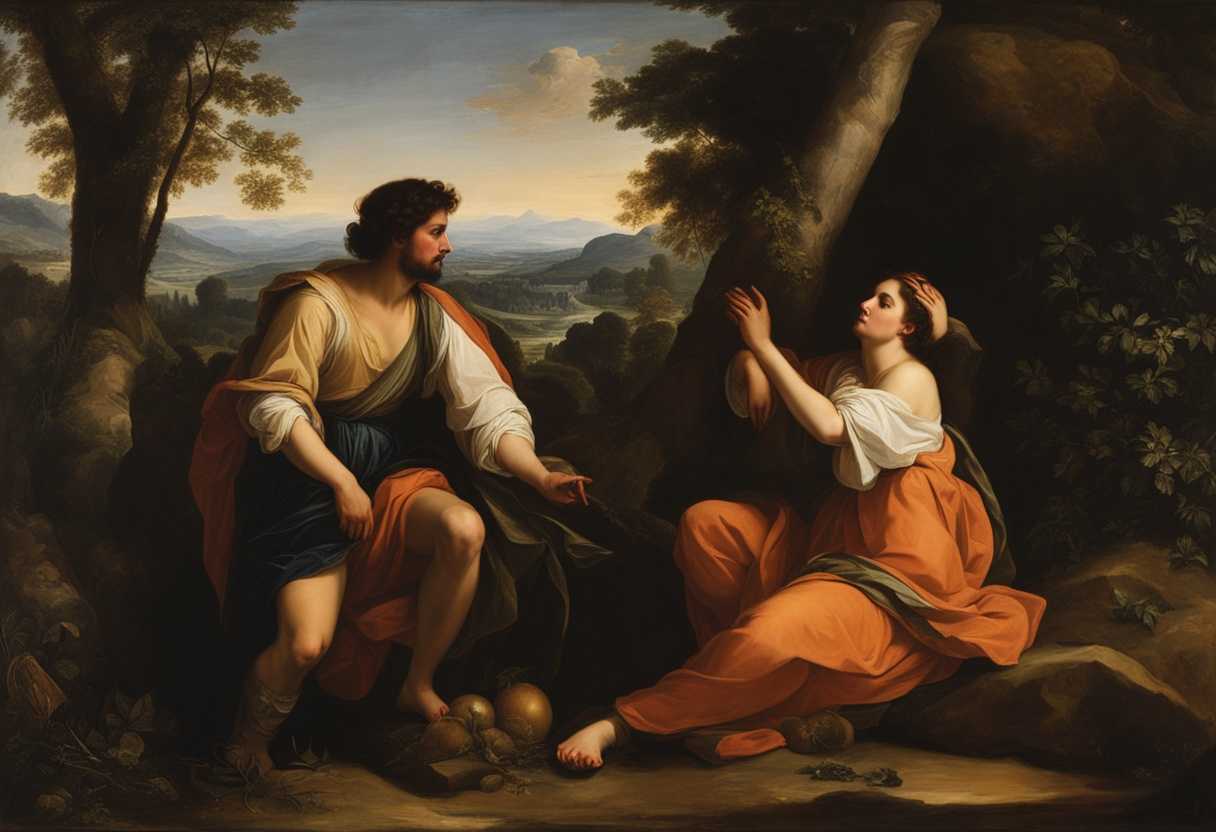
Setting the Scene for Genesis 13:5-18
In Genesis chapter 13, we find Abram (later known as Abraham) and his nephew Lot standing in the land of Canaan. The scene unfolds as they both have accumulated wealth in terms of livestock, silver, and gold. The land could not support both of their possessions, as they had so many that they could not dwell together. This led to disputes between Abram’s herdsmen and Lot’s herdsmen.
To resolve the conflict, Abram suggests to Lot that they separate and gives him the choice of which direction he would like to go. Lot looks up and sees the well-watered plain of the Jordan, which was lush and fertile, resembling the garden of the Lord. Lot chooses this area for himself and moves eastward, parting ways with Abram. After Lot’s departure, God speaks to Abram, promising to give him all the land he sees to him and his descendants forever.
The setting is a vast and open plain in Canaan, with the sun setting in the distance, casting a warm glow over the land. The air is filled with the sounds of bleating sheep and lowing cattle as the two men stand facing each other, contemplating their next steps. The bond between uncle and nephew is evident, but the need for separation is clear. As Lot sets off towards the Jordan, Abram remains standing, looking out over the land that God has promised to him and his descendants.
What is Genesis 13:5-18 about?
When Abram and Lot decided to part ways, it was not only a physical separation but also a symbolic one. They were separating their possessions and families, but more importantly, they were going their own ways in life. This decision marked a crucial point in Abram’s journey of faith and growth. It required a great deal of trust and courage to let go and move forward into the unknown. Abram settled in Canaan after parting ways with Lot, signifying a new chapter in his life. Canaan was the land that God had promised to him and his descendants. This act of obedience and faith by Abram showed his willingness to trust in God’s promises and guidance. It serves as a reminder that sometimes we need to let go of certain things in order to fully embrace the blessings that God has in store for us.
So, as we reflect on Abram’s story, we are reminded of the importance of trusting in God’s plan and timing, even when it requires us to step out of our comfort zone or let go of certain things. Just like Abram, may we have the courage to follow where God leads us and have faith that His promises will be fulfilled in our lives.
Understanding what Genesis 13:5-18 really means
In Genesis 13:5-18, we witness a pivotal moment in the lives of Abram and Lot, where their growing prosperity leads to a potential conflict between their herdsmen. Abram, displaying humility and faith in God’s provision, offers Lot the first choice of land to prevent strife. This act of selflessness not only showcases Abram’s character but also underscores the importance of maintaining harmonious relationships in the face of material wealth.
Abram’s words, “Let there be no strife, I pray thee, between me and thee,” resonate with a timeless message of seeking peace and unity over discord. His willingness to prioritize peace over personal gain sets a profound example for us all, urging us to value relationships above possessions. Similarly, his generous offer to Lot, “Is not the whole land before thee?” reflects a deep trust in God’s promise and a readiness to let go of earthly treasures for the sake of peace.
God’s command to Abram to survey the land, “Lift up now thine eyes, and look from the place where thou art,” symbolizes the vastness of God’s blessings and promises. This directive serves as a reminder of the abundance that comes from trusting in God’s provision and following His guidance. It prompts us to consider the limitless possibilities that unfold when we place our faith in Him.
Drawing parallels from related biblical passages such as Matthew 5:9, Hebrews 11:8-10, and Proverbs 3:5-6, we find a consistent theme of faith, obedience, and trust in God’s wisdom. These verses echo Abram’s actions and highlight the enduring relevance of his story in guiding believers to prioritize humility, faith, and peace in their lives. The narrative of Abram and Lot serves as a beacon of light in a world often clouded by self-interest and competition, reminding us of the enduring value of humility and trust in God’s plan.
In applying the lessons from Abram’s story to contemporary scenarios, we can envision transformative outcomes. Imagine two business partners at odds over a crucial decision. Inspired by Abram’s example, one partner selflessly offers the other the opportunity to choose the path forward, prioritizing their relationship over individual gain. This act of humility and faith not only resolves the conflict but also strengthens their partnership, leading to greater success in the long run.
In conclusion, the account of Abram and Lot encapsulates profound truths about faith, humility, and peace. By emulating Abram’s trust in God’s promises and his willingness to prioritize relationships over material possessions, we can unlock the fullness of God’s provision and guidance in our lives. Let us heed the timeless wisdom of this narrative, embracing a life marked by faith, humility, and a commitment to fostering peace and unity in all our interactions.
What does it mean to live by faith?
Living by faith means trusting in God’s promises and guidance even when we may not fully understand or see the outcome. It involves having confidence in God’s faithfulness and believing that He will fulfill His promises in His perfect timing. We demonstrate a reliance on God rather than on our own understanding or abilities by living in faith.
Living by faith also requires obedience and willingness to follow God’s leading, even when it may not make complete sense to us at the time. It involves stepping out in obedience without knowing all the details or how things will unfold, trusting that God will provide what is needed and work all things for our good. Living by faith ultimately demonstrates a deep dependence on God and a commitment to trust Him in all circumstances and decisions of life.
Application
In a world filled with competition and individualism, it’s crucial to remember the value of unity and harmony. Let’s take inspiration from the story of Abraham and Lot, putting aside our greed and embracing cooperation. By prioritizing peace over possessions, we can build stronger bonds in our modern families and workplaces. Will you join me in choosing humility and collaboration over selfishness and division today?

Reverend Michael Johnson is an experienced Church Minister with a profound expertise in spirituality and guidance. With a serene presence and a compassionate heart, he has faithfully served his congregation for over 20 years, leading them on a spiritual journey towards inner peace and enlightenment. Reverend Johnson’s extensive knowledge of religious philosophies and profound understanding of human nature have made him a trusted confidant and mentor to many, as he seamlessly weaves his profound wisdom into life teachings. Reverend Johnson’s calming demeanor and empathetic nature continue to uplift and heal souls, nurturing a sense of unity and tranquility within his community.