
Genesis 13:8-9 is about Abraham’s generous and selfless decision to allow Lot to choose the land he desired, showing his faith in God’s provision and prioritizing harmony over material gain.
8 Then Abram said to Lot, “Let there be no strife between you and me, and between your herdsmen and my herdsmen, for we are kinsmen.
9 Is not the whole land before you? Separate yourself from me. If you take the left hand, then I will go to the right, or if you take the right hand, then I will go to the left.”
Setting the Scene for Genesis 13:8-9
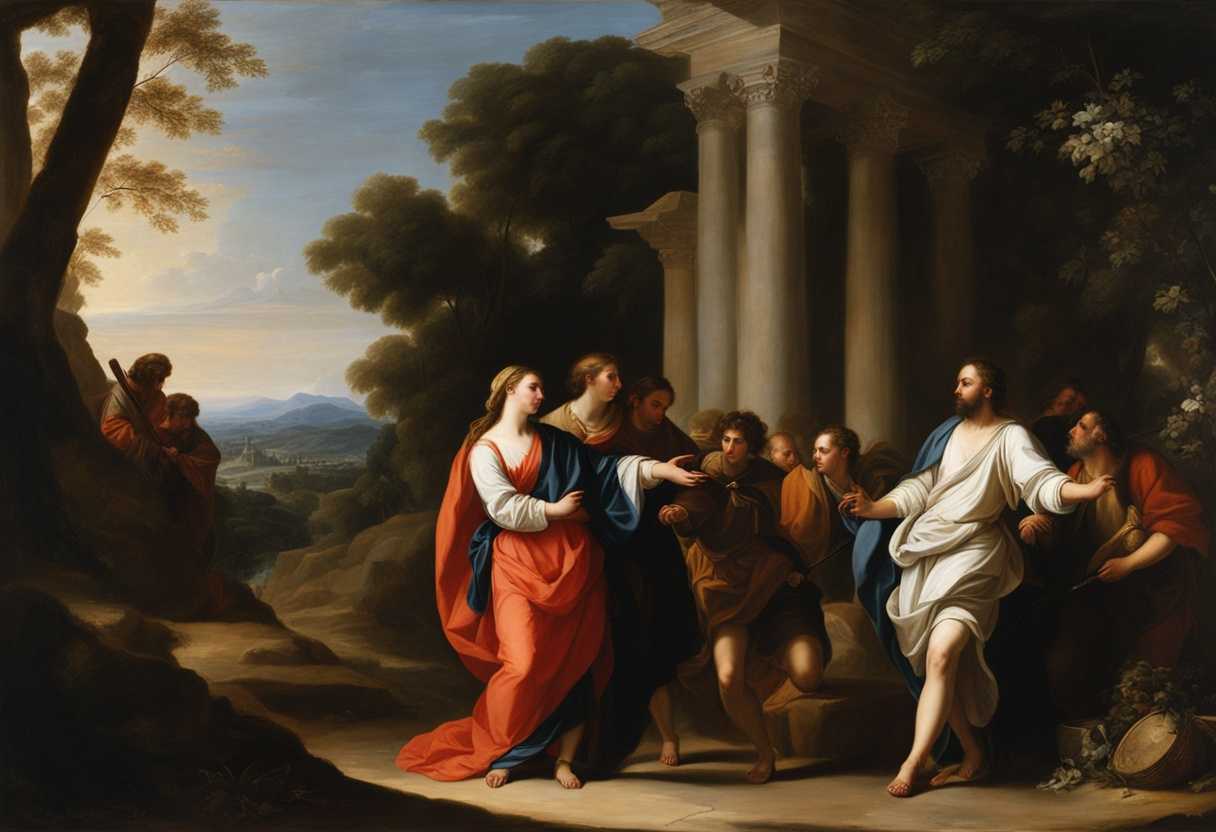
In Genesis chapter 13, we find Abram (later known as Abraham) and his nephew Lot standing in the land of Canaan. The scene unfolds as they both realize that the land could not support the large herds and flocks that they each possessed. As a result, disputes arose between Abram’s herdsmen and Lot’s herdsmen over grazing rights and resources.
Abram, being the elder and wise patriarch, approaches Lot to resolve the conflict peacefully. He suggests that they part ways to prevent any further strife between their households. Abram generously gives Lot the first choice of the land, offering him the opportunity to choose which direction he would like to go. Lot, seeing the lush Jordan Valley, decides to move eastward and settles near the city of Sodom.
The setting is a vast and fertile land, with rolling hills and valleys stretching out before them. The sun is setting, casting a warm golden glow over the landscape as Abram and Lot stand facing each other, making a pivotal decision that will shape their futures. This moment marks a significant turning point in their relationship and sets the stage for the journeys and trials that lie ahead for both men.
What is Genesis 13:8-9 about?
Abraham and Lot choose to part ways in order to prevent conflict between their herdsmen, displaying a powerful sense of humility and peace in this verse. Abraham exemplifies the virtue of humility by prioritizing harmony over pride or self-interest. Instead of insisting on his own way or allowing disputes to escalate, he values peace and unity within his family.
This moment serves as a poignant reminder that conflict can often be avoided through selflessness and understanding. Abraham’s willingness to sacrifice his own desires for the greater good not only preserves peace within his family but also sets a positive example for future generations. Through his actions, we are encouraged to consider the well-being of others and strive for harmony in our relationships. We are challenged to examine our own attitudes towards conflict and consider how we can embody the principles of humility and peace in our interactions with others by reflecting on this verse. How can we prioritize unity over personal gain? What steps can we take to prevent discord and promote understanding in our own relationships? We meditate on the lessons found in this verse, inspiring us to follow Abraham’s example of humility and create a more harmonious world around us.
Understanding what Genesis 13:8-9 really means
In the narrative of Abram and Lot, we witness a poignant display of conflict resolution and humility. As their herdsmen quarreled over land, Abram, recognizing the significance of peace, proposed a solution to his nephew. “Let there be no strife, I pray thee, between me and thee, and between my herdmen and thy herdmen; for we be brethren.” In these words, Abram underscores the value of unity, especially among family members who share a common heritage. The term “brethren” not only highlights their familial bond but also emphasizes the importance of maintaining harmony.
Abram’s next statement showcases his remarkable humility and generosity. He offers Lot the first choice of land, stating, “Is not the whole land before thee? Separate thyself, I pray thee, from me: if thou wilt take the left hand, then I will go to the right; or if thou depart to the right hand, then I will go to the left.” This act of selflessness sets a profound example of prioritizing others’ needs above one’s own desires. Abram’s willingness to relinquish control and allow Lot to choose demonstrates a rare level of humility and a commitment to peace.
The parallels between Abram’s actions and biblical teachings are striking. In Matthew 5:9, we are reminded, “Blessed are the peacemakers, for they shall be called the children of God.” This beatitude echoes Abram’s pursuit of peace and his efforts to avoid conflict. Similarly, in Philippians 2:3-4, Paul advises, “Do nothing out of selfish ambition or vain conceit. Rather, in humility value others above yourselves.” This counsel aligns perfectly with Abram’s conduct, emphasizing the virtues of humility and selflessness.
In today’s world, characterized by strife and discord, Abram’s example remains profoundly relevant. His actions teach us the enduring value of seeking peace and prioritizing relationships over material possessions. The principle of selflessness and humility, exemplified by Abram, transcends time and finds application in various spheres of life, from family dynamics to workplace interactions.
Imagine a contemporary scenario in a workplace where two colleagues vie for a promotion. Instead of fostering rivalry, one colleague, recognizing the strengths of the other, steps back and supports their peer’s advancement. This act of humility not only strengthens their relationship but also fosters a more harmonious work environment. It mirrors Abram’s willingness to let Lot choose first, illustrating that true leadership and strength often lie in prioritizing peace and the well-being of others.
In conclusion, Abram’s actions in Genesis 13:8-9 serve as a compelling reminder of the significance of peace, humility, and selflessness. By following his example and placing others first, we can cultivate stronger, more compassionate communities where conflicts are resolved with grace and unity is cherished above all.
What should guide our decisions: selflessness or selfishness?
The story in Genesis 13:8-9 shows us the importance of selflessness in making decisions. Abraham and Lot faced a conflict over land for their flocks in this passage. Abraham, being the elder and the one God had promised the land to, chose to yield and let Lot pick the land he wanted first. This act of selflessness allowed for peace and harmony between them, avoiding potential discord. Abraham prioritized unity and the well-being of their relationship over his own selfish desires. We should also consider the impact on others in our own decision-making and choose selflessness over selfishness when possible. When we prioritize the needs and concerns of others above our own, it can lead to better relationships and a more harmonious community. We can cultivate an attitude of selflessness that brings about unity and cooperation rather than conflict and discord by following the example of Abraham in this passage.
Application
In the busy chaos of our digital lives, let’s strive to be like Abraham and Lot – choosing unity over strife. When conflict knocks on the door of your heart, choose love and understanding to pave the way for harmony. Will you embrace this ancient wisdom and sow seeds of peace in your modern relationships today?

Reverend Michael Johnson is an experienced Church Minister with a profound expertise in spirituality and guidance. With a serene presence and a compassionate heart, he has faithfully served his congregation for over 20 years, leading them on a spiritual journey towards inner peace and enlightenment. Reverend Johnson’s extensive knowledge of religious philosophies and profound understanding of human nature have made him a trusted confidant and mentor to many, as he seamlessly weaves his profound wisdom into life teachings. Reverend Johnson’s calming demeanor and empathetic nature continue to uplift and heal souls, nurturing a sense of unity and tranquility within his community.