
Genesis 15:7-11 is about God reaffirming His promise to Abraham of blessing him with numerous descendants and land, while symbolically demonstrating His covenant by instructing Abraham to sacrifice specific animals and birds in preparation for entering into a covenant with Him.
7 And he said to him, “I am the Lord who brought you out from Ur of the Chaldeans to give you this land to possess.”
8 But he said, “O Lord God, how am I to know that I shall possess it?”
9 He said to him, “Bring me a heifer three years old, a female goat three years old, a ram three years old, a turtledove, and a young pigeon.”
10 And he brought him all these, cut them in half, and laid each half over against the other. But he did not cut the birds in half.
11 And when birds of prey came down on the carcasses, Abram drove them away.
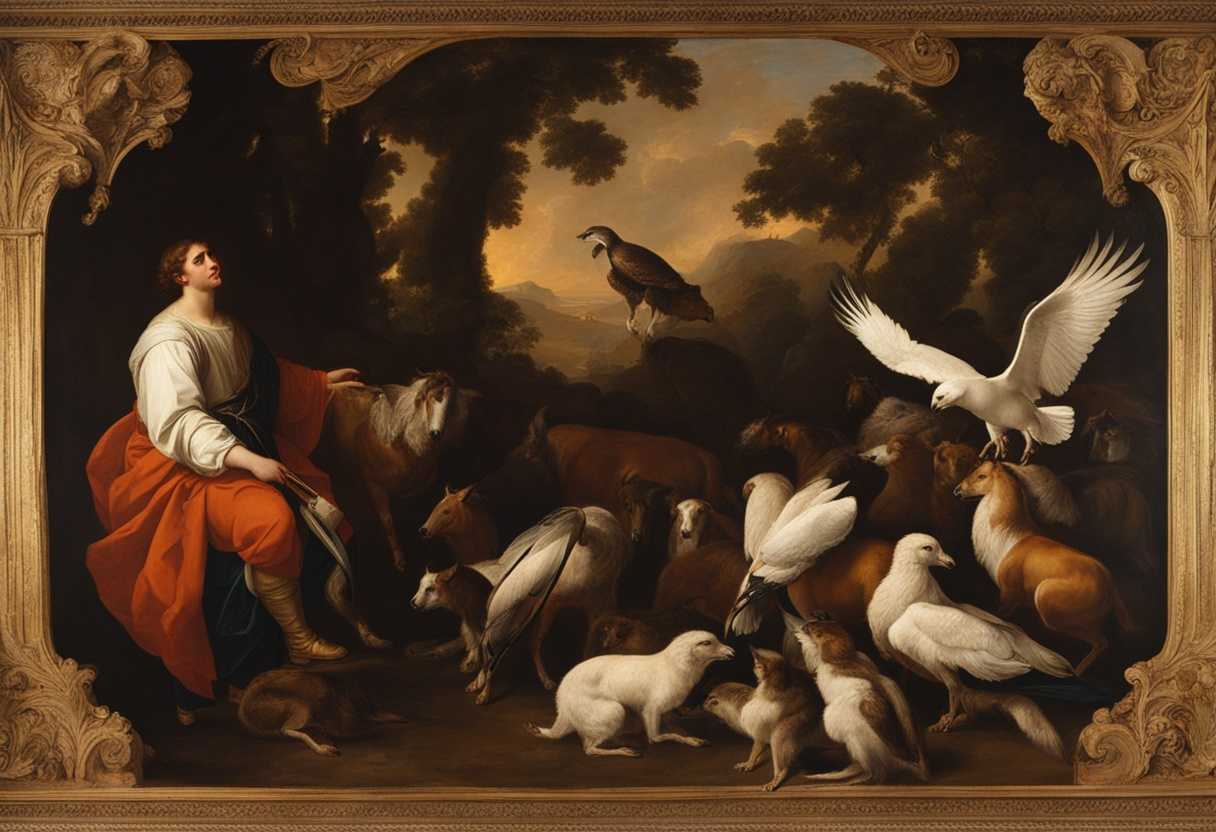
Setting the Scene for Genesis 15:7-11
In Genesis 15:7-11, we find Abram, later known as Abraham, in a significant moment of his life. The scene is set in the land of Canaan, where God has led Abram. As the sun begins to set, the atmosphere is filled with a sense of anticipation and mystery. The land is vast and open, with the silhouette of mountains in the distance and the sound of gentle winds rustling through the trees.
Abram is standing outside his tent, gazing up at the starry night sky, feeling a mix of awe and uncertainty. God has just spoken to him, promising that his descendants will be as numerous as the stars. Abram, childless and aging, is grappling with this promise, seeking reassurance from the Lord. As he ponders the words spoken to him, a deep sense of faith and trust begins to take root in his heart.
In this moment, Abram’s faith is tested and strengthened as he chooses to believe in the promises of God, despite the seeming impossibility of the situation. The scene captures a pivotal moment in Abram’s journey of faith, where he chooses to trust in God’s plan for his life, setting the stage for the remarkable events that will unfold in the chapters to come.
What is Genesis 15:7-11 about?
Imagine the scene: Abram, filled with faith and hope in God’s promise of land, prepares a sacrifice as an offering. This act symbolizes his trust in the divine covenant. However, as he waits for God to manifest, birds swoop down to devour the offering. How disheartening this must have been for Abram, facing an unexpected obstacle in the midst of his preparation for God’s blessing.
This verse serves as a powerful reminder of the challenges and tests that often accompany our journey of faith. Just like the birds that threatened Abram’s sacrifice, unexpected trials may appear in our lives, attempting to derail our trust and perseverance in God’s promises. It prompts us to reflect on how we respond when faced with setbacks or obstacles on our path of spiritual growth. Do we remain steadfast like Abram, holding on to our faith despite difficulties? Can we trust that God’s plan is greater than any temporary setback we may encounter? Let us take inspiration from Abram’s unwavering faith and commitment, knowing that even amidst challenges, God’s promise remains true.
Understanding what Genesis 15:7-11 really means
In Genesis 15:7-11, we witness a crucial moment in the relationship between God and Abram, later known as Abraham. This passage forms the bedrock of the Abrahamic covenant, a pivotal agreement in biblical history that lays the groundwork for God’s promises of land and descendants to Abraham. The words “I am the Lord who brought you out of Ur of the Chaldeans” serve as a powerful declaration of God’s authority and faithfulness, reminding Abram of God’s role as his deliverer and guide. This statement not only establishes God’s credibility but also underscores His past acts of salvation, setting the stage for the promises to come.
Moreover, when God assures Abram of giving him the land to possess, it signifies more than just a physical territory. It represents a place of blessing and the fulfillment of divine promises, highlighting the spiritual significance of the covenant. Abram’s question, “How can I know that I will gain possession of it?” reflects a common human experience of doubt and the need for reassurance. Even the faithful, like Abram, may seek confirmation from God, showing that questioning and seeking clarity are natural aspects of our relationship with the divine.
The specific animals – a heifer, a goat, a ram, a dove, and a young pigeon – chosen for the covenant ritual hold symbolic significance. They represent a serious and binding agreement, reflecting ancient practices of covenant-making where the parties involved would solemnize their commitment through sacrificial rituals. Abram’s act of driving away the birds of prey that threatened the sacrifice symbolizes vigilance and the need to protect what is sacred, emphasizing the importance of safeguarding the promises and agreements made with God.
This passage finds resonance in other biblical texts, such as Genesis 12:1-3, which lays the foundation for God’s call and promise to Abram, and Hebrews 11:8-12, which reflects on Abram’s unwavering faith in God’s promises. Additionally, Jeremiah 34:18-20 provides cultural context by showcasing another covenant involving the cutting of animals, shedding light on the significance of such rituals in ancient times.
Today, the themes of faith, doubt, and God’s faithfulness in Genesis 15:7-11 remain relevant. Just as Abram sought assurance from God, people in contemporary times often grapple with doubts and uncertainties in their faith journey. This passage encourages believers to bring their questions and concerns before God, trusting in His promises and steadfast love. It serves as a poignant reminder of the seriousness and commitment inherent in our covenant relationship with God, urging us to honor our promises and commitments with reverence and dedication.
To illustrate this point, consider a young couple embarking on the journey of buying their first home. Amidst excitement and anxiety, they seek reassurance from their parents, who remind them of past successes and unwavering support. Similarly, Abram’s need for assurance and God’s reaffirmation of His promises can inspire us to move forward in faith, trusting in God’s provision and guidance as we navigate life’s uncertainties.
In conclusion, Genesis 15:7-11 stands as a testament to God’s faithfulness, the importance of trusting in His promises, and the sacred nature of our covenant relationship with Him. It speaks to the universal human experience of seeking assurance and finding solace in the unchanging love and commitment of God, inviting us to deepen our faith and reliance on His unfailing grace.
How can we trust in God’s promises fully?
God makes a covenant with Abram and promises him descendants as numerous as the stars in Genesis 15:7-11. This passage reminds us of the faithfulness of God in keeping His promises. One way to trust in God’s promises fully is to remember His track record of faithfulness throughout history. We can be assured that God will fulfill the promises He has made to us as we look back on how He has fulfilled His promises in the past.
Another way to trust in God’s promises fully is by leaning on His character. The Bible tells us that God is faithful, unchanging, and true to His word. We can have confidence in the promises He has made because of who He is. Reflecting on God’s attributes can strengthen our trust in His promises and help us to rely on His unfailing love and faithfulness.
Lastly, we can trust in God’s promises by aligning our hearts and minds with His will. When we seek to follow God’s guidance, spend time in prayer and study of His word, and walk in obedience to His commands, our trust in His promises deepens. We can have confidence that God will bring about what He has promised in His perfect timing by drawing closer to Him and surrendering our lives to His plans.
Application
Just like navigating through a busy workday or nurturing your family, stepping into faith and trusting in God’s promises requires courage and determination. As Abram obeyed, let’s choose to surrender our doubts and uncertainties to Him, knowing that His plans are greater than any challenges we may encounter. Will you dare to embrace faith and obedience, believing that God’s promises will guide you through every aspect of your life?

Reverend Michael Johnson is an experienced Church Minister with a profound expertise in spirituality and guidance. With a serene presence and a compassionate heart, he has faithfully served his congregation for over 20 years, leading them on a spiritual journey towards inner peace and enlightenment. Reverend Johnson’s extensive knowledge of religious philosophies and profound understanding of human nature have made him a trusted confidant and mentor to many, as he seamlessly weaves his profound wisdom into life teachings. Reverend Johnson’s calming demeanor and empathetic nature continue to uplift and heal souls, nurturing a sense of unity and tranquility within his community.