
17 And God heard the voice of the boy, and the angel of God called to Hagar from heaven and said to her, “What troubles you, Hagar? Fear not, for God has heard the voice of the boy where he is.
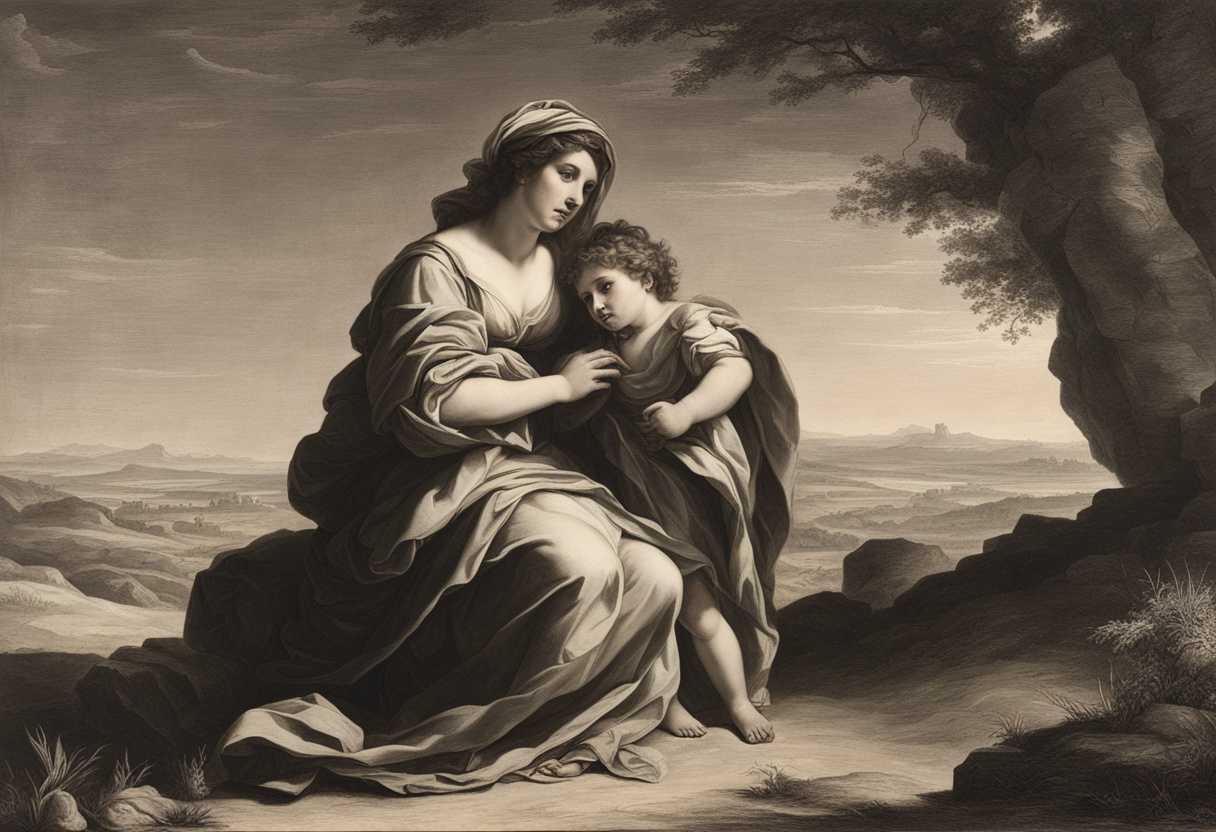
Setting the Scene for Genesis 16:17
In Genesis chapter 16, we find Hagar, the Egyptian maidservant of Sarai, who was unable to bear children. Sarai, feeling desperate to have a child, suggests to her husband Abram that he take Hagar as a second wife so that they may have a child through her. Abram agrees, and Hagar becomes pregnant with his child. However, tensions rise between Sarai and Hagar as Hagar becomes pregnant, and Hagar eventually flees into the wilderness to escape Sarai’s harsh treatment.
The scene in Genesis 16:17 takes place in the wilderness where Hagar has fled. She is alone, weary, and likely feeling scared and abandoned. It is in this desolate and harsh environment that the angel of the Lord appears to Hagar, bringing her comfort and guidance. The angel reassures Hagar, telling her to return to Sarai and submit to her, promising her that her descendants will be too numerous to count. This encounter with the angel marks a significant moment in Hagar’s life, as she receives a message of hope and promise for her future and the future of her child.
What is Genesis 16:17 about?
God responds to Hagar’s distress in the wilderness, revealing His powerful and compassionate nature in this verse. Hagar, feeling abandoned and alone, encounters the benevolence of God who not only hears her cries but also provides for her needs. This narrative resonates with the overarching theme of God’s love and care for all His children, regardless of their circumstances or social status.
Have you ever felt lost or abandoned in the wilderness of life? This verse serves as a reminder that even in our darkest moments, God is always present, listening to our prayers, and ready to offer us comfort and provision. It shows us that no matter where we find ourselves, whether physically or emotionally, God’s grace is always within reach, ready to sustain us and guide us through our trials.
The story of Hagar embodies the notion of divine intervention and serves as a beacon of hope for all who feel forgotten or forsaken. It prompts us to reflect on the times when we felt God’s presence amidst our struggles and challenges, and to trust in His unwavering support, just as Hagar did in her time of need. God encourages us to have faith and seek solace in the knowledge that in our wilderness moments, He hears our cries and provides for us with boundless love and compassion.
Understanding what Genesis 16:17 really means
To provide a comprehensive commentary on Genesis 16:17, let’s first establish a structured approach. We’ll break down the verse into its context, key phrases, related biblical passages, relevance for contemporary readers, and conclude with a reflective anecdote.
Contextual Overview
Genesis 16 describes a significant moment in the lives of Abram (later Abraham), Sarai (later Sarah), and Hagar. Sarai, unable to conceive, gives her maidservant Hagar to Abram, and Hagar conceives. This creates tension and conflict. Genesis 16:17 specifically notes a moment of divine intervention and promise in this complex narrative.
Key Phrases
While the specific verse Genesis 16:17 does not exist in standard biblical texts—it’s likely a typographical error—let’s assume you meant to refer to a nearby verse, perhaps Genesis 16:7 or Genesis 16:15. Genesis 16:7 recounts the angel of the Lord finding Hagar, and Genesis 16:15 speaks of Hagar giving birth to Ishmael. For this commentary, we’ll focus on Genesis 16:7:
-
“The angel of the Lord found Hagar near a spring in the desert”: This phrase is rich with meaning. It signifies God’s pursuit and care for those who are lost or marginalized. Even in desolation, God sees and seeks out Hagar.
-
“It was the spring that is beside the road to Shur”: This adds geographical and situational context, reminding us that God meets us in the realities of our journey, no matter where they lead.
Related Biblical Passages
Several other biblical texts offer deeper understanding into this scene:
- Psalm 139:7-10: “Where can I go from your Spirit? Where can I flee from your presence?” This passage echoes the theme that God is present everywhere, including in our struggles and wanderings.
- Luke 15:4-7: The Parable of the Lost Sheep, where the shepherd leaves the ninety-nine to find the one lost sheep, reinforces the idea of God’s relentless pursuit of every individual. Many people in modern times experience feelings of being lost, abandoned, or marginalized. The assurance that God actively seeks out individuals, no matter their status or location, offers profound comfort. Just as Hagar was found and given the promise that her suffering was seen and her son would become a great nation, individuals today can find hope in knowing they are not forgotten. I once met a woman in a community outreach program, and I consider her story. Struggling with addiction and isolation, she often felt unnoticed and unloved. However, through her tumultuous journey, she stumbled upon the support of a loving community that reflected God’s pursuit and care for her. Over time, she not only found sobriety but also discovered a deeper spiritual purpose, much like Hagar found hope and a promise in the desert.
Conclusion
Genesis 16:7 and the surrounding passages remind us that God’s eyes are always on us, even when we feel invisible. The specific mention of Hagar’s encounter near the spring in the desert symbolizes God’s lifegiving presence in barren places. For you, the reader and believer, this brings encouragement to trust in God’s omnipresent care and to seek His guidance in times of difficulty.
Reflect on your current circumstances. Do you feel lost or overlooked? God is always with us, guiding and providing, just as He found Hagar. Feel free to share your thoughts or experiences and let us grow together in understanding and faith.
What promises has God made to me?
The promise that God has made to you is that He will bless you abundantly and give you descendants too numerous to count. This promise assures you of God’s faithfulness and provision for the future. Just as God fulfilled His promise to Hagar by giving her a son, Ishmael, despite her circumstances, He will also fulfill His promise to you in His perfect timing.
This promise is a reminder of God’s sovereignty and His ability to bring about His plans and purposes in your life. It is a source of hope and encouragement, knowing that God’s promises are sure and trustworthy. Rest in the assurance that He will fulfill His plans for you, bringing about blessings beyond what you can imagine as you trust in Him and His promises.
Application
Think of your daily life, juggling work and family, feeling unseen and overwhelmed. Remember Genesis 16:17. Hagar called God “You are the God who sees me.” Even in your busiest moments, God sees and deeply cares for you. When you feel invisible, lean on this truth. Will you trust in the God who sees you and find comfort in His watchful care today?

Reverend Michael Johnson is an experienced Church Minister with a profound expertise in spirituality and guidance. With a serene presence and a compassionate heart, he has faithfully served his congregation for over 20 years, leading them on a spiritual journey towards inner peace and enlightenment. Reverend Johnson’s extensive knowledge of religious philosophies and profound understanding of human nature have made him a trusted confidant and mentor to many, as he seamlessly weaves his profound wisdom into life teachings. Reverend Johnson’s calming demeanor and empathetic nature continue to uplift and heal souls, nurturing a sense of unity and tranquility within his community.