
10 This is my covenant, which you shall keep, between me and you and your offspring after you: Every male among you shall be circumcised.
11 You shall be circumcised in the flesh of your foreskins, and it shall be a sign of the covenant between me and you.
12 He who is eight days old among you shall be circumcised. Every male throughout your generations, whether born in your house or bought with your money from any foreigner who is not of your offspring,
13 He who is born in your house and he who is bought with your money, shall surely be circumcised. So shall my covenant be in your flesh an everlasting covenant.
14 Any uncircumcised male who is not circumcised in the flesh of his foreskin shall be cut off from his people; he has broken my covenant.”
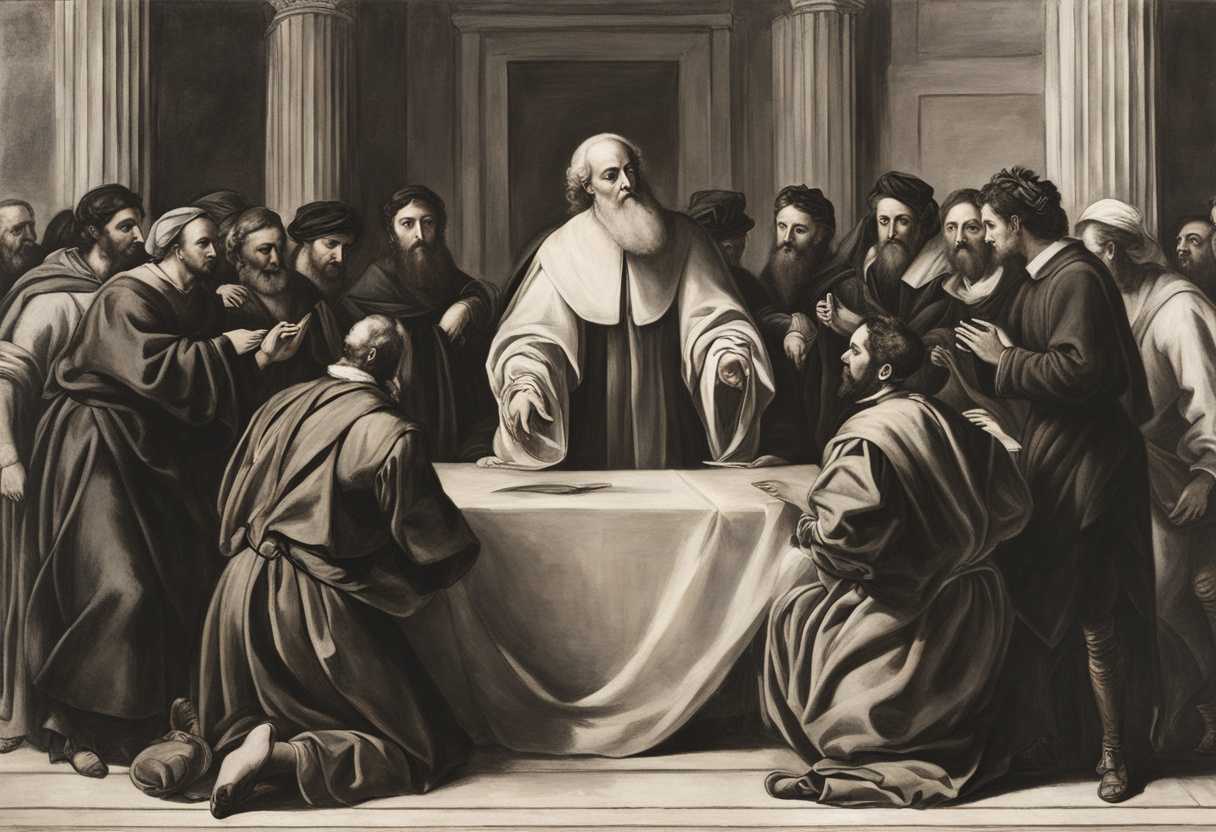
Setting the Scene for Genesis 17:10-14
In Genesis chapter 17, we find Abraham, formerly known as Abram, in the presence of God. The scene is set in the plains of Mamre, where Abraham had set up his tent. As the sun begins to set, a radiant light surrounds the area, signifying the divine presence. Abraham, now an old man, is deep in thought when suddenly, God appears before him.
God, in all His glory, speaks to Abraham, reaffirming His covenant with him and promising to make him the father of many nations. As a sign of this everlasting covenant, God instructs Abraham to circumcise himself, his household, and all the males in his camp. This act of circumcision is to be a physical reminder of the spiritual covenant between God and Abraham’s descendants.
Abraham, though initially taken aback by this command, ultimately obeys without hesitation, demonstrating his unwavering faith and trust in God. The atmosphere is filled with a sense of reverence and awe as Abraham carries out the circumcision, symbolizing his commitment to God’s covenant. This pivotal moment solidifies the bond between God and Abraham, setting the stage for the fulfillment of God’s promises in the generations to come.
What is Genesis 17:10-14 about?
God institutes circumcision as a physical sign of the covenant He makes with Abraham and his descendants in this verse. Circumcision is not merely a physical act, but a symbolic gesture representing the commitment and relationship between God and His chosen people. It signifies a separation from the world and a consecration to God’s purposes.
Through this act, God demonstrates His faithfulness and promises to Abraham, reinforcing the special relationship He has with him and his lineage. This covenant is not only a promise of blessings and protection but also a call to obedience and faithfulness to God’s commands. Circumcision serves as a constant reminder of this covenant and the responsibilities that come with being a part of God’s chosen people. Symbols in our faith remind us of their significance and we are reminded of the importance of honoring our commitments to God as we reflect on this verse. Just as circumcision was a visible sign of the covenant in the Old Testament, we are challenged to consider how we demonstrate our commitment to God in our lives today. How do we display our faithfulness and dedication to God’s purposes? How do we uphold the promises we have made to Him? Let us reflect on the symbolism of circumcision and strive to live out our faith in a way that honors our covenant with God.
Understanding what Genesis 17:10-14 really means
Structure for Commentary
- Introduction to the Passage: Brief overview of the selected verses
- Contextual Background: Historical and cultural background information
- Detailed Examination: Phrase-by-phrase breakdown and explanation
- Related Passages: Cross-references to other Bible verses
- Relevance Today: Application to modern life
- Anecdotal Illustration: Personal or relatable story
- God establishes the covenant of circumcision with Abraham in Genesis 17:10-14. This sign of the covenant is deeply significant for Abraham’s descendants and serves as a lasting symbol of their relationship with God.
Contextual Background
During Abraham’s time, covenants were seen as binding agreements. The act of physical circumcision was not merely a health practice; it was a mark of identity and obedience. This covenant distinguished Abraham’s descendants from others and set the foundation for their unique relationship with God. Let’s delve into the key phrases of the passage.
- “Every male among you shall be circumcised” – This directive establishes an inclusive commitment, involving every male within the community.
- “Throughout your generations” – It signifies a perpetual covenant, intended to last beyond Abraham’s immediate family, affecting countless generations.
- “He who is eight days old” – The timing of circumcision represents a new beginning, aligning with the belief that children are dedicated to God from their earliest days.
- “My covenant in your flesh is to be an everlasting covenant” – This underscores the permanence and enduring nature of God’s promise, intended to be a physical reminder of a spiritual reality.
Related Passages
If we turn to Romans 2:28-29, Paul discusses true circumcision, distinguishing between physical and spiritual circumcision. He states, “A person is not a Jew who is one only outwardly, nor is circumcision merely outward and physical. No, a person is a Jew who is one inwardly; and circumcision is circumcision of the heart, by the Spirit, not by the written code.”
Another relevant passage is Galatians 5:6, where Paul remarks, “The only thing that counts is faith expressing itself through love.” This teaches us that faith and obedience to God’s will are more critical than ritual alone.
Relevance Today
How does this ancient covenant apply to us today? While physical circumcision is no longer a religious requirement for Christians, the principles behind this act still hold. It invokes commitment, identity, and belonging. Today, we enter into a “circumcision of the heart,” striving to align our actions with our professed beliefs. Are there ways you are publicly displaying your faith and dedication to God in modern life?
Anecdotal Illustration
I recall a member of our congregation who decided to be baptized as an adult. Although she had grown up in a Christian household, she felt a personal call to publicly show her commitment to Christ. This act was more than a ritual; it was a heartfelt proclamation of faith, akin to the ancient covenant in its intention and significance. Her story reminds us that outward signs, when paired with inward conviction, have the power to transform our lives and community.
Conclusion
Genesis 17:10-14 highlights a profound covenant, one that involves both a physical act and a spiritual commitment. From Abraham’s time to our modern day, the importance of outwardly manifesting inward faith remains critical. Let us consider how we can symbolize and live out our covenant with God in our daily lives as we reflect on this passage.
What is the significance of physical circumcision in faith?
Physical circumcision in the faith is significant because it was established by God as a sign of the covenant between Him and His chosen people. Through this act, individuals were set apart as part of God’s chosen people and were reminded of their commitment to following His commandments. The physical act of circumcision symbolizes a spiritual transformation, where believers are called to be obedient to God’s laws and live a life of faithfulness.
Furthermore, physical circumcision served as a physical reminder of the spiritual circumcision of the heart that believers are called to undergo. It represents the removal of sin and the commitment to live a life dedicated to God. Circumcision reflected one’s commitment to God and His covenant as a symbol of purity, faithfulness, and holiness. Physical circumcision was ultimately more than just a religious practice; it was a visible sign of one’s relationship with God and a demonstration of their willingness to live according to His will. It served as a reminder of the importance of obedience and faithfulness in the life of a believer.
Application
Think about Genesis 17:10-14 and God’s promise to Abraham. This wasn’t just about them; it’s about you and your commitment today. Where in your busy life—between work deadlines and family moments—can you make a stronger dedication to God? Use this moment to ignite a deeper faith and true obedience. Are you ready to make a real change and respond to God’s call with genuine action?

Reverend Michael Johnson is an experienced Church Minister with a profound expertise in spirituality and guidance. With a serene presence and a compassionate heart, he has faithfully served his congregation for over 20 years, leading them on a spiritual journey towards inner peace and enlightenment. Reverend Johnson’s extensive knowledge of religious philosophies and profound understanding of human nature have made him a trusted confidant and mentor to many, as he seamlessly weaves his profound wisdom into life teachings. Reverend Johnson’s calming demeanor and empathetic nature continue to uplift and heal souls, nurturing a sense of unity and tranquility within his community.