
14 Any uncircumcised male who is not circumcised in the flesh of his foreskin shall be cut off from his people; he has broken my covenant.”
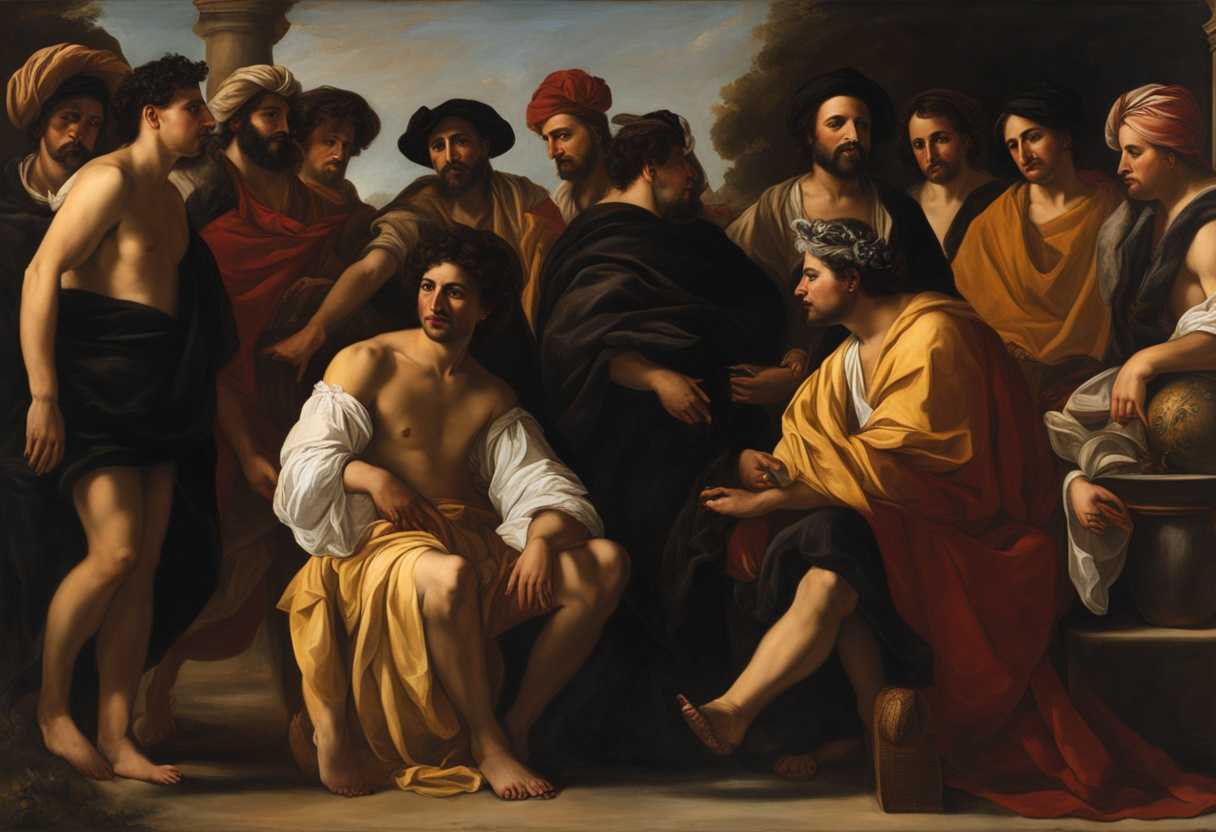
Setting the Scene for Genesis 17:14
In Genesis chapter 17, we find Abraham, formerly known as Abram, in the presence of God. The scene is set in the plains of Mamre, where Abraham had set up his tent. As Abraham sat outside his tent, three visitors approached him, and he quickly recognized one of them as the Lord. The Lord had come to reaffirm His covenant with Abraham and to announce the birth of a son through Sarah, despite their old age.
Abraham, a man of great faith, immediately bowed down before the Lord and listened attentively to His words. The atmosphere was filled with a sense of reverence and awe as the Lord spoke to Abraham about the covenant He was making with him and his descendants. The conversation was intimate and profound, as the Lord changed Abram’s name to Abraham, signifying his new role as the father of many nations.
Surrounded by the beauty of the plains of Mamre, Abraham and the Lord engaged in a deep and meaningful dialogue, with Abraham expressing his humility and gratitude for the promises God had bestowed upon him. The scene captures a pivotal moment in Abraham’s life, as he receives the assurance of God’s faithfulness and the fulfillment of His promises.
What is Genesis 17:14 about?
The concept of circumcision symbolizes a commitment to God’s covenant and adherence to His commandments in this verse. Circumcision was a physical act that marked a person as part of God’s chosen people in the Old Testament. It was a sign of the covenant between God and His people, signifying obedience and dedication to His laws. Therefore, those who were uncircumcised were considered outside of this covenant and not in alignment with God’s commandments. The verse highlights the importance of faithfulness and obedience to God’s teachings by stating that the uncircumcised will be cut off from God’s covenant because they have broken His command. It serves as a reminder that adherence to God’s laws is fundamental in maintaining a relationship with Him and receiving the blessings of His covenant. The verse emphasizes the seriousness of disobeying God’s commandments and warns of the consequences of straying from His path. It prompts us to reflect on our own adherence to God’s commandments and consider the significance of our commitment to His covenant.
Understanding what Genesis 17:14 really means
Commentary Structure
- Introduction and Context
- Detailed Explanation of Key Phrases
- Connection to Other Biblical Passages
- Relevance to Modern Readers
- Anecdotal Illustration
- Reflection and Invitation to Engage
Commentary
Introduction and Context
Genesis 17:14 is situated within a pivotal covenant between God and Abraham. This chapter outlines the establishment of circumcision as a sign of the covenant. Specifically, the verse addresses the serious consequence for failing to uphold this rite. Understanding its place in the broader narrative of Genesis helps us grasp its gravity.
Detailed Explanation of Key Phrases
One of the key phrases in this verse is “cut off from his people,” which signifies exclusion from the community and the benefits of God’s covenant. This isn’t just physical isolation; it’s a spiritual and relational severance. The phrase “he has broken my covenant” emphasizes the deliberate nature of this disobedience. It’s not a casual oversight but a significant breach of an agreement established by God Himself.
Connection to Other Biblical Passages
This theme of covenant and obedience is echoed throughout the Bible. For instance, in Deuteronomy 30:19-20, Moses speaks of choosing life by obeying God, thus ensuring blessings and life within the community. Furthermore, John 15:5-6 describes how remaining in Jesus, like branches to a vine, is crucial for spiritual life; being cut off implies withering away.
Relevance to Modern Readers
How does this ancient practice speak to us today? While the ritual of circumcision might not hold the same symbolic weight for everyone now, the underlying principles of covenant and obedience are timeless. Today, it translates into being faithful to our commitments to God. This verse reminds us of the importance of faithfulness and collective identity within our spiritual journey in a world that often values individual preference over communal or divine agreements. One player refuses to follow the training regimen or attend practices in a sports team. This not only affects their performance but the cohesion and success of the entire team. Similarly, failing to uphold our spiritual commitments doesn’t just impact us individually but the community we’re part of. Reflect on this verse as you consider the areas of your life where you might be neglecting your commitments to God or your community. Are there ways you can reaffirm your faith and actions to align more closely with your spiritual values? Reflecting on these questions can help deepen your faith walk and strengthen your ties with both God and your community. Let’s engage in conversation around this and support each other in our spiritual journeys. We can draw meaningful parallels to our modern lives by understanding Genesis 17:14 within its context and exploring its timeless principles, encouraging us to live faithfully and in unity with our spiritual community.
Are we upholding our end of the covenant?
God made a covenant with Abram, promising to make him a father of many nations and to bless him. God required Abram and his descendants to undergo circumcision as a physical sign of their commitment to Him as part of this covenant. The significance of this act was to set apart God’s chosen people and mark them as different from other nations. They were acknowledging their trust and faith in God’s promises and committing to following His ways by obeying this command. Abram and his descendants had to be circumcised on the eighth day after birth in order to uphold their end of the covenant. This act of obedience demonstrated their willingness to submit to God’s will and to be set apart as His chosen people. They were affirming their commitment to the covenant and their trust in God’s faithfulness to fulfill His promises by continuing to practice circumcision throughout the generations. They kept this physical sign of the covenant as a way to show their loyalty and devotion to God.
Application
Think of your relationship with God as a contract at work or a commitment to your family. In Genesis 17:14, we are reminded to honor our end of the deal. Ignoring our responsibilities has severe consequences, just like in any important pact. Will you step up today and show your dedication by living according to His ways? Are you ready to keep your promise?

Reverend Michael Johnson is an experienced Church Minister with a profound expertise in spirituality and guidance. With a serene presence and a compassionate heart, he has faithfully served his congregation for over 20 years, leading them on a spiritual journey towards inner peace and enlightenment. Reverend Johnson’s extensive knowledge of religious philosophies and profound understanding of human nature have made him a trusted confidant and mentor to many, as he seamlessly weaves his profound wisdom into life teachings. Reverend Johnson’s calming demeanor and empathetic nature continue to uplift and heal souls, nurturing a sense of unity and tranquility within his community.