
1 And the Lord appeared to him by the oaks of Mamre, as he sat at the door of his tent in the heat of the day.
2 He lifted up his eyes and looked, and behold, three men were standing in front of him. When he saw them, he ran from the tent door to meet them and bowed himself to the earth.
3 He said, “O Lord, if I have found favor in your sight, do not pass by your servant.
4 Let a little water be brought, and wash your feet, and rest yourselves under the tree,
5 And I will bring a morsel of bread, that you may refresh yourselves, and after that you may pass on—since you have come to your servant.” So they said, “Do as you have said.”
6 And Abraham went quickly into the tent to Sarah and said, “Quick! Three seahs of fine flour! Knead it, and make cakes.”
7 And Abraham ran to the herd and took a calf, tender and good, and gave it to a young man, who prepared it quickly.
8 He took curds and milk and the calf that he had prepared, and set it before them. And he stood by them under the tree while they ate.
9 They said to him, “Where is Sarah your wife?” And he said, “She is in the tent.”
10 The Lord said, “I will surely return to you about this time next year, and Sarah your wife shall have a son.”
11 Now Abraham and Sarah were old, advanced in years. The way of women had ceased to be with Sarah.
12 So Sarah laughed to herself, saying, “After I am worn out, and my lord is old, shall I have pleasure?”
13 The Lord said to Abraham, “Why did Sarah laugh and say, ‘Shall I indeed bear a child, now that I am old?’
14 Is anything too hard for the Lord? At the appointed time I will return to you, about this time next year, and Sarah shall have a son.”
15 Sarah denied it however, saying, “I did not laugh,” for she was afraid. He said, “No, but you did laugh.”
1 The Lord visited Sarah as he had said, and the Lord did to Sarah as he had promised.
2 And Sarah conceived and bore Abraham a son in his old age at the time of which God had spoken to him.
3 Abraham called the name of his son who was born to him, whom Sarah bore him, Isaac.
4 And Abraham circumcised his son Isaac when he was eight days old, as God had commanded him.
5 Abraham was a hundred years old when his son Isaac was born to him.
6 And Sarah said, “God has made laughter for me; everyone who hears will laugh over me.”
7 And she said, “Who would have said to Abraham that Sarah would nurse children? Yet I have borne him a son in his old age.”
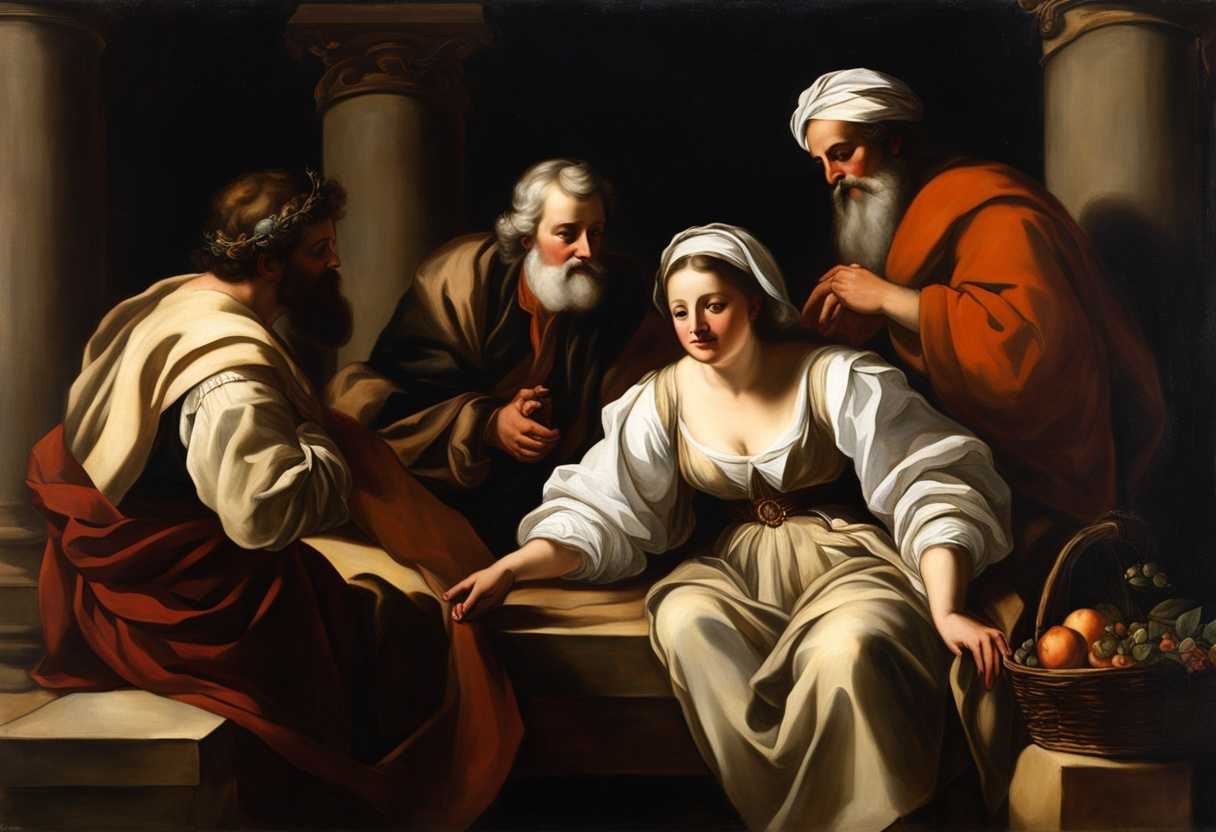
Setting the Scene for Genesis 18:1-15, 21:1-7
In the scene described in Genesis 18:1-15, we find Abraham sitting at the entrance of his tent during the heat of the day in the region of Mamre. As he looks up, he sees three men standing nearby. These men are actually angels of the Lord, but Abraham does not know this yet. Being a hospitable host, Abraham rushes to greet them, bowing low to the ground, and invites them to rest and have a meal. He instructs Sarah, his wife, to prepare bread from fine flour, and he personally selects a choice calf to be prepared for his guests.
As the meal is being prepared, one of the visitors reveals that Sarah will have a son within the year. Sarah, who is listening from the entrance of the tent, laughs at this news as she is advanced in years. The visitor then questions Abraham about Sarah’s laughter, and Sarah denies laughing out of fear. The visitor responds, “Is anything too hard for the Lord?” This interaction sets the stage for the miraculous birth of Isaac, fulfilling God’s promise to Abraham and Sarah.
In Genesis 21:1-7, we see the fulfillment of the promise made in the previous encounter. Sarah conceives and gives birth to a son, Isaac, just as the Lord had said. This joyous occasion marks the beginning of a new chapter in Abraham and Sarah’s lives, as they experience the faithfulness and power of God firsthand. The scene is filled with gratitude, awe, and wonder as Abraham and Sarah hold their long-awaited child in their arms, a tangible reminder of God’s faithfulness and provision.
What is Genesis 18:1-15, 21:1-7 about?
Abraham and Sarah witness the miraculous promise of God in this verse, despite their advanced age and barrenness. The assurance of a son to carry on their lineage not only speaks to the power and faithfulness of God but also underscores the theme of hope and redemption. It shows us that God’s plans and promises transcend human limitations such as age or circumstances. We reflect on this verse, reminding us of the importance of faith and patience in waiting for God’s promises to unfold in our lives. It challenges us to trust in God’s timing and believe that He is always faithful to fulfill His word, even in the most unlikely situations. The story of Abraham and Sarah serves as a powerful reminder that with God, all things are possible, and His plans always prevail, regardless of our earthly limitations. So, let us take heart and hold onto our faith, knowing that God’s promises are always worth waiting for.
Understanding what Genesis 18:1-15, 21:1-7 really means
Structure for Commentary:
- Context and Overview
- Key Phrases and Their Meanings
- Cross-Referencing Other Scriptures
- Relevance and Application Today
- Anecdote for Relatability
- Encouragement and Challenge to the Reader
Context and Overview
Genesis 18:1-15, 21:1-7 narrates the divine visitation to Abraham by three visitors and the subsequent promise of a son to Sarah, despite their old age. This narrative highlights themes of faith, hospitality, and divine promise. The birth of Isaac in 21:1-7 fulfills God’s promise, emphasizing God’s faithfulness and the joy it brings.
Key Phrases and Their Meanings
One of the key phrases is when the visitors announce, “Is anything too hard for the LORD?” This rhetorical question underscores the omnipotence of God. It invites us to trust in His power beyond human limitations. Another significant phrase is Sarah’s laughter in 18:12, followed by her denial in 18:15. Her initial skepticism shows a natural human reaction to divine promise, yet this skepticism eventually turns into joy and fulfillment.
Cross-Referencing Other Scriptures
Referencing Luke 1:37, “For nothing will be impossible with God,” affirms the consistent biblical theme of God’s omnipotence. Similarly, Romans 4:20-21 reflects on Abraham’s unwavering faith, despite the improbability of the promise:
“He did not waver through unbelief regarding the promise of God, but was strengthened in his faith and gave glory to God, being fully persuaded that God had power to do what he had promised.”
These passages help us to see these themes throughout the Bible, reinforcing the truth that God’s promises are trustworthy and His power limitless.
Relevance and Application Today
Today, this passage speaks volumes to anyone facing seemingly impossible challenges or waiting on God’s promises. It reminds us that God operates on a different timeline and scale than we do. When we encounter obstacles or delays, we can draw strength from this story, knowing that our faith should rest in God’s capabilities, not our circumstances.
Anecdote for Relatability
Imagine a couple struggling with infertility for years, just as Abraham and Sarah did. Modern medicine had given them little hope, and yet they kept praying and holding onto God’s promises. Miraculously, they conceived after nearly giving up hope. Their testimony is a modern echo of Sarah and Abraham’s experience, demonstrating that God’s timing and power are beyond human understanding. Reflect on this passage as you consider the areas of your life where you might doubt God’s promises or His ability to intervene. Are there aspects where you have laughed internally, dismissing the possibility of divine intervention? Challenge yourself to replace skepticism with faith, leaning on the truth that “nothing is too hard for the Lord.” Trust in His timing and have faith in His promises, just as Abraham and Sarah ultimately did. Your situation may seem improbable, but remember—God specializes in the impossible. Engaging with this narrative not only gives you insight into biblical history but also inspires you to deepen your faith journey. Reflect, trust, and be encouraged, knowing that God is always at work, even in the most unlikely circumstances.
How can we show faith in the midst of doubt?
We can show faith in times of doubt like Abraham and Sarah did in the mentioned verses. Despite the doubts and uncertainties they faced, they remained faithful to God’s promises. They trusted in God’s plan, even when it seemed impossible from a human perspective. Abraham and Sarah’s unwavering faith was ultimately rewarded, as God fulfilled His promises to them.
Like Abraham and Sarah, we can show faith in the midst of doubt by holding on to the belief that God’s plans are greater than our understanding. We can choose to trust in God’s timing and have confidence that He is working all things for our good. It is important to remember that doubt is a natural human emotion, but our faith can help us overcome it and remain steadfast in our trust in God. We can draw inspiration and encouragement to keep believing in God’s promises by looking back on the examples of faithful individuals like Abraham and Sarah.
Application
Think about how we juggle work deadlines and family responsibilities, striving for balance. Just like Abraham and Sarah found hope in God’s promise, we too can trust in divine timing. Amid life’s chaos, can you pause and trust that God’s plans for you will unfold, even when it seems impossible? Will you embrace faith in His promises today?

Reverend Michael Johnson is an experienced Church Minister with a profound expertise in spirituality and guidance. With a serene presence and a compassionate heart, he has faithfully served his congregation for over 20 years, leading them on a spiritual journey towards inner peace and enlightenment. Reverend Johnson’s extensive knowledge of religious philosophies and profound understanding of human nature have made him a trusted confidant and mentor to many, as he seamlessly weaves his profound wisdom into life teachings. Reverend Johnson’s calming demeanor and empathetic nature continue to uplift and heal souls, nurturing a sense of unity and tranquility within his community.