
1 And the Lord appeared to him by the oaks of Mamre, as he sat at the door of his tent in the heat of the day.
2 He lifted up his eyes and looked, and behold, three men were standing in front of him. When he saw them, he ran from the tent door to meet them and bowed himself to the earth.
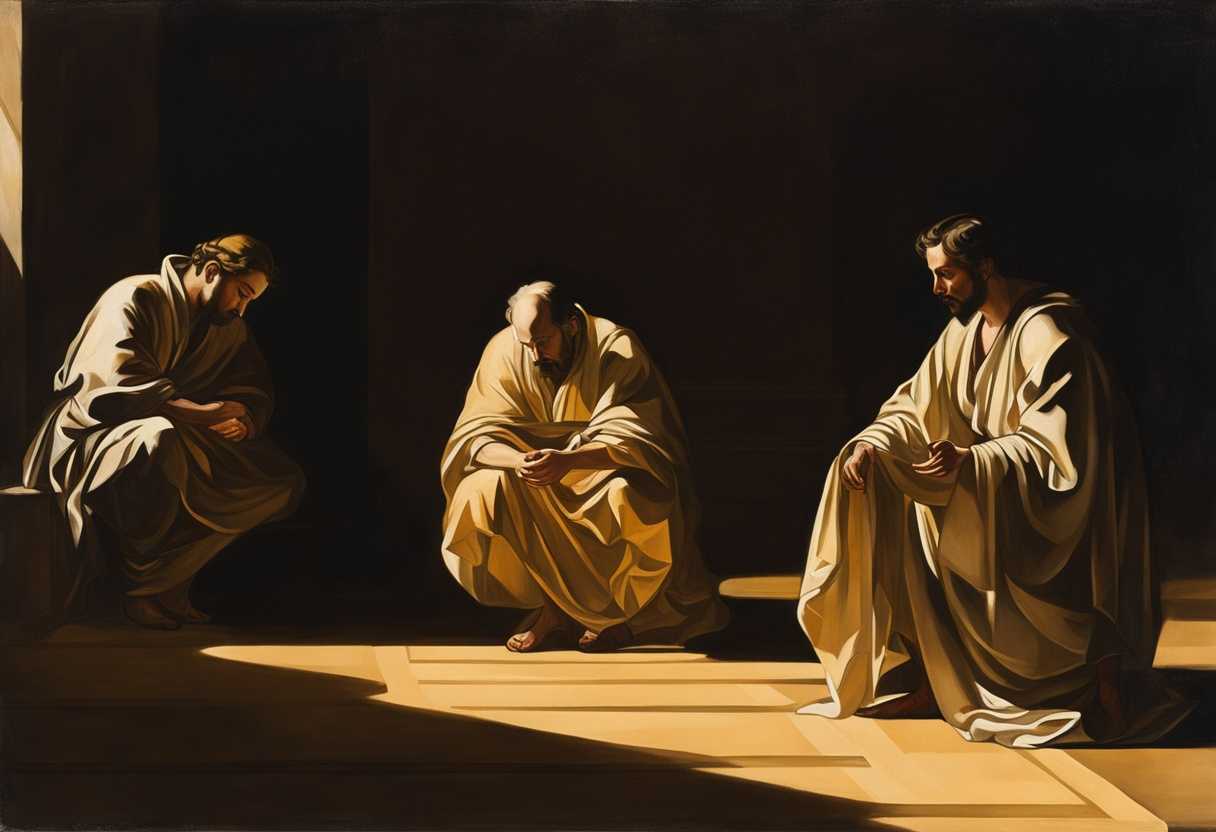
Setting the Scene for Genesis 18:1-2
In Genesis chapter 18, we find Abraham sitting at the entrance of his tent during the heat of the day. As he looks up, he sees three men standing nearby. These men are actually angels of the Lord, though Abraham does not yet know this. The men appear in human form, and their presence is unexpected.
Abraham, known for his hospitality, quickly runs to greet the men and bows down before them. He invites them to rest and refresh themselves under the shade of a tree while he prepares a meal for them. Abraham’s wife, Sarah, is also present, though she remains in the background as Abraham attends to their guests.
The scene is set in the desert, with the sun beating down on the sandy landscape. Abraham’s tent provides a welcome respite from the heat, and the sound of animals can be heard in the distance. As Abraham and Sarah entertain their guests, little do they know that these visitors will bring them life-changing news and blessings from the Lord.
What is Genesis 18:1-2 about?
Abraham entertains three visitors who are actually angels, displaying a profound act of hospitality in this verse. Abraham’s actions showcase a deep sense of generosity and respect towards his guests, embodying the values of hospitality and faithfulness. Not only does he welcome the visitors into his home, but he goes above and beyond to ensure that they are taken care of and made to feel comfortable. We reflect on this verse, reminding us of the importance of showing kindness and hospitality towards others, even when we may not fully understand their true nature or purpose. Abraham’s example challenges us to practice generosity and faithfulness in our own lives, fostering a sense of community and connection with those around us. Can you imagine the impact we could have if we approached every interaction with the same level of hospitality and openness that Abraham did? Let us embody the principles of hospitality and faithfulness in our own lives, taking inspiration from Abraham’s actions and creating a welcoming and inclusive environment for all those we encounter. By embracing the spirit of generosity and kindness, we uplift others and cultivate a sense of unity and compassion within our communities.
Understanding what Genesis 18:1-2 really means
Structure for Commentary
- Introduction: Context and Setting
- Verse Breakdown: Key Phrases and Their Meanings
- Cross-Referencing: Connecting with Other Biblical Verses
- Relevance Today: Modern Day Implications
- Anecdote: Engaging Example
- Conclusion: Wrapping Up the Ideas
Commentary
1. Introduction:
Genesis 18:1-2 is part of a larger narrative that captures a theophany, where God appears to Abraham. This moment is pivotal as it marks a divine visitation that promises a son to Abraham and Sarah. Abraham received God’s promise of becoming the father of many nations in the previous chapter. Thus, this visitation is a reaffirmation of God’s covenant.
2. Verse Breakdown:
The passage begins with “The Lord appeared to Abraham,” which sets the divine nature of the encounter. The phrase “the Lord” indicates a direct interaction with God, not just an angelic messenger. When Abraham “looked up and saw three men standing nearby,” it’s crucial to recognize the immediacy and serenity portrayed. The number three often symbolizes completeness and unity, reflecting the Holy Trinity in Christian theology. Abraham’s immediate response—running from the tent to meet them—shows his hospitality and readiness to serve.
3. Cross-Referencing:
This encounter mirrors other significant Biblical moments involving divine visitations. For instance, in Genesis 32:24-30, Jacob wrestles with God and receives a blessing. Similarly, in Hebrews 13:2, we are reminded, “Do not forget to show hospitality to strangers, for by so doing some people have shown hospitality to angels without knowing it.” These references emphasize the importance of recognizing and responding to God’s presence in our lives, often in unexpected forms.
4. Relevance Today:
Why is this moment relevant today? It serves as a reminder of the importance of hospitality and openness to divine intervention. Routines often consume us in contemporary times, causing us to miss out on moments where God might be present. Like Abraham, we may need to be prepared to recognize and welcome such encounters with humility and readiness.
**5. A woman once hosted a neighborhood gathering. She welcomed everyone, from close friends to near strangers. During the event, she met someone who later became instrumental in providing her family with crucial support during a difficult period. Her openness and hospitality opened a door to a divine blessing, much like Abraham’s encounter. It’s a practical example of how being hospitable and receptive can bring unforeseen blessings.
6. Conclusion:
Genesis 18:1-2 captures more than just an encounter; it encapsulates the essence of divine presence and human hospitality. It urges readers to stay vigilant for God’s presence, even in ordinary experiences. We open ourselves to the fullness of divine promises and interventions by being receptive and willing to serve, much like Abraham. Reflecting on this passage encourages us to cultivate a heart of hospitality, looking beyond the physical and recognizing the spiritual significance in our daily interactions.
How can we show hospitality to strangers in need?
Abraham demonstrated hospitality to strangers in need in the story of Genesis 18:1-2 by rushing to greet them, providing water for them to wash their feet, and inviting them to rest and have a meal. This act of welcoming the strangers with open arms, offering them comfort and sustenance, is a powerful exemplification of showing hospitality to those in need. It shows a willingness to put the needs of others before our own, to reach out to those who may be weary or in distress, and to treat them with kindness and generosity. We can emulate Abraham’s actions in our own lives by being attentive to the needs of strangers we encounter, whether they be physical, emotional, or spiritual. We can offer a listening ear, a helping hand, a kind gesture, or a warm meal. We are not only following in the footsteps of our ancestors but also practicing a virtue that is highly valued in many faith traditions around the world by showing hospitality to strangers in need. It is a way of embodying love, compassion, and solidarity with our fellow human beings, regardless of their background or circumstances.
Application
Think of your life as a busy office or a bustling home, where everyone needs a boost now and then. Just like Abraham welcomed strangers, let’s open our hearts to those in need around us. Can you be the colleague or neighbor who steps in with kindness and support? Will you be the beacon of love and hospitality that brightens someone’s day?

Reverend Michael Johnson is an experienced Church Minister with a profound expertise in spirituality and guidance. With a serene presence and a compassionate heart, he has faithfully served his congregation for over 20 years, leading them on a spiritual journey towards inner peace and enlightenment. Reverend Johnson’s extensive knowledge of religious philosophies and profound understanding of human nature have made him a trusted confidant and mentor to many, as he seamlessly weaves his profound wisdom into life teachings. Reverend Johnson’s calming demeanor and empathetic nature continue to uplift and heal souls, nurturing a sense of unity and tranquility within his community.