
1 And the Lord appeared to him by the oaks of Mamre, as he sat at the door of his tent in the heat of the day.
2 He lifted up his eyes and looked, and behold, three men were standing in front of him. When he saw them, he ran from the tent door to meet them and bowed himself to the earth.
3 He said, “O Lord, if I have found favor in your sight, do not pass by your servant.
4 Let a little water be brought, and wash your feet, and rest yourselves under the tree,
5 And I will bring a morsel of bread, that you may refresh yourselves, and after that you may pass on—since you have come to your servant.” So they said, “Do as you have said.”
6 And Abraham went quickly into the tent to Sarah and said, “Quick! Three seahs of fine flour! Knead it, and make cakes.”
7 And Abraham ran to the herd and took a calf, tender and good, and gave it to a young man, who prepared it quickly.
8 He took curds and milk and the calf that he had prepared, and set it before them. And he stood by them under the tree while they ate.
9 They said to him, “Where is Sarah your wife?” And he said, “She is in the tent.”
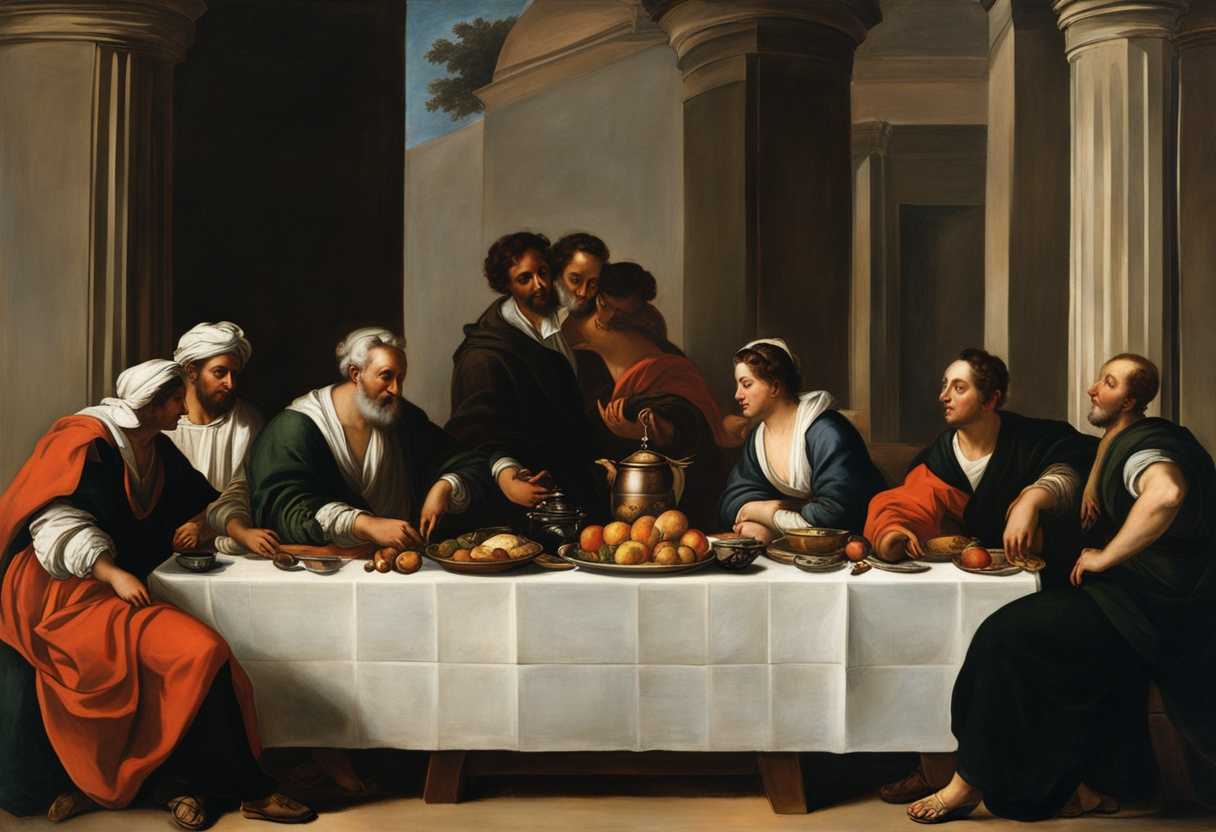
Setting the Scene for Genesis 18:1-9
In Genesis chapter 18, we find Abraham sitting at the entrance of his tent during the heat of the day. As he looks up, he sees three men standing nearby. These men are actually angels of the Lord, but Abraham does not know this yet. He runs from the entrance of his tent to greet them, showing great hospitality and respect.
Abraham invites the three men to rest under a tree while he fetches water to wash their feet and offers them food. Sarah, Abraham’s wife, is also present in the scene, helping to prepare a meal for their guests. The setting is in the plains of Mamre, near Hebron, where Abraham and Sarah have made their home. The landscape is dry and dusty, typical of the region, with the scorching sun beating down on the travelers and their hosts.
As the scene unfolds, Abraham and Sarah engage in conversation with the visitors, and it becomes clear that they are receiving a special visitation from the Lord. The atmosphere is one of reverence and awe as the divine presence is felt among them. This encounter sets the stage for the announcement of the miraculous birth of Isaac, a pivotal moment in the story of Abraham and Sarah as they continue to walk in faith and obedience to God’s promises.
What is Genesis 18:1-9 about?
Abraham displays the virtue of hospitality in this verse by welcoming and serving three passing visitors. Little did he know that one of these visitors was the Lord himself. This act of hospitality not only demonstrates Abraham’s kindness and generosity but also his faith and devotion to God. It shows us the importance of treating others with kindness and respect, even when we may not realize who they truly are.
Have you ever stopped to think about the people you encounter in your daily life? What if one of them was a divine being in disguise, testing your character and faith? Abraham’s story reminds us to always be kind and welcoming to others, as we never know who we may be entertaining. It challenges us to reflect on our own actions and how we can show hospitality and kindness to those around us, regardless of their status or appearance.
So, the next time you have the opportunity to show hospitality to someone, remember the story of Abraham and his visitors. Embrace the chance to be kind and welcoming, for you never know how your actions may be seen by a higher power. Be like Abraham, open your heart and your home, and let kindness be your guiding principle in all your interactions.
Understanding what Genesis 18:1-9 really means
Abraham encounters a divine visitation by three men in the opening narrative of Genesis 18:1-9, in the plains of Mamre, who are later understood to be manifestations of the Lord. This portion of the text not only deepens our understanding of God’s intimate relationship with His faithful servants but also exemplifies the profound virtue of hospitality.
Firstly, let’s consider the setting and action. Abraham sits at the entrance to his tent during the heat of the day, a typical scene of rest in Near Eastern culture, yet he remains vigilantly attentive, immediately responsive to the presence of his visitors. This paints a vivid picture of readiness and reverence, a life posture that every believer might aspire to emulate—being always ready to receive, whether it be divine revelation or an opportunity to serve others.
“Abraham ran to meet them,” the scripture says, illustrating a level of eagerness and respect. Here, Abraham’s actions teach us the virtues of hospitality and humility. He bows to the ground—a gesture of deep respect in ancient times and even today in many cultures. How often do we approach our daily encounters with such humility and readiness to serve? This moment in scripture challenges us to consider our own responses to the opportunities God presents to us, whether they are divinely ordained meetings or interactions in our daily routine. Abraham’s preparations indicate a generous heart. He hastens to prepare a meal, selecting choice ingredients and coordinating its preparation quickly. This generosity reflects a heart in tune with God’s own character, as Scripture repeatedly shows us a God generous in mercy and abundance. Jesus reminds us in Luke 14:12-14 to invite the poor, the crippled, the lame, and the blind when we give a feast, as they cannot repay us, echoing the selfless hospitality shown by Abraham.
Lastly, why is this passage relevant today? It’s easy to become insular, focusing on our comfort and security in our modern age. However, Abraham’s encounter reminds us that our homes and resources are not just for our benefit but are tools through which God can bless others. The act of opening our homes and lives as spaces of refuge and blessing stands counter-cultural in a world that often promotes isolation.
Let me share a brief anecdote. Last year, a new family moved into our community, seemingly aloof and detached. Despite several residents’ reluctance to interact due to their standoffish nature, one family decided to invite them over for dinner. What resulted was the start of a wonderful friendship, and through those initial awkward dinners, the new family eventually confided their struggles with settling in and expressed immense gratitude for the warm welcome.
This passage calls us to be like Abraham, not merely observers of our faith but active participants in a life of service and hospitality. Our challenge is to transform our living spaces into places of refuge and peace for those God brings across our paths. How are we preparing to meet the unexpected guests sent our way? Are we ready to serve, eager to give without expecting in return?
Genesis 18:1-9 invites us to look deeply at our own lives, urging us to live in anticipation of divine encounters and to practice hospitality as a sacred duty. Through such living, we can truly walk in the footsteps of Abraham, ‘the friend of God’ (James 2:23), whose faith was demonstrated not just in words, but profoundly in deeds.
How can we show hospitality to strangers?
We can show hospitality to strangers by welcoming them into our homes and providing them with food and drink, just as Abraham did in Genesis 18. It is important to extend kindness and generosity to those we do not know, as we never know when we may be entertaining angels or representatives of God. We fulfill a duty of hospitality and create opportunities for meaningful connections and acts of kindness by opening our hearts and homes to strangers. We can also show hospitality in our interactions with strangers by listening to their stories, offering assistance, and making them feel valued and respected. We can create a welcoming and inclusive environment that reflects the love and kindness of God by showing empathy and compassion. Additionally, practicing hospitality towards strangers allows us to break down barriers, build bridges, and foster a sense of community and unity among all people.
Application
Imagine you’re a lighthouse in a stormy sea, your beam cutting through the darkness to guide lost ships to shore. Just as Abraham, in Genesis 18:1-9, welcomed weary strangers with open arms and a feast, you too have the power to be a beacon of warmth and kindness in your own bustling world of deadlines and family dinners. Each person you meet is navigating their own rough waters; your generosity could be the light that leads them to safety. Hospitality isn’t just about setting a table; it’s about opening your heart. Will you be the lighthouse in someone’s storm today?

Reverend Michael Johnson is an experienced Church Minister with a profound expertise in spirituality and guidance. With a serene presence and a compassionate heart, he has faithfully served his congregation for over 20 years, leading them on a spiritual journey towards inner peace and enlightenment. Reverend Johnson’s extensive knowledge of religious philosophies and profound understanding of human nature have made him a trusted confidant and mentor to many, as he seamlessly weaves his profound wisdom into life teachings. Reverend Johnson’s calming demeanor and empathetic nature continue to uplift and heal souls, nurturing a sense of unity and tranquility within his community.