
Genesis 18:20-22 is about God revealing to Abraham his plan to destroy the cities of Sodom and Gomorrah due to their great wickedness, demonstrating both his justice and mercy in response to Abraham’s plea for the righteous in those cities.
20 Then the Lord said, “Because the outcry against Sodom and Gomorrah is great and their sin is very grave,
21 I will go down to see whether they have done altogether according to the outcry that has come to me.
22 So the men turned from there and went toward Sodom, but Abraham still stood before the Lord.
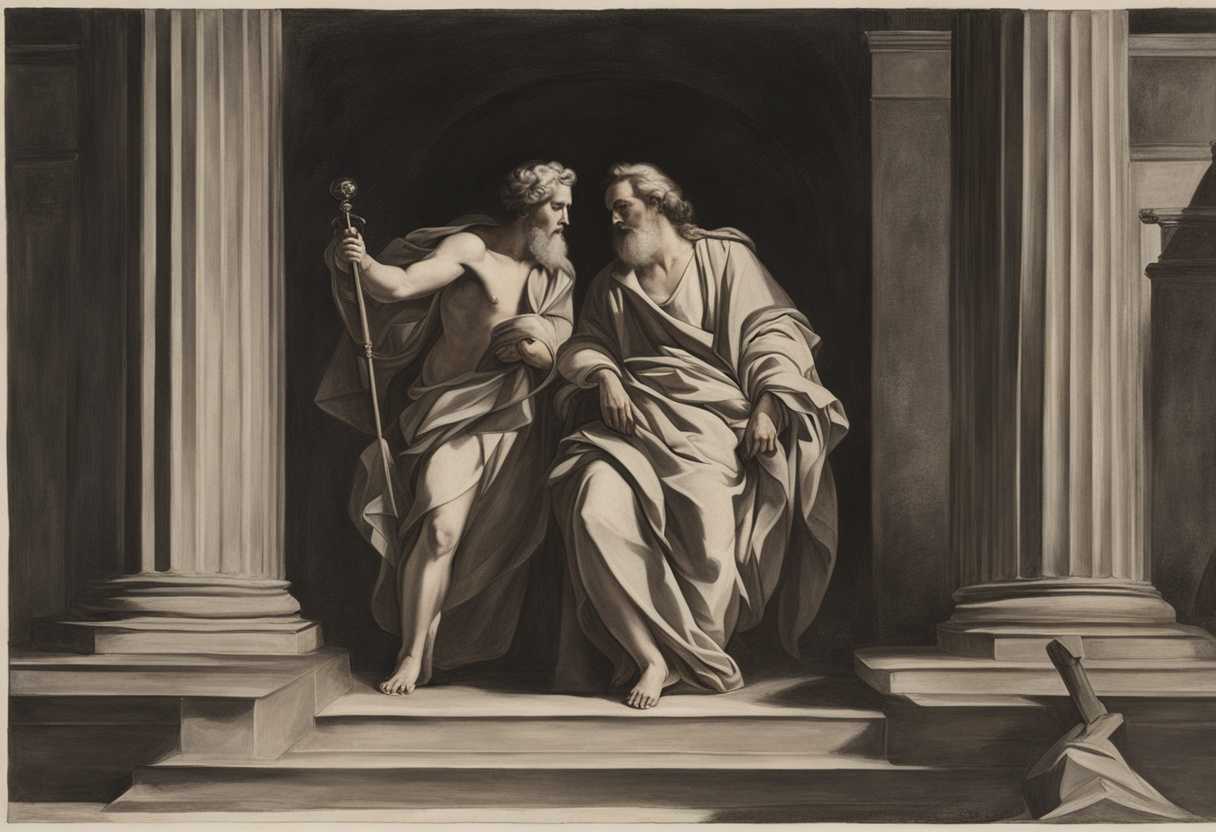
Setting the Scene for Genesis 18:20-22
In Genesis chapter 18, we find Abraham sitting at the entrance of his tent during the heat of the day. As he looks up, he sees three men standing nearby. These men are actually angels sent by God, but Abraham does not know this yet. Being the hospitable host that he is known to be, Abraham runs to greet them and invites them to rest and refresh themselves under the shade of a tree.
As the scene unfolds, Abraham’s wife Sarah is inside the tent, listening to the conversation happening outside. The men inform Abraham that they are on their way to Sodom and Gomorrah to investigate the outcry against the cities. This is where the tension in the scene builds, as Abraham begins to intercede on behalf of the cities, pleading with God to spare them if even a few righteous people are found there. The dialogue between Abraham and the angels is filled with emotion and urgency as Abraham negotiates with God for the salvation of the cities.
The setting is a peaceful and serene one, with the sun shining brightly overhead and a gentle breeze rustling through the trees. Abraham’s tent is a simple yet welcoming structure, surrounded by the vast expanse of the desert. The scene is charged with a sense of anticipation and importance as the fate of Sodom and Gomorrah hangs in the balance, and Abraham’s faith and compassion are put to the test.
What is Genesis 18:20-22 about?
Intercession plays an important role in the relationship between mankind and God, as seen in this verse. Abraham, chosen by God to be the father of many nations, is given the privilege of knowing God’s plans and purposes. He takes this knowledge and stands before God on behalf of others, specifically the people of Sodom and Gomorrah. Abraham’s act of intercession is a powerful demonstration of his compassion, empathy, and desire for mercy for those in need.
When we contemplate this verse, we are challenged to consider our own role in interceding for others in our lives. Are we willing to stand in the gap for those who are facing difficulties or in need of God’s intervention? Do we have the boldness and faith to approach God on behalf of others, even when the situation seems dire? Abraham’s example reminds us of the profound impact our prayers and intercession can have on the lives of those around us, showcasing the importance of empathy, compassion, and a heart aligned with God’s will. Let us reflect on Abraham’s actions and strive to be intercessors who selflessly advocate for others in our communities, families, and beyond.
Understanding what Genesis 18:20-22 really means
Genesis 18:20-22 unveils a pivotal moment in the biblical narrative, where God discloses to Abraham His plan to investigate the outcry against the cities of Sodom and Gomorrah. This revelation serves as a prelude to Abraham’s subsequent plea for mercy on behalf of the inhabitants, showcasing his role as a mediator between humanity and the divine. The gravity of the situation is underscored by the phrase “The outcry against Sodom and Gomorrah is so great,” indicating the magnitude of the sins that have provoked divine scrutiny. It suggests a tipping point where the collective wrongdoing of the cities has become intolerable, necessitating God’s intervention.
Moreover, the declaration that “Their sin is so grievous” emphasizes the profound nature of the transgressions, portraying them not as mere lapses in judgment but as profound moral failings that cry out for justice. God’s statement, “I will go down and see,” employs anthropomorphic language to convey His commitment to thorough investigation before meting out judgment. This portrayal of God as a just and fair arbiter underscores the importance of discerning the truth and understanding the full extent of the situation before taking action.
The passage’s relevance extends beyond its historical context, resonating with contemporary issues of justice and accountability. In a world rife with injustices and moral decay, the assurance that God is cognizant of human wrongdoing and will act justly offers solace and hope. It beckons us to emulate Abraham’s compassion and advocacy for mercy, urging us to intercede for those in need and champion righteousness in a world marred by sin.
Drawing parallels with other biblical passages, such as Genesis 4:10, Exodus 3:7, and Psalm 34:15, reinforces the theme of God’s attentiveness to human suffering and His responsiveness to the cries of the oppressed. These verses collectively paint a portrait of a God who is intimately involved in the affairs of humanity, attuned to both the righteous and the downtrodden, and poised to act on their behalf.
To elucidate the passage’s significance further, consider a scenario where a community confronts corruption, akin to the outcry against Sodom and Gomorrah. Just as authorities meticulously investigate allegations before rendering judgment, God’s methodical approach underscores the importance of truth and justice in His divine governance. Likewise, on a personal level, when we encounter injustices or witness wrongdoing, the assurance that God sees and hears all encourages us to trust in His righteous judgment and advocate for righteousness in our spheres of influence.
In conclusion, Genesis 18:20-22 imparts profound lessons on God’s justice, His compassion for the oppressed, and the imperative of interceding for others. It prompts us to be vigilant in recognizing injustices, to emulate Abraham’s plea for mercy, and to place our trust in God’s unwavering commitment to righteousness. As we navigate a world fraught with moral dilemmas and societal injustices, may this passage serve as a beacon of hope, reminding us of God’s omnipresent gaze and His promise to uphold justice in due time.
How can we discern God’s will in our lives?
Abraham sought to discern God’s will through prayer and conversation in the story of Abraham interceding for the people of Sodom and Gomorrah. He did not hesitate to engage with God in a direct and open manner, asking questions and seeking clarity. This illustrates the importance of communication with God in discerning His will in our lives.
Furthermore, Abraham’s humility is also evident in his dialogue with God. He approached the situation with a sense of reverence and submission, acknowledging God’s ultimate authority and wisdom. This highlights the need for humility and a willingness to accept God’s will even when it may not align with our own desires or understanding. Discerning God’s will requires a deep and personal relationship with Him, grounded in prayer, dialogue, humility, and submission. We can trust that God will lead us in the paths He has prepared for us by seeking His guidance with sincerity and openness.
Application
Pause, reflect, and hear His voice. Trust in His plan for you, and have faith in His guidance during moments of uncertainty. Assess your commitment and surrender to His will. Will you make the choice to follow His path with determination?

Reverend Michael Johnson is an experienced Church Minister with a profound expertise in spirituality and guidance. With a serene presence and a compassionate heart, he has faithfully served his congregation for over 20 years, leading them on a spiritual journey towards inner peace and enlightenment. Reverend Johnson’s extensive knowledge of religious philosophies and profound understanding of human nature have made him a trusted confidant and mentor to many, as he seamlessly weaves his profound wisdom into life teachings. Reverend Johnson’s calming demeanor and empathetic nature continue to uplift and heal souls, nurturing a sense of unity and tranquility within his community.