
6 And Abraham went quickly into the tent to Sarah and said, “Quick! Three seahs of fine flour! Knead it, and make cakes.”
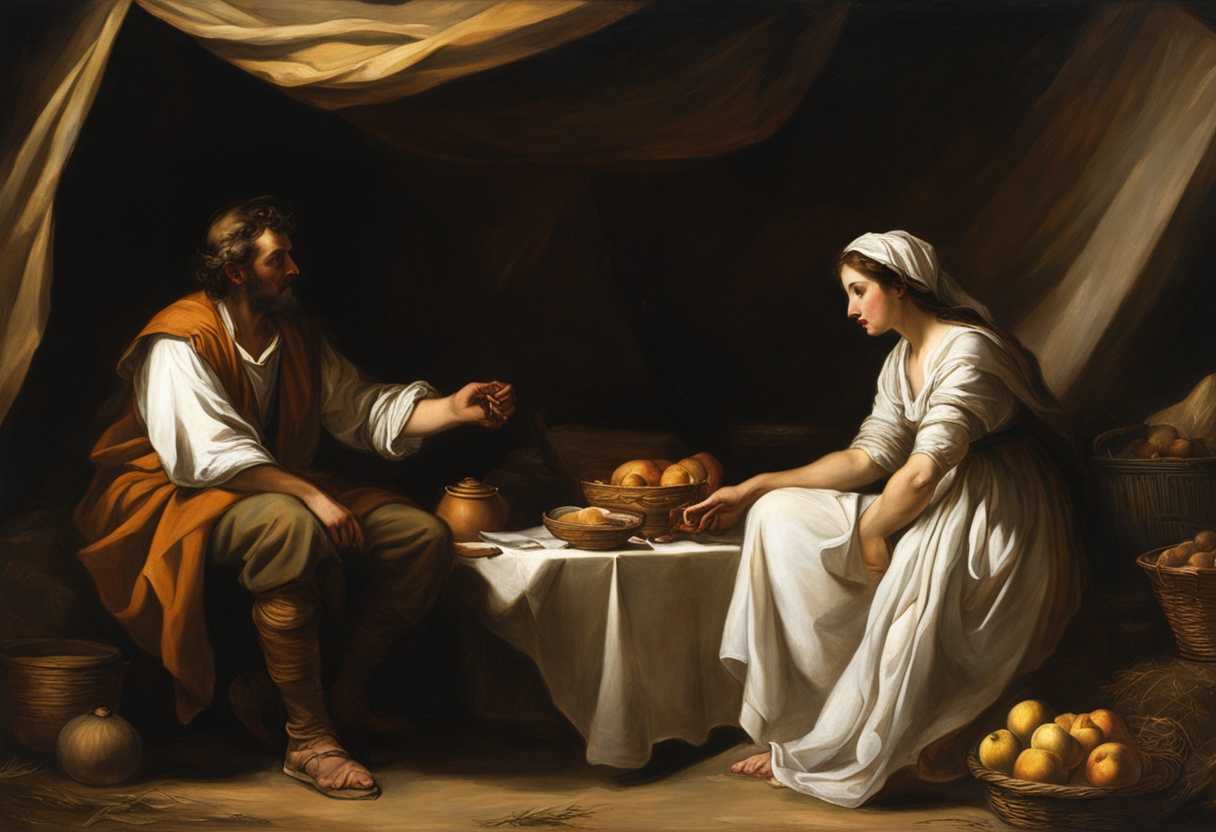
Setting the Scene for Genesis 18:6
In Genesis chapter 18, we find Abraham sitting at the entrance of his tent during the heat of the day. As he looks up, he sees three men standing nearby. These men are actually angels of the Lord, but Abraham does not know this yet. He runs from the entrance of his tent to greet them and bows down to the ground, showing them great respect and hospitality.
Abraham invites the three men to rest under a tree while he fetches water to wash their feet and offers them food. Sarah, Abraham’s wife, is inside the tent listening to the conversation. The scene is set in the plains of Mamre, near Hebron, where Abraham and Sarah have made their home. The surroundings are peaceful, with the sound of birds chirping and a gentle breeze blowing through the trees. The hospitality and kindness shown by Abraham and Sarah towards the three strangers set the stage for a significant event that will unfold in the following verses.
What is Genesis 18:6 about?
Abraham displays a sense of urgency and hospitality by asking Sarah to quickly prepare bread for their guests in this verse. Abraham’s request for the finest flour emphasizes the importance of offering the best hospitality and showing respect to their visitors. Abraham is demonstrating the value of sharing food as a way to show care and generosity towards others by instructing Sarah to prepare bread.
Imagine the scene unfolding before you – Abraham rushing into the tent, eager to ensure their guests are well taken care of. His quick actions and attention to detail reflect a culture of hospitality and kindness. This verse serves as a reminder of the significance of welcoming others into our homes and making them feel cherished and valued. What can we learn from Abraham’s actions about the importance of hospitality and treating others with warmth and generosity? How can we practice similar gestures of kindness and thoughtfulness in our own lives to create a welcoming and inclusive environment for those around us?
Understanding what Genesis 18:6 really means
Structure for the Commentary
- Introduction to the Verse
- Context within the Chapter
- Key Phrases and Their Meanings
- Connecting with Other Scripture
- Relevance in Today’s World
- Personal Anecdote
- Conclusion and Reflection
Commentary
Introduction to the Verse
The selected verse falls within the intriguing story of Genesis 18 where Abraham shows hospitality to three visitors who turn out to be divine messengers. This passage highlights themes of hospitality, divine encounter, and promise. Let’s delve deeper into the meanings and implications of it.
Context within the Chapter
Genesis 18 begins with Abraham sitting by the entrances of his tent in the heat of the day. Suddenly, he notices three men standing nearby. Perceiving them as divine or highly significant, Abraham runs to greet them, offering them rest, refreshment, and nourishment. This act of hospitality involves multiple members of his household, including Sarah who prepares the meal. This sets the stage for the announcement of the miraculous birth of Isaac.
Key Phrases and Their Meanings
The verse talks about Abraham instructing Sarah to hurriedly make preparations. The urgency in his voice, “Quick,” denotes the importance of the guests and the need to honor them promptly. The phrase “fine flour” signifies the quality and care given to the preparation. The use of “knead it and make bread” indicates a hands-on effort, symbolizing dedication and service. This manner of preparing food reflects both the reverence Abraham has for his guests and the cultural significance of hospitality.
Connecting with Other Scripture
Hospitality is a recurring theme in the Bible. Hebrews 13:2 instructs believers not to forget to show hospitality to strangers, for by doing so some have shown hospitality to angels without knowing it. Another poignant parallel is the Parable of the Good Samaritan in Luke 10:25-37, which emphasizes loving and caring for others regardless of their identity. These passages collectively teach us to extend kindness and generosity, often connected to divine encounters and blessings. Providing thoughtful hospitality can bring people closer and is a tangible way of demonstrating God’s love in a world that often seems indifferent or hurried. Our lives are filled with schedules and deadlines, making genuine, heartfelt hospitality rare yet immensely impactful. It can be deeply transformative when someone goes out of their way to make you feel valued and welcome.
Personal Anecdote
I recall a time when I visited a family who had recently been displaced due to a natural disaster. Despite their own hardship, they offered me freshly baked bread and tea. Their act of kindness and hospitality, given in their time of need, was incredibly humbling and taught me about the love and grace that transcends one’s circumstances. Their actions were reminiscent of Sarah and Abraham’s; they recognized the sacredness in serving others.
Conclusion and Reflection
Reflect on how you can incorporate the spirit of this verse into your life. When was the last time you extended heartfelt hospitality? How can you recognize and honor the ‘divine encounters’ in your everyday experiences? As we embrace these virtues, let us consider the broader impact of our actions. Just as Abraham and Sarah were part of God’s plan in welcoming the divine messengers, our acts of kindness can unfold greater purposes.
How can we show hospitality to strangers?
One way to show hospitality to strangers is by providing them with food and drink. This act of hospitality can involve offering a meal, a drink, or even a place to rest. We demonstrate care and generosity by showing kindness through sharing what we have with strangers, creating a welcoming environment.
Another way to show hospitality to strangers is by being attentive and respectful in our interactions with them. This can involve listening to their needs, showing empathy, and making genuine efforts to connect with them. We can make strangers feel valued and respected by being present and considerate.
Furthermore, offering a helping hand or assistance to strangers in need is another way to show hospitality. We can show strangers that they are not alone and that there are people who care about them by extending support and going out of our way to offer help. This act of kindness can foster a sense of community and solidarity, creating a positive and welcoming space for strangers.
Application
Picture your life as a busy office or bustling household. Genesis 18:6 shows Abraham eagerly welcoming three strangers, who ended up being angels. Just as Abraham opened his home, you are called to open your heart and life to others. Find the time to share your warmth and generosity, because you never know the true impact of your kindness. Will you take this chance to bring light into someone else’s life today?

Reverend Michael Johnson is an experienced Church Minister with a profound expertise in spirituality and guidance. With a serene presence and a compassionate heart, he has faithfully served his congregation for over 20 years, leading them on a spiritual journey towards inner peace and enlightenment. Reverend Johnson’s extensive knowledge of religious philosophies and profound understanding of human nature have made him a trusted confidant and mentor to many, as he seamlessly weaves his profound wisdom into life teachings. Reverend Johnson’s calming demeanor and empathetic nature continue to uplift and heal souls, nurturing a sense of unity and tranquility within his community.