
30 Now Lot went up out of Zoar and lived in the hills with his two daughters, for he was afraid to live in Zoar. So he lived in a cave with his two daughters.
31 And the firstborn said to the younger, “Our father is old, and there is not a man on earth to come in to us after the manner of all the earth.
32 Come, let us make our father drink wine, and we will lie with him, that we may preserve offspring from our father.
33 So they made their father drink wine that night. And the firstborn went in and lay with her father. He did not know when she lay down or when she arose.
34 The next day, the firstborn said to the younger, “Behold, I lay last night with my father. Let us make him drink wine tonight also. Then you go in and lie with him, that we may preserve offspring from our father.”
35 So they made their father drink wine that night. And the firstborn went in and lay with her father. He did not know when she lay down or when she arose.
36 Thus both the daughters of Lot became pregnant by their father.
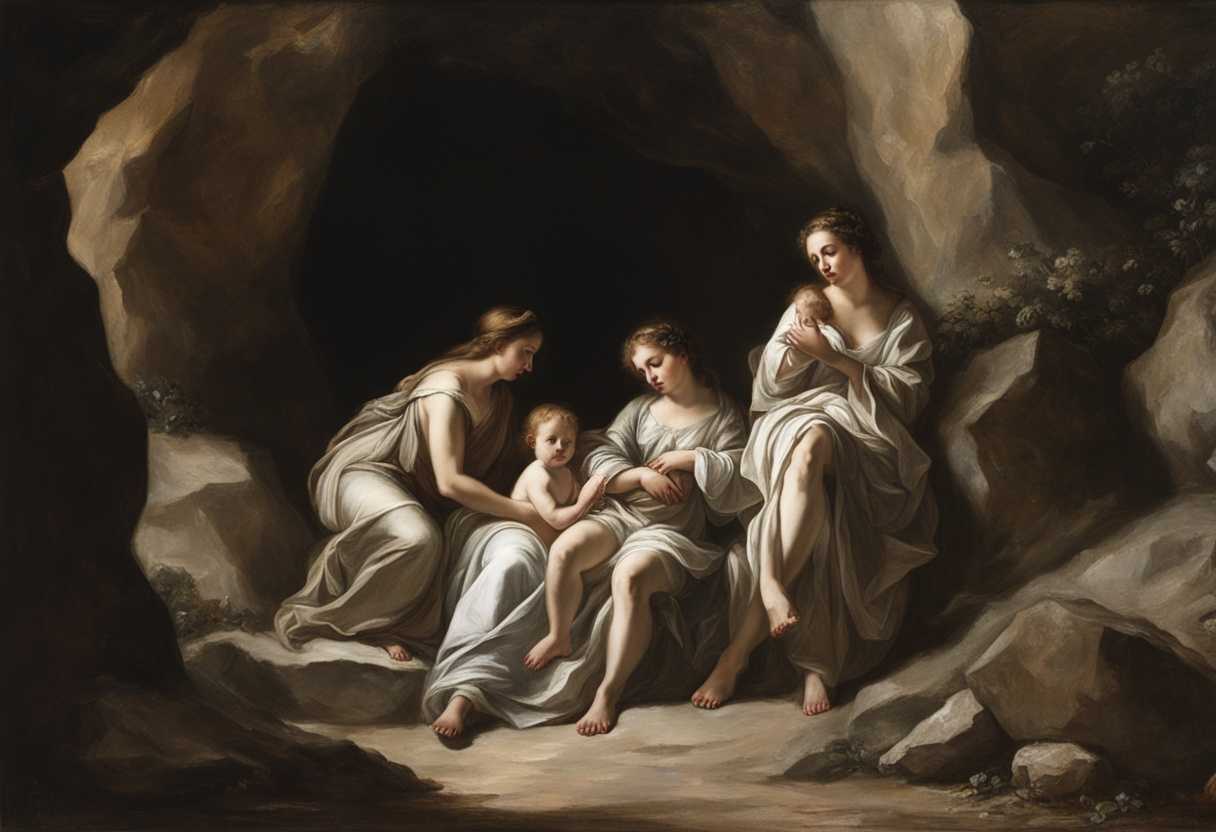
Setting the Scene for Genesis 19:30-36
In Genesis 19:30-36, the scene unfolds in a cave in the mountains near the city of Zoar. Lot and his two daughters, who had fled the destruction of Sodom and Gomorrah, find themselves in this isolated place. The city had been destroyed by fire and brimstone as a result of its wickedness, and Lot’s wife had tragically turned into a pillar of salt when she looked back at the destruction against the warning given by the angels.
Feeling alone and fearing that there are no other survivors, Lot’s daughters come up with a plan to ensure their family line continues. They get their father Lot drunk on wine on two consecutive nights and each daughter sleeps with him, resulting in them both becoming pregnant. The circumstances are desperate, and the daughters believe this is the only way to preserve their family line.
The atmosphere in the cave is one of desperation and sorrow, as Lot’s family has lost everything they had in Sodom and Gomorrah. The daughters’ actions, though controversial, stem from a place of fear and a desire to ensure their family’s survival in the aftermath of the catastrophic events they have witnessed.
What is Genesis 19:30-36 about?
The verse in the Bible shows an example of the complex and often troubling dynamics. The actions of Lot’s daughters towards their father may seem shocking and morally questionable to us today. However, we must remember the context of the time in which this story was set. Family lineage and the continuation of one’s bloodline were of utmost importance in ancient societies. This extreme act by Lot’s daughters was likely born out of a desperate belief that they needed to ensure the survival of their family line. Individuals in the past faced harsh realities where survival and societal norms often dictated extreme and unimaginable actions as we reflect on this verse. It challenges us to consider the lengths to which people may go to protect their families and preserve their heritage in the face of adversity. This verse serves as a reminder of the complexities of human nature and the sometimes uncomfortable truths found in ancient texts. It prompts us to delve deeper into the cultural, historical, and ethical nuances of such narratives, sparking important discussions and reflections on the values and beliefs that shaped the lives of those who came before us.
Understanding what Genesis 19:30-36 really means
Structure for Commentary
- Context and Background
- Detailed Explanation
- Relevant Cross-References
- Modern Relevance
- Personal Anecdote and Reflection
- Lot and his daughters are read about in these verses following the destruction of Sodom and Gomorrah. Lot and his daughters fled to the mountains and settled in a cave. The daughters, driven by a misunderstood sense of duty and survival, committed an act of incest with their father to ensure their family line would continue.
Detailed Explanation:
Key phrases such as “dwelt in a cave” and “there is not a man in the earth to come in unto us” draw our attention to the desperate and isolated situation that Lot’s daughters found themselves in. The cave represents both physical isolation and a metaphorical retreat from society, amplifying their feeling of hopelessness. Their misguided solution to this crisis led them to take drastic measures by deceiving their father through intoxicating him with wine.
Relevant Cross-References:
The actions of Lot’s daughters have echoes in other parts of the Bible, particularly in stories that show the complexity of human morality when faced with dire circumstances. For example, the story of Tamar in Genesis 38 demonstrates another instance of a woman taking extreme measures to ensure the continuation of her lineage. Similarly, the broader narrative context of Noah’s story in Genesis 9 reveals the dangers of drunkenness and its potential to lead to grievous situations.
Modern Relevance:
This passage underscores the complexities of human decision-making, especially under stress. It challenges us to think critically about how isolation and desperation can lead to misguided choices. People in modern times often face situations where they feel isolated or pressured to act out of desperation. Understanding the potential consequences of our actions, even in tough circumstances, remains highly relevant today. I often recall a story from my pastoral ministry when counseling individuals who feel isolated or desperate. A young woman once approached me, feeling cornered by societal and familial expectations, believing she had no honorable path forward. We discussed this passage, not to justify Lot’s daughters’ actions, but to illuminate the importance of seeking wisdom and support rather than resorting to drastic actions. Through prayer and community support, she found a resolution that honored her values and faith. Reflecting on these verses reminds us of the importance of seeking guidance and moral clarity, especially in isolating or desperate times. It prompts us to question how we react under pressure and encourages us to seek out God’s wisdom rather than succumbing to immediate and potentially harmful solutions. How might we better support those around us in times of crisis to prevent them from feeling so isolated? Let us consider this complex world deeply as we strive to live out our faith.
Can sexual sin lead to unhealthy family relationships?
Yes, sexual sin can indeed lead to unhealthy family relationships, as seen in the actions of Lot and his daughters in Genesis 19:30-36. Lot and his daughters engage in sexual relations with each other out of desperation and a distorted sense of duty after the destruction of Sodom and Gomorrah in this passage. This sinful act not only violates the boundaries of a healthy family dynamic but also brings about shame, guilt, and dysfunction within the family unit.
The consequences of sexual sin in this story are profound and far-reaching, affecting not just the individuals involved but also impacting future generations. The breakdown of trust, respect, and moral values within the family can lead to long-lasting emotional and psychological scars that can perpetuate a cycle of dysfunction and brokenness. It serves as a stark reminder of the destructive power of sexual sin and the importance of upholding God’s design for purity and healthy relationships within the family unit.
Application
Think of your values as the blueprint for your life’s building. Straying from them is like letting cracks form in the foundation. Reinforce your commitment to faith and integrity. Choices aligned with God’s path are solid bricks in this structure. Will you let your life’s blueprint stand strong and remain true to God’s guidance?

Reverend Michael Johnson is an experienced Church Minister with a profound expertise in spirituality and guidance. With a serene presence and a compassionate heart, he has faithfully served his congregation for over 20 years, leading them on a spiritual journey towards inner peace and enlightenment. Reverend Johnson’s extensive knowledge of religious philosophies and profound understanding of human nature have made him a trusted confidant and mentor to many, as he seamlessly weaves his profound wisdom into life teachings. Reverend Johnson’s calming demeanor and empathetic nature continue to uplift and heal souls, nurturing a sense of unity and tranquility within his community.