
1 In the beginning, God created the heavens and the earth.
2 The earth was without form and void, and darkness was over the face of the deep. And the Spirit of God was hovering over the face of the waters.
3 And God said, “Let there be light,” and there was light.
4 And God saw that the light was good.
5 God called the light Day, and the darkness he called Night. And there was evening and there was morning, the first day.
6 And God said, “Let there be an expanse in the midst of the waters, and let it separate the waters from the waters.”
7 And God made the expanse and separated the waters that were under the expanse from the waters that were above the expanse. And it was so.
8 And God called the expanse Heaven. And there was evening and there was morning, the second day.
9 And God said, “Let the waters under the heavens be gathered together into one place, and let the dry land appear.” And it was so.
10 God called the dry land Earth, and the waters that were gathered together he called Seas. And God saw that it was good.
11 And God said, “Let the earth sprout vegetation, plants yielding seed, and fruit trees bearing fruit in which is their seed, each according to its kind, on the earth.” And it was so.
12 The earth brought forth vegetation, plants yielding seed according to their own kinds, and trees bearing fruit in which is their seed, each according to its kind. And God saw that it was good.
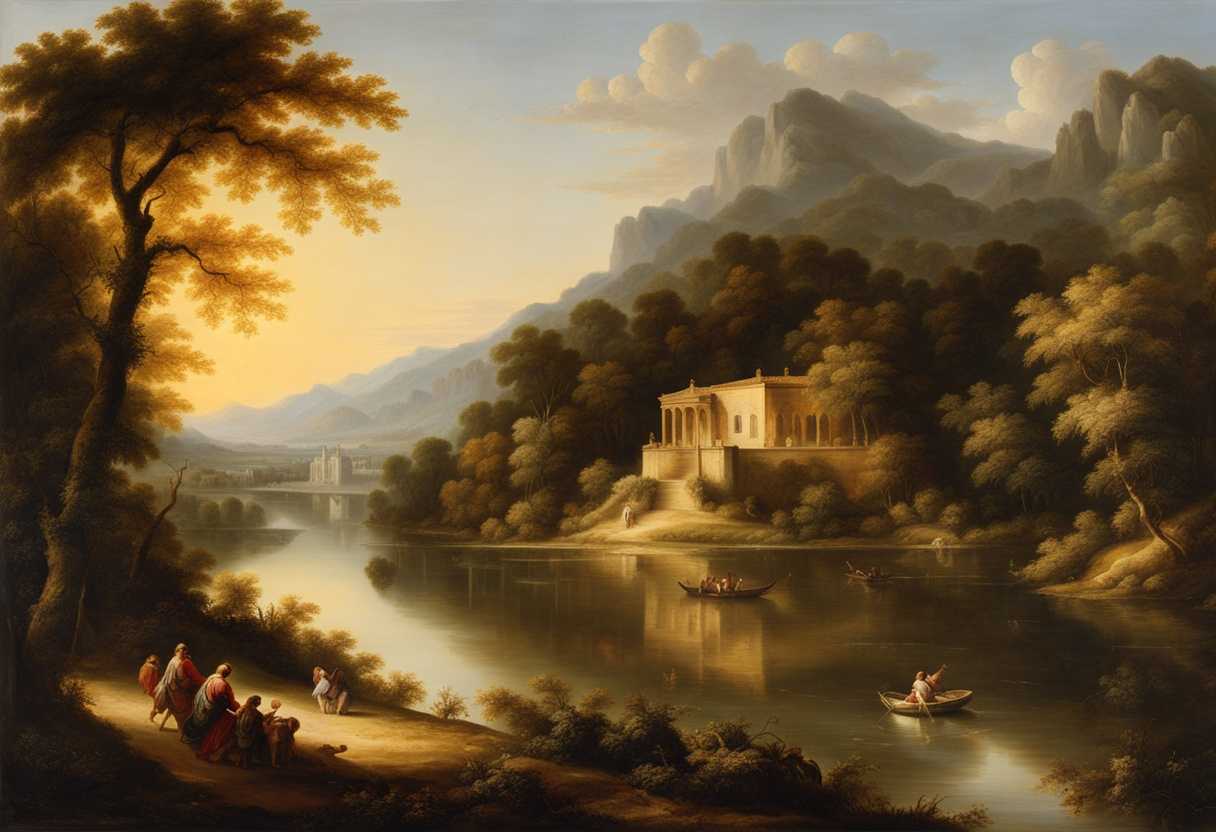
Setting the Scene for Genesis 1:1-12
In the beginning, God created the heavens and the earth. The earth was formless and empty, and darkness covered the deep waters. And the Spirit of God was hovering over the surface of the waters. Then God said, “Let there be light,” and there was light. God saw that the light was good, and he separated the light from the darkness. God called the light “day” and the darkness “night.”
As the scene unfolds, we see God continuing to create the world. He separates the waters to form the sky and the seas. He commands the land to appear, bringing forth vegetation, plants yielding seeds, and trees bearing fruit. The earth begins to teem with life as God creates the sun, moon, and stars to govern the day and night. Birds fill the sky, fish swim in the seas, and animals roam the land. Each creation is carefully crafted by the divine hand of God, bringing order and beauty to the world.
In this majestic setting, we witness the power and creativity of God on full display. The scene is filled with awe and wonder as the Creator speaks life into existence, shaping the world with precision and purpose. The beauty of the newly formed earth is a testament to God’s sovereignty and love for His creation. The stage is set for the unfolding story of humanity, as God’s plan for the world begins to take shape.
What is Genesis 1:1-12 about?
Isn’t it amazing to think about the incredible power of creation that God holds? This verse from Genesis sums up the vastness and complexity of the universe that God brought into existence in just a few short sentences. From the grand expanse of the heavens to the delicate beauty of the vegetation, every detail was carefully crafted by God’s hand. Can you imagine the sheer magnitude of God’s creative ability and the incredible beauty that surrounds us in the world as you read these words?
Reflecting on this verse can remind us of the majesty and wonder of God’s creation all around us. It can prompt us to take a moment to appreciate the intricate design and perfect balance present in the natural world. From the smallest seed to the largest galaxies, everything bears witness to the glory of God’s handiwork. As you meditate on this verse, consider how you can honor and care for God’s creation, recognizing the value and beauty that it holds.
Understanding what Genesis 1:1-12 really means
Structure for Commentary:
- Introduction to the Passage
- Breakdown and Explanation of Key Phrases
- Thematic Connections with Other Biblical Passages
- Relevance of the Passage to Contemporary Life
- Anecdote for Illustration
- Conclusion and Reflection Questions
Commentary:
1. Introduction to the Passage
Genesis 1:1-12 describes the creation of the world by God. It encompasses the first four days, where God brings light, separates it from darkness, and creates the sky, land, seas, and plants. This passage forms the foundation of the biblical narrative, showing God’s power and intentionality in creation.
**2. The phrase “In the beginning God created the heavens and the earth” serves as the opening statement, marking the start of time and the universe. God’s creative work begins with the simple yet profound act of bringing light into the void. The command “Let there be light” highlights God’s sovereignty; His word alone brings things into existence. The separation of light and darkness, day and night, serves as a metaphor for order establishing itself over chaos.
When God says, “Let the land produce vegetation,” He is delegating some creative power to creation itself. Plants yielding seeds according to their kinds show the ordered structure and purposefulness of God’s work. There’s an inherent system and sustainability embedded within creation, emphasizing that God’s designs perpetuate growth and life.
3. Thematic Connections with Other Biblical Passages
The divine word’s creative power extends throughout Scripture. Jesus, referred to as the Word, is depicted as a foundational part of creation in John 1:1-3. “Through Him all things were made; without Him, nothing was made that has been made.” This links the Genesis account to the New Testament, suggesting that creation’s purpose and order are part of a larger divine narrative. Psalms 33:6 affirms God’s creative power by stating, “By the word of the LORD were the heavens made, their starry host by the breath of His mouth.””
4. Relevance of the Passage to Contemporary Life
Today, this passage challenges us to view the world around us as a divine gift, crafted with care and purpose. It raises important questions about our responsibility towards environmental stewardship. If God went to such lengths to create a balanced and ordered world, how might we honor that in our daily lives? It encourages reflection on our daily interactions with the natural world and our efforts to preserve its integrity.
**5. A gardener meticulously plans and tends to their garden. Each plant has its place, water and nutrients are distributed carefully, and the gardener watches over the garden with pride. One day, the gardener shares the garden’s produce with neighbors, illustrating that their painstaking effort wasn’t just for personal gain but to benefit the community. Similarly, God’s creation is a gift meant to be enjoyed and shared responsibly with others.
**6. We must ask ourselves: How do we reflect God’s creativity and care in our lives as we ponder Genesis 1:1-12? Are we stewarding the earth in a way that honors its Creator? We can deepen our understanding and appreciation of this passage by considering these questions. Let us strive to emulate God’s intentionality and care in how we live and interact with creation.
Reflect on these points as you continue your week. How will understanding God’s creative order influence your actions? Can you see areas in your life where order and intentionality need to be restored?
How can we experience God’s power in creation?
We can experience God’s power in creation by recognizing the magnitude and intricacy of the world around us. When we observe the vast expanse of the universe, the delicate balance of ecosystems, and the stunning diversity of life forms on Earth, we are witnessing the handiwork of a powerful and creative God. Every sunrise, every storm, every blooming flower is a testament to the immense power and wisdom of our Creator. We can also experience God’s power in creation in our daily lives by cultivating a sense of awe and gratitude for the world we live in. Taking time to marvel at the beauty of nature, whether it’s a majestic mountain range or a tiny butterfly, can help us connect with the divine presence that is all around us. We can deepen our faith and appreciation for the God who spoke the universe into existence by acknowledging the power behind these wonders. Recognizing God’s power in creation can ultimately lead us to a deeper sense of humility and reverence. When we stand in awe of the natural world, we are reminded of our own smallness and dependence on a higher power. This awareness can inspire us to live with a greater sense of awe and respect for the world God has made, and to seek ways to be good stewards of the earth and all its creatures.
Application
Reflect on your busy life—work, family, endless tasks—and see God’s creation in every detail. Genesis 1:1-12 isn’t just a story; it’s a call to witness the beauty around you. Don’t just breeze through these moments; take a pause to honor and praise. Will you let the divine creation be merely background noise, or will you stop and truly appreciate His masterpiece?

Reverend Michael Johnson is an experienced Church Minister with a profound expertise in spirituality and guidance. With a serene presence and a compassionate heart, he has faithfully served his congregation for over 20 years, leading them on a spiritual journey towards inner peace and enlightenment. Reverend Johnson’s extensive knowledge of religious philosophies and profound understanding of human nature have made him a trusted confidant and mentor to many, as he seamlessly weaves his profound wisdom into life teachings. Reverend Johnson’s calming demeanor and empathetic nature continue to uplift and heal souls, nurturing a sense of unity and tranquility within his community.