
1 In the beginning, God created the heavens and the earth.
2 The earth was without form and void, and darkness was over the face of the deep. And the Spirit of God was hovering over the face of the waters.
3 And God said, “Let there be light,” and there was light.
4 And God saw that the light was good.
5 God called the light Day, and the darkness he called Night. And there was evening and there was morning, the first day.
6 And God said, “Let there be an expanse in the midst of the waters, and let it separate the waters from the waters.”
7 And God made the expanse and separated the waters that were under the expanse from the waters that were above the expanse. And it was so.
8 And God called the expanse Heaven. And there was evening and there was morning, the second day.
9 And God said, “Let the waters under the heavens be gathered together into one place, and let the dry land appear.” And it was so.
10 God called the dry land Earth, and the waters that were gathered together he called Seas. And God saw that it was good.
11 And God said, “Let the earth sprout vegetation, plants yielding seed, and fruit trees bearing fruit in which is their seed, each according to its kind, on the earth.” And it was so.
12 The earth brought forth vegetation, plants yielding seed according to their own kinds, and trees bearing fruit in which is their seed, each according to its kind. And God saw that it was good.
13 And there was evening and there was morning, the third day.
14 And God said, “Let there be lights in the expanse of the heavens to separate the day from the night. And let them be for signs and for seasons, and for days and years,
15 and let them be lights in the expanse of the heavens to give light upon the earth.” And it was so.
16 And God made the two great lights—the greater light to rule the day and the lesser light to rule the night—and the stars.
17 And God set them in the expanse of the heavens to give light on the earth,
18 to rule over the day and over the night, and to separate the light from the darkness. And God saw that it was good.
19 And there was evening and there was morning, the fourth day.
20 And God said, “Let the waters swarm with swarms of living creatures, and let birds fly above the earth across the expanse of the heavens.”
21 So God created the great sea creatures and every living creature that moves, with which the waters swarm, according to their kinds, and every winged bird according to its kind. And God saw that it was good.
22 And God blessed them, saying, “Be fruitful and multiply and fill the waters in the seas, and let birds multiply on the earth.”
23 And there was evening and there was morning, the fifth day.
24 And God said, “Let the earth bring forth living creatures according to their kinds—livestock and creeping things and beasts of the earth according to their kinds.” And it was so.
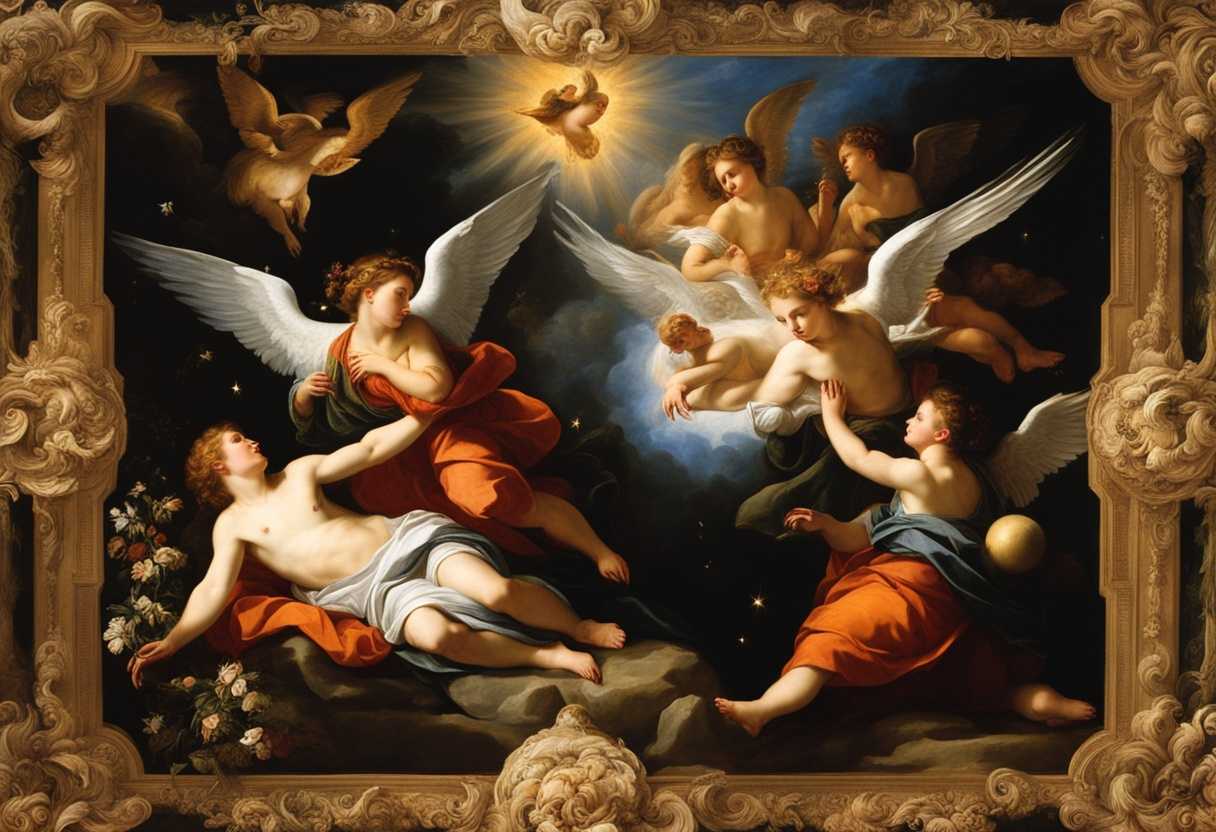
Setting the Scene for Genesis 1:1-24
In the beginning, God created the heavens and the earth. The earth was formless and empty, and darkness covered the deep waters. And the Spirit of God was hovering over the surface of the waters. Then God said, “Let there be light,” and there was light. God saw that the light was good, and he separated the light from the darkness. He called the light “day” and the darkness “night.”
As the scene unfolds, we see God continuing to create the world. He separated the waters to create the sky and the seas. Then God commanded the waters to be filled with living creatures and the sky with birds. The land was formed, and God made vegetation, plants yielding seed, and fruit trees. The earth was teeming with life as God created animals of all kinds, each according to their kind. Finally, God created humankind in His image, male and female, and gave them dominion over all living creatures on earth.
In this majestic scene, we witness the power and creativity of God as He brings forth the world and all its inhabitants. The setting is awe-inspiring, with the earth taking shape under the divine command. The scene is filled with a sense of wonder and beauty as God’s creation unfolds in perfect harmony and order.
What is Genesis 1:1-24 about?
This verse describes the magnificent creation of the world by God in just six days. Can you imagine the power and divine ability it would take to shape the vastness of the universe, the intricacies of life, and the beauty of nature within such a short span of time? Each day, a new element of the world was brought into existence, showcasing the wondrous diversity and complexity of God’s creation.
From the radiance of light to the abundance of land and sea, from the lushness of plants to the creatures that roam the earth, everything was meticulously designed and carefully crafted by the divine hands of God. And in the climax of creation, humankind was created in the likeness of God, reflecting the image of the Creator in both physical form and spiritual essence. This verse serves as a testament to the boundless power, creativity, and love of God, who brought forth the world and all its inhabitants with purpose and intention.
Understanding what Genesis 1:1-24 really means
Delving into the structure of the creation narrative in examining Genesis 1:1-24 involves exploring the meaning behind the specific phrases, cross-referencing with other biblical texts, considering relevance to contemporary life, and including a closing anecdote to make the themes relatable. This first chapter in Genesis sets the foundation for the entire biblical story, revealing pivotal insights about God, the world, and humanity’s place within it. It’s a passage rich with meaning and echoes throughout the scriptures, offering profound implications for how we view and engage with the world today.
Commentary Structure
- The Structure of the Creation Narrative
- Meaningful Phrases and Their Significance
- Cross-references with Other Biblical Texts
- Relevance to Contemporary Life
- Conclusion and Anecdote
The Structure of the Creation Narrative
Genesis 1:1-24 is divided into a series of creative acts spread over six days. Each day builds upon the previous one, culminating in the creation of living creatures. The structured nature of this account emphasizes order and intentionality in God’s actions. On the first day, light is separated from darkness, setting the tone for subsequent acts of separation and organization—waters are divided, land is formed, and vegetation is planted. This structured approach demonstrates not only God’s creative power but also His purposefulness and precision. The phrase “God said” recurs throughout the passage and should be considered. This highlights the power of God’s word in creation. Everything that was made came into existence through His command. Another compelling phrase is “And God saw that it was good,” which reveals God’s satisfaction with His creation. This approval is repeated after major creative acts, underscoring the intrinsic goodness of what God has made. The phrase “Let us make” hints at the relational aspect of God’s nature when it refers to the creation of humans, often interpreted as evidence of the Trinity. John 1:1-3 in the New Testament echoes the themes of Genesis 1, stating, “In the beginning was the Word, and the Word was with God, and the Word was God.”” This reinforces the creative power of God’s word. Colossians 1:16 goes further, attributing creation to Jesus: “For by him all things were created.” These passages deepen our understanding of the relational and purposeful nature of God’s creative act, as revealed in Genesis. The creation story reminds us of the importance of stewardship in today’s world. Genesis 1:24 describes the introduction of living creatures, placed in a well-ordered environment, reflecting God’s intention for a harmonious relationship between humans, animals, and nature. How often do we consider our responsibility in maintaining this harmony? Modern environmental issues challenge us to take Genesis 1 seriously, considering our role in preserving the goodness of God’s creation.
Conclusion and Anecdote
I recall a story of a farmer who once revitalized a barren piece of land. With time, effort, and care, he transformed the soil into fertile ground that supported a variety of plants and animals. This mirrors God’s initial act of bringing order and life to chaos. Like the farmer, we are invited to participate in God’s ongoing creative work, nurturing and protecting our environment. Genesis 1:1-24 not only offers a cosmic view of creation but also calls us to purposeful action in our daily lives. We align ourselves more closely with God’s vision for His world by understanding and embracing this passage.
What is the significance of God’s creative power?
The significance of God’s creative power is profound as demonstrated in Genesis 1. God’s ability to create the heavens and the earth out of nothing showcases His omnipotence and sovereignty. This power not only highlights His existence as the ultimate Creator but also establishes His authority over all creation. Through His word, God brought order and beauty out of chaos, showing His supreme ability to bring forth life and light where there was void and darkness.
The process of creation in Genesis underscores the supreme nature of God’s creative power, illustrating His wisdom and design in establishing the world and all that is in it. God displays His limitless capacity to form and shape the universe according to His divine will by simply speaking things into existence. This act of creation is a testament to God’s unique attributes of being the source of life and the sustainer of all existence, reinforcing His eternal nature and infinite abilities. The account of God’s creative power in Genesis ultimately serves as a foundational belief in understanding the nature of God and His relationship with His creation. It is a reminder of His majesty, creativity, and authority, instilling awe and reverence for the Creator who spoke the universe into being and continues to uphold it by His word. The narrative of creation in Genesis 1 not only sets the stage for the rest of Scripture but also sets the tone for understanding God’s unparalleled power and glory in the world.
Application
Think of Genesis 1:1-24 as the ultimate project launch. God crafted everything with precision, much like how we manage our work and families. This reminds us to value and protect our own environment with the same care. Are you keeping your workspace and home in order, ensuring they thrive? How will you step up to safeguard and cherish the world around you each day?

Reverend Michael Johnson is an experienced Church Minister with a profound expertise in spirituality and guidance. With a serene presence and a compassionate heart, he has faithfully served his congregation for over 20 years, leading them on a spiritual journey towards inner peace and enlightenment. Reverend Johnson’s extensive knowledge of religious philosophies and profound understanding of human nature have made him a trusted confidant and mentor to many, as he seamlessly weaves his profound wisdom into life teachings. Reverend Johnson’s calming demeanor and empathetic nature continue to uplift and heal souls, nurturing a sense of unity and tranquility within his community.