
1 In the beginning, God created the heavens and the earth.
2 The earth was without form and void, and darkness was over the face of the deep. And the Spirit of God was hovering over the face of the waters.
3 And God said, “Let there be light,” and there was light.
4 And God saw that the light was good. And God separated the light from the darkness.
5 God called the light Day, and the darkness he called Night. And there was evening and there was morning, the first day.
6 And God said, “Let there be an expanse in the midst of the waters, and let it separate the waters from the waters.”
7 And God made the expanse and separated the waters that were under the expanse from the waters that were above the expanse. And it was so.
8 And God called the expanse Heaven. And there was evening and there was morning, the second day.
9 And God said, “Let the waters under the heavens be gathered together into one place, and let the dry land appear.” And it was so.
10 God called the dry land Earth, and the waters that were gathered together he called Seas. And God saw that it was good.
11 And God said, “Let the earth sprout vegetation, plants yielding seed, and fruit trees bearing fruit in which is their seed, each according to its kind, on the earth.” And it was so.
12 The earth brought forth vegetation, plants yielding seed according to their own kinds, and trees bearing fruit in which is their seed, each according to its kind. And God saw that it was good.
13 And there was evening and there was morning, the third day.
14 And God said, “Let there be lights in the expanse of the heavens to separate the day from the night. And let them be for signs and for seasons, and for days and years,
15 and let them be lights in the expanse of the heavens to give light upon the earth.” And it was so.
16 And God made the two great lights—the greater light to rule the day and the lesser light to rule the night—and the stars.
17 And God set them in the expanse of the heavens to give light on the earth,
18 to rule over the day and over the night, and to separate the light from the darkness. And God saw that it was good.
19 And there was evening and there was morning, the fourth day.
20 And God said, “Let the waters swarm with swarms of living creatures, and let birds fly above the earth across the expanse of the heavens.”
21 So God created the great sea creatures and every living creature that moves, with which the waters swarm, according to their kinds, and every winged bird according to its kind. And God saw that it was good.
22 And God blessed them, saying, “Be fruitful and multiply and fill the waters in the seas, and let birds multiply on the earth.”
23 And there was evening and there was morning, the fifth day.
24 And God said, “Let the earth bring forth living creatures according to their kinds—livestock and creeping things and beasts of the earth according to their kinds.” And it was so.
25 And God made the beasts of the earth according to their kinds and the livestock according to their kinds, and everything that creeps on the ground according to its kind. And God saw that it was good.
26 Then God said, “Let us make man in our image, after our likeness. And let them have dominion over the fish of the sea and over the birds of the heavens and over the livestock and over all the earth and over every creeping thing that creeps on the earth.”
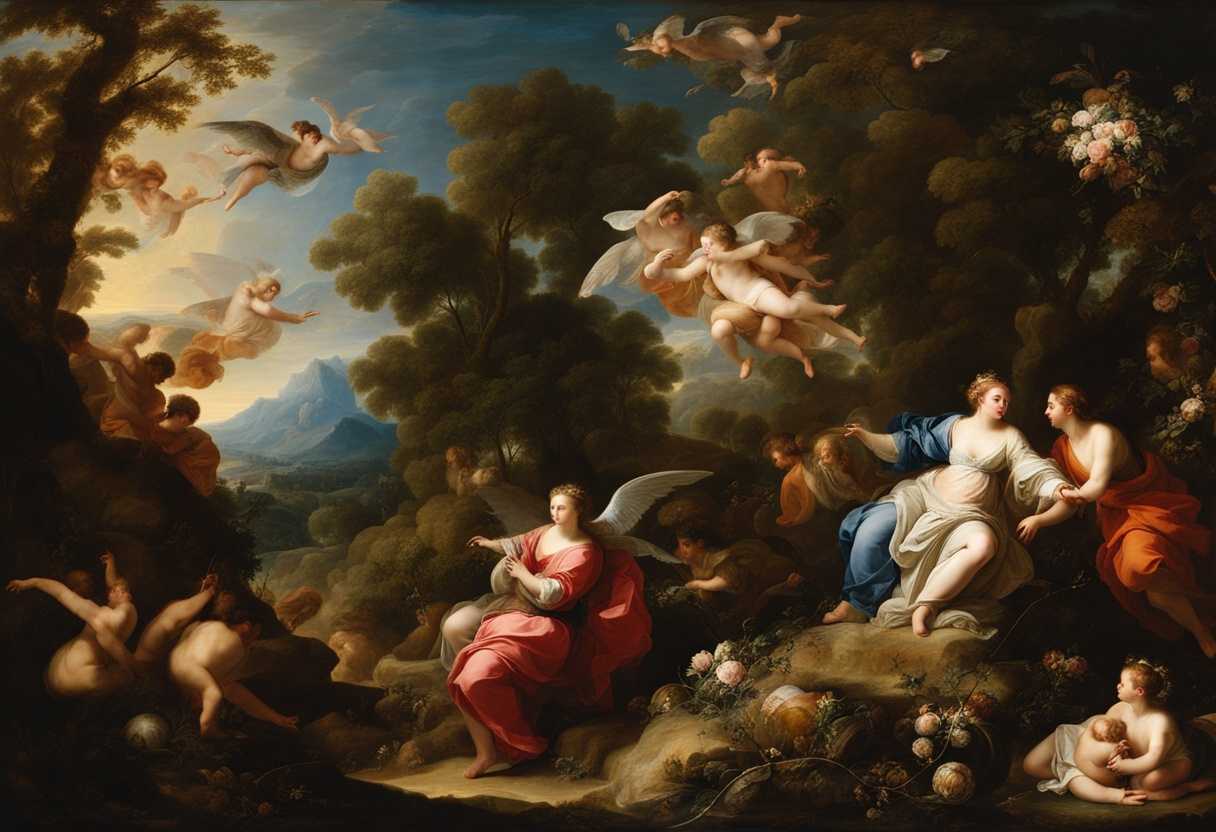
Setting the Scene for Genesis 1:1-26
In the beginning, God created the heavens and the earth. The scene opens with a vast expanse of darkness covering the surface of the deep waters. The Spirit of God hovers over the waters, ready to bring forth creation. God speaks, “Let there be light,” and suddenly, light pierces through the darkness, separating it from the light. God sees that the light is good, and He separates the light from the darkness, calling the light “day” and the darkness “night.”
As the scene progresses, God continues to create the heavens and the earth. He forms the sky above and the waters below, gathering the waters to reveal dry ground. God commands the earth to bring forth vegetation, plants yielding seeds, and fruit trees bearing fruit. The land becomes lush with greenery, a testament to God’s creative power. In the midst of this magnificent display, God creates the sun, moon, and stars to govern the day and night, marking seasons, days, and years.
In this divine setting, God creates living creatures of all kinds, filling the waters with fish and sea creatures, the sky with birds, and the land with animals. Finally, God creates humankind in His image, male and female, giving them dominion over all living creatures on earth. The scene is a breathtaking display of God’s power, creativity, and love for His creation, setting the stage for the unfolding story of the world’s beginning.
What is Genesis 1:1-26 about?
God’s magnificent power and creativity are on full display in the creation account in Genesis. The verse sheds light on the profound significance of God’s role as the ultimate creator of the world and everything within it. Reflecting on this verse prompts us to ponder on the sheer complexity and beauty of the world around us. Have you ever looked up at the night sky and marveled at the stars, pondering the enormity of the universe and how it all came to be?
Furthermore, the verse highlights the inherent value and dignity of humanity, as the pinnacle of God’s creation. We are invited to reflect on our purpose and responsibility in caring for creation and each other as we consider our unique place in the world. How does knowing that God created the world and humanity impact the way we view ourselves and others? This verse calls us to appreciate the interconnectedness of all living beings and the importance of stewarding the earth with reverence and gratitude. Let us honor God’s handiwork in our thoughts, words, and actions by being inspired by the divine act of creation.
Understanding what Genesis 1:1-26 really means
The profound opening of Genesis 1:1-26 introduces us to the awe-inspiring act of creation, setting the stage for understanding our relationship with the Divine and our responsibilities as stewards of the earth. God as the originator of everything is established not only by the temporal beginning but also by the phrase “In the beginning God created the heavens and the earth.” This initiation of the universe is critical in framing our worldview and our place within it. We methodically detail the sequence of creation over six days as we delve deeper into the passage, culminating with the creation of mankind. Each step is an affirmation of God’s deliberate plan, emphasizing order, purpose, and intentionality. This orderly progression from light and sky to land and vegetation, and finally to living creatures, highlights a fundamental principle: the world is not a product of random chance but of divine intention. God stated in Genesis 1:26, “Let us make mankind in our own image, in our likeness.”..”. This phrase invites us to ponder deeply about what it means to be made in the image of God. Human beings, in a practical sense, endow themselves with inherent value and dignity, setting forth the basis for ethical behaviour and the pursuit of justice and kindness.
Connecting this scripture to modern life reveals its enduring relevance. We face environmental crises today. Understanding that God created the earth and commissioned humans to “rule over” and “subdue” it (terms that, in their original context, imply responsible stewardship rather than exploitative dominion), molds our approach to environmental ethics. It reminds us that we are caretakers of the earth, called to preserve and nurture rather than deplete and destroy.
Let me share a poignant anecdote. I once encountered a congregant, a young father determined to instill a sense of environmental responsibility in his daughter. Inspired by the creation narrative, he started a small community garden, teaching his daughter to plant trees and care for plants. Through this act, he was embodying the biblical commandment of stewardship, demonstrating in a tangible way that understanding our scriptural roots can lead to actionable, meaningful life practices. Reflecting on Genesis 1:1-26 challenges readers and believers to consider their daily actions and their alignment with the divine order. It beckons us to engage with the world not as owners, but as humble stewards, ensuring that our legacy is one of respect, preservation, and love for the creation we are part of. How, then, might we live differently if we truly embraced our role as images of God, as caretakers of His creation? This profound passage not only defines our beginnings but also directs our future, urging us towards a life of purpose and responsibility.
What is the significance of God’s creation of humanity?
The significance of God’s creation of humanity is profound and central to the biblical narrative. God demonstrated His purposeful intention to have a unique and intimate relationship with human beings that reflects His own character and image by creating humanity. This reveals the intrinsic value and dignity that God has bestowed upon humanity, setting them apart from the rest of creation as bearers of His image and as stewards of the earth.
Through the act of creation, God established humanity as the pinnacle of His creative work, emphasizing their special place in His plan for the world. The creation of humanity showcases God’s love and care for His creation, as He personally formed and breathed life into them, distinguishing them from all other living beings. This act of creation signifies God’s desire for a meaningful relationship with humanity, in which they are called to reflect His love, wisdom, and creativity in the world.
God’s creation of humanity also underscores the responsibility and purpose that accompany being made in His image. Humans, as image-bearers of God, are called to embody His attributes and values in their interactions with each other and the world around them. This creates a profound sense of meaning and significance in human existence, as they are entrusted with the role of caring for creation, living in harmony with one another, and reflecting God’s glory through their actions and relationships.
Application
Imagine you’re at the helm of a bustling corporation or guiding your family through life’s journey—your decisions, big and small, shape the world around you. Just as Genesis 1:1-26 illuminates, you’ve been appointed a caretaker of an extraordinary project: our Earth. Embrace this role with the dedication of a CEO and the love of a parent. Infuse every day with intention, and treat our planet with the respect and care it deserves. How will you step up today, leading and loving, to make a difference? Will you rise to be the steward your world needs?

Reverend Michael Johnson is an experienced Church Minister with a profound expertise in spirituality and guidance. With a serene presence and a compassionate heart, he has faithfully served his congregation for over 20 years, leading them on a spiritual journey towards inner peace and enlightenment. Reverend Johnson’s extensive knowledge of religious philosophies and profound understanding of human nature have made him a trusted confidant and mentor to many, as he seamlessly weaves his profound wisdom into life teachings. Reverend Johnson’s calming demeanor and empathetic nature continue to uplift and heal souls, nurturing a sense of unity and tranquility within his community.