
14 So Abraham rose early in the morning and took bread and a skin of water and gave it to Hagar, putting it on her shoulder, along with the child, and sent her away. And she departed and wandered in the wilderness of Beersheba.
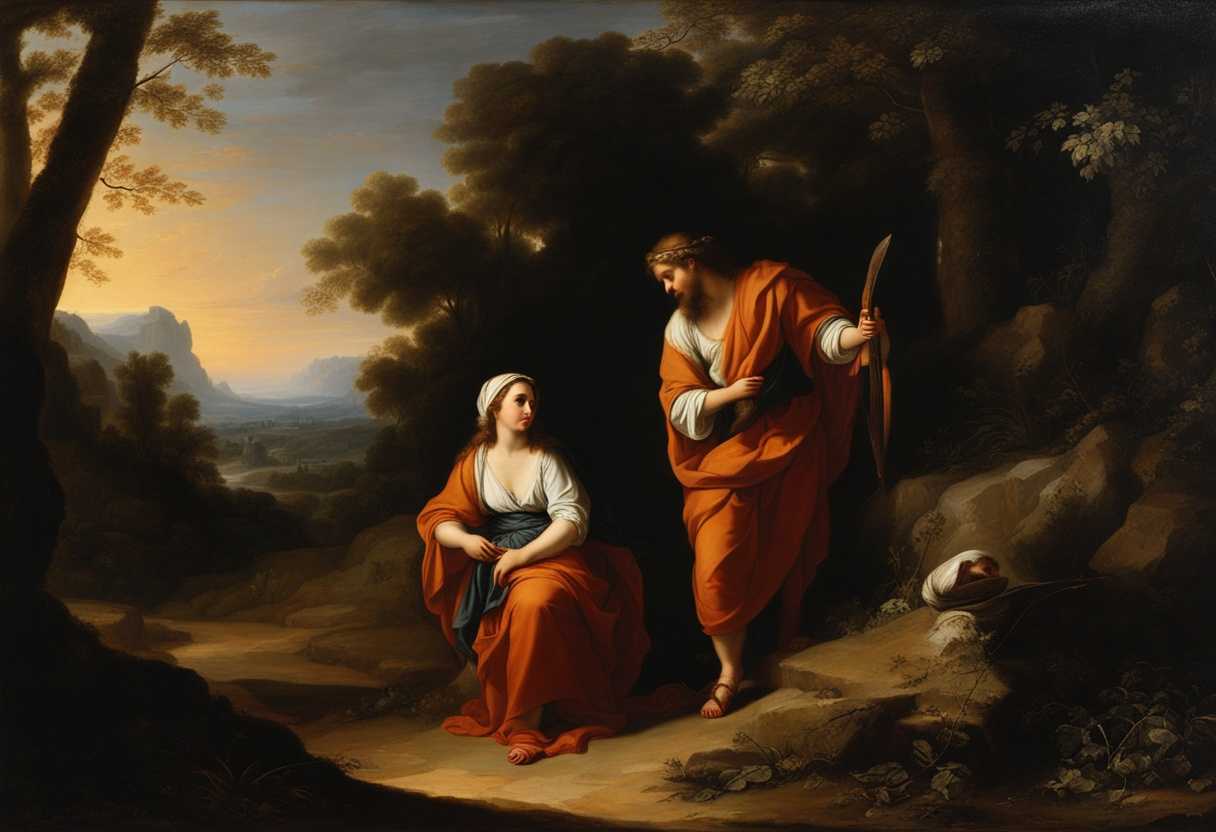
Setting the Scene for Genesis 21:14
In Genesis chapter 21, we find the poignant scene where Hagar and her son Ishmael are cast out into the wilderness by Abraham at the insistence of Sarah. The tension between Sarah and Hagar had been brewing for years, stemming from Hagar’s status as Abraham’s concubine and the mother of his firstborn son, Ishmael. Sarah’s jealousy and insecurity led her to demand that Abraham send Hagar and Ishmael away, fearing that Ishmael would be a threat to her own son, Isaac.
As Hagar and Ishmael found themselves alone in the wilderness, with only a skin of water and some bread provided by Abraham, their situation seemed dire. The scorching sun beat down on them, and the barren landscape offered little hope of survival. Hagar, desperate and afraid for her son’s life, placed Ishmael under one of the bushes and distanced herself, unable to bear witnessing his suffering.
In this heart-wrenching moment, we see the depths of Hagar’s despair and the extent of her love for her son. It is in this desolate wilderness that God hears the cries of Ishmael and provides a miraculous intervention, saving their lives and promising to make Ishmael into a great nation. This scene serves as a powerful reminder of God’s compassion and faithfulness, even in the most desperate of circumstances.
What is Genesis 21:14 about?
This verse from Genesis tells us about a powerful moment when Hagar and Ishmael, feeling abandoned and alone in the wilderness, are ultimately provided for by God. It is a reminder that even in our darkest moments, when we feel like we have been cast aside or forgotten, there is always a higher power watching over us and providing for our needs. When Hagar and Ishmael were at their lowest point, God showed them that they were not alone and that they would be taken care of.
Think about the times in your own life when you have felt lost or abandoned. How did you find your way out of those dark moments? This verse serves as a reminder that no matter how dire our circumstances may seem, there is always hope and help available to us if we open our hearts to receive it. Just like Hagar and Ishmael, we too can trust that God will provide for us, even in the most desolate of places.
Understanding what Genesis 21:14 really means
Commentary Structure:
- Introduction and Context
- Explanation of Key Phrases
- Cross-References in the Bible
- Relevance to Contemporary Life
- Personal Application and Anecdote
- Reflective Questions and Conclusion
Introduction and Context
Genesis 21:14 narrates a poignant episode in the life of Abraham as he sends Hagar and his son Ishmael away. This event comes after the birth of Isaac, the child of promise, born to Sarah in her old age. This verse captures not only a moment of profound familial tension but also an instance of faith and reliance on God’s provision. Within the context of Genesis, it showcases the complexities of human relationships and the broader narrative of God’s promises.
Explanation of Key Phrases
One significant phrase in this verse is “early in the morning.” This demonstrates Abraham’s sense of urgency and obedience in following God’s commands. His action reflects an immediate and resolute response, emphasizing the seriousness of the situation.
Another notable phrase is “putting it on her shoulder.” This imagery evokes the burden that Hagar is forced to carry, both literally and emotionally. It signifies the weight of the situation and the hardships she and Ishmael must endure.
Additionally, “wandered in the wilderness” metaphorically alludes to moments in life when we feel lost or abandoned, yet these experiences can be times for God to work distinctly in our lives.
Cross-References in the Bible
This passage resonates with other biblical moments of testing and divine care. For instance, Genesis 22 describes Abraham’s test of faith with Isaac, further illustrating faithful obedience amidst heart-wrenching decisions. Similarly, Hagar’s encounter with God in Genesis 16, where she names Him “El-Roi” (the God who sees), reinforces the theme of God’s watchful provision. Jesus teaches about trusting in God’s provision and not worrying about tomorrow in Matthew 6:25-34, drawing parallels in the New Testament. These passages collectively underline the notion that God sees, knows, and provides for His people even in seemingly dire circumstances.
Relevance to Contemporary Life
This verse speaks powerfully to modern readers by addressing themes of faith, obedience, and divine provision amid trials. This story reminds us to trust in God’s plan and timing, whether we face family struggles, economic hardships, or personal uncertainties in our daily lives. A single parent today might consider the challenges of Hagar’s distress and isolation. Despite the overwhelming burden, the message is clear: God’s provision is ever-present, even in the wilderness.
Personal Application and Anecdote
Reflecting on an anecdote, imagine a family I knew facing foreclosure. They felt the burden of their financial “wilderness.” Through faith, prayers, and the support of their church community, they found temporary shelter, eventually securing a new home. This modern experience echoes the journey of Hagar and Ishmael, where faith and community played crucial roles in navigating through hardship.
Reflective Questions and Conclusion
How often do we find ourselves in situations where we feel like we’re wandering in a wilderness? Do we trust that God sees our struggles and will provide for us, as He did for Hagar and Ishmael? Let us ponder Genesis 21:14 and embrace the lessons of trust and obedience. Amid life’s challenges, may we find reassurance in God’s unwavering provision and care. Whether we are facing personal, familial, or communal trials, let this verse remind us to lean on God early in the morning and every moment thereafter.
How can we trust that God will provide?
God provided for Hagar and Ishmael in the wilderness in the story of Genesis 21:14. This verse serves as a reminder that no matter how challenging our circumstances may seem, God is always with us and will provide for our needs. Just as God heard Hagar’s cries and provided a well of water for her and Ishmael, we can trust that He will also provide for us in our times of need.
This verse highlights the faithfulness of God to His promises and His ability to provide for His children. It encourages us to trust in God’s provision and to have faith that He will always come through for us, even in the most desolate and hopeless situations. We can strengthen our own trust in God’s provision and learn to rely on His faithfulness in all circumstances by looking at the example of Hagar and Ishmael.
Application
Think about Genesis 21:14 and how God cared for Hagar and Ishmael when they were desperate. In our busy days at work and with family, can we find ways to reflect that same compassion? Look around you: is there someone struggling who could use your support? Today, will you be the one to offer comfort and a helping hand?

Reverend Michael Johnson is an experienced Church Minister with a profound expertise in spirituality and guidance. With a serene presence and a compassionate heart, he has faithfully served his congregation for over 20 years, leading them on a spiritual journey towards inner peace and enlightenment. Reverend Johnson’s extensive knowledge of religious philosophies and profound understanding of human nature have made him a trusted confidant and mentor to many, as he seamlessly weaves his profound wisdom into life teachings. Reverend Johnson’s calming demeanor and empathetic nature continue to uplift and heal souls, nurturing a sense of unity and tranquility within his community.