
Genesis 21:8-14 is about God’s providence and faithfulness in providing for Hagar and Ishmael in their time of need, demonstrating that even in moments of desperation, God sees and cares for His people.
8 And the child grew and was weaned. And Abraham made a great feast on the day that Isaac was weaned.
9 But Sarah saw the son of Hagar the Egyptian, whom she had borne to Abraham, laughing.
10 So she said to Abraham, “Cast out this slave woman with her son, for the son of this slave woman shall not be heir with my son Isaac.”
11 And the thing was very displeasing to Abraham on account of his son.
12 But God said to Abraham, “Be not displeased because of the boy and because of your slave woman. Whatever Sarah says to you, do as she tells you, for through Isaac shall your offspring be named.”
13 And I will make a nation of the son of the slave woman also, because he is your offspring.
14 So Abraham rose early in the morning and took bread and a skin of water and gave it to Hagar, putting it on her shoulder, along with the child, and sent her away. And she departed and wandered in the wilderness of Beersheba.
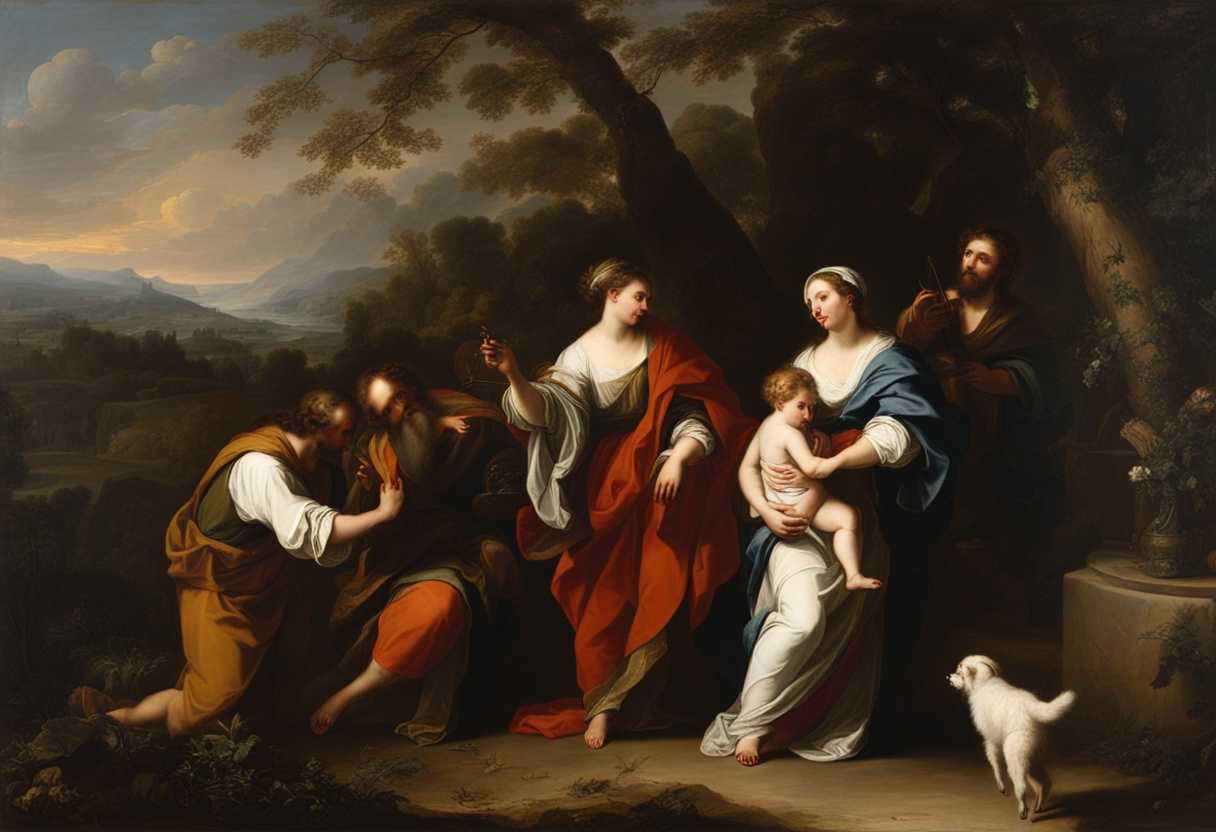
Setting the Scene for Genesis 21:8-14
In Genesis chapter 21, we find Sarah, Abraham’s wife, who had miraculously given birth to Isaac in her old age. The scene unfolds in the wilderness of Beersheba, a region in the southern part of Canaan. The tension in the air is palpable as Sarah observes Ishmael, her son from her maidservant Hagar, playing with Isaac.
Sarah, still grappling with the past resentment towards Hagar and Ishmael, witnesses an incident that triggers her protective instincts towards Isaac. She approaches Abraham, expressing her concern about the future and the potential threat Ishmael poses to Isaac’s inheritance. Abraham, torn between his love for both sons, is troubled by Sarah’s request to send Hagar and Ishmael away.
As the sun sets over the vast desert landscape, Abraham rises early the next morning to prepare provisions for Hagar and Ishmael’s journey. The somber mood is evident as he leads them out, ensuring they have enough supplies for their uncertain future. The wilderness echoes with the sound of their footsteps as Hagar and Ishmael venture into the unknown, guided only by faith in God’s promise of protection and provision.
What is Genesis 21:8-14 about?
We witness a powerful display of God’s compassion and provision in this verse. Despite Hagar and Ishmael being sent away into the wilderness by Abraham, God does not abandon them. Instead, He watches over them and ensures their survival. This serves as a reminder of God’s faithfulness and care for all His creations, even in the midst of challenging circumstances.
This verse also teaches us about the importance of trusting in God’s plan, even when it may not align with our own understanding. Hagar and Ishmael may have felt afraid and uncertain about their future in the wilderness, but God had a plan for them. It challenges us to reflect on our own lives and consider how we can trust in God’s provision, even when faced with difficult situations. Have you ever found yourself in a wilderness moment, unsure of what the future holds? How did you see God provide for you during that time? Trusting in God’s provision, even in the wilderness, can lead to unexpected blessings and a deepening of our faith.
Understanding what Genesis 21:8-14 really means
The story in Genesis 21:8-14 recounts a poignant moment in the lives of Abraham, Sarah, Hagar, Ishmael, and Isaac. It captures the tension and conflict within the family as Sarah, feeling threatened by Ishmael’s actions towards Isaac, demands that Abraham send Hagar and Ishmael away. This narrative is rich in themes of family strife, divine intervention, and God’s unwavering provision. As we delve into the key phrases of the passage, we uncover layers of emotion and significance. The milestone of Isaac being weaned symbolizes his growth from infancy to early childhood, while Sarah’s demand to “get rid of that slave woman and her son” reveals her desire to secure Isaac’s inheritance and eliminate competition.
Abraham’s distress at Sarah’s demand showcases his deep care for Ishmael, underscoring the complexity of the situation. However, God’s reassurance to Abraham not only provides comfort but also highlights divine guidance and the promise of provision for both Isaac and Ishmael. The promise to bless Ishmael and make him a great nation demonstrates God’s faithfulness and care for all of Abraham’s descendants, emphasizing His overarching plan and love for His people. This passage is intricately woven with divine promises and human emotions, offering a profound insight into the complexities of family relationships and the unwavering faithfulness of God.
The relevance of this narrative extends to modern-day challenges in family dynamics, trust in God’s provision, and the need for divine guidance. Just as Abraham faced a difficult decision but found solace in God’s promises, we are reminded to trust in God’s care even amidst turmoil. The story serves as a timeless reminder that God is intimately involved in our lives, offering guidance and provision in the midst of our struggles. Reflecting on this passage, we are encouraged to lean on God’s promises and trust in His unfailing love, knowing that He is faithful to fulfill His plans for us.
In our contemporary lives, we can draw parallels to the story of Hagar and Ishmael in various situations. Consider a single mother facing uncertainty after a separation, feeling abandoned and overwhelmed. Yet, through the support of her community and her faith in God’s provision, she finds the strength to persevere. This echoes Hagar’s experience of feeling forsaken but ultimately being cared for by God’s unwavering love and provision. As we navigate our own challenges and uncertainties, may we find comfort in the timeless truths revealed in Genesis 21:8-14, trusting in God’s promises and resting in His faithful provision.
How can we show compassion to the outcast?
We can show compassion to the outcast by recognizing their struggles and offering them support and inclusion. We can reach out to those who may be marginalized or overlooked in society, just as Hagar and her son Ishmael were cast out into the desert, feeling isolated and abandoned. We can demonstrate compassion and make a positive impact on their lives by extending a helping hand and showing empathy towards their situation.
It is important to remember that everyone deserves love and kindness, regardless of their circumstances. We can help alleviate their feelings of rejection and loneliness by acknowledging the humanity in each individual and treating them with dignity and respect. Through acts of compassion and understanding, we have the power to uplift those who may feel cast out and show them that they are valued members of our community.
Application
Take a moment to consider Hagar and Ishmael’s journey through the barren wilderness. Just when all seemed lost, a well appeared before them, a beacon of hope in their darkest hour. Let this story ignite a flame within you, a reminder to trust in divine providence, to heed the call of guidance, and to extend a hand of compassion to those around you. How will you embrace these teachings in your own modern-day wilderness?

Reverend Michael Johnson is an experienced Church Minister with a profound expertise in spirituality and guidance. With a serene presence and a compassionate heart, he has faithfully served his congregation for over 20 years, leading them on a spiritual journey towards inner peace and enlightenment. Reverend Johnson’s extensive knowledge of religious philosophies and profound understanding of human nature have made him a trusted confidant and mentor to many, as he seamlessly weaves his profound wisdom into life teachings. Reverend Johnson’s calming demeanor and empathetic nature continue to uplift and heal souls, nurturing a sense of unity and tranquility within his community.