
16 and said, “By myself I have sworn, declares the Lord, because you have done this and have not withheld your son, your only son,
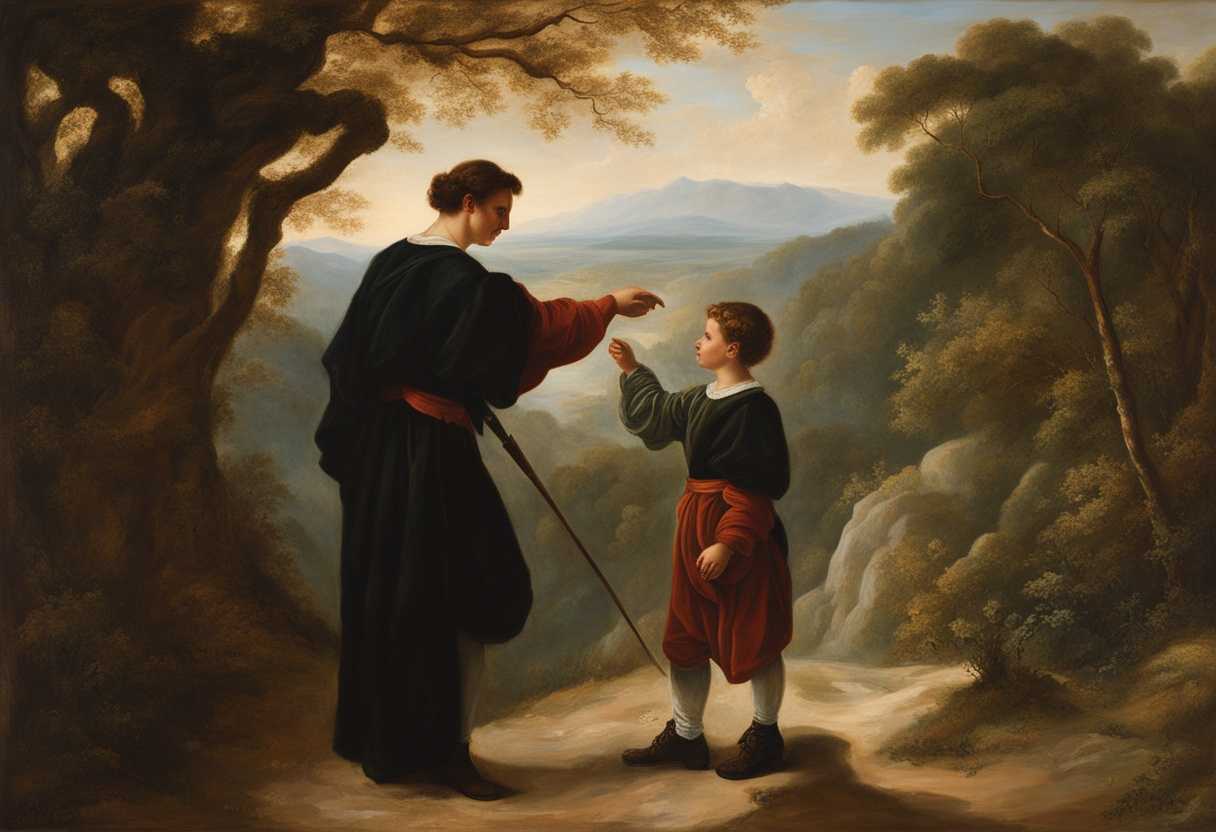
Setting the Scene for Genesis 22:16
In Genesis chapter 22, we find Abraham and his son Isaac in a profound and challenging scene. The story unfolds with God testing Abraham’s faith by asking him to sacrifice his beloved son, Isaac, as a burnt offering. Abraham, known for his unwavering faith, obediently sets out with Isaac to the land of Moriah to carry out God’s command.
As they journey to the designated place, the tension in the air is palpable. The weight of the task ahead hangs heavy on Abraham’s heart, yet he trusts in God’s plan. Isaac, unaware of the true purpose of their journey, walks alongside his father, carrying the wood for the sacrifice. The scene is set against the backdrop of the rugged terrain of Moriah, with the sun casting long shadows as they make their way to the appointed spot.
Upon reaching the designated place, Abraham builds an altar and prepares to carry out the sacrifice. Just as he is about to fulfill God’s command, an angel of the Lord intervenes, staying Abraham’s hand and providing a ram caught in a thicket as a substitute for Isaac. This pivotal moment showcases Abraham’s unwavering faith and obedience, as well as God’s provision and faithfulness in the midst of testing.
What is Genesis 22:16 about?
God is emphasizing the importance of obedience and faithfulness in this verse. Abraham demonstrates his trust and commitment to God by choosing to follow God’s commands and keep His covenant. God promises to bless him abundantly and multiply his descendants, showing that obedience to God leads to blessings and fulfillment of promises.
Think about the implications of this verse in your own life. Have you ever experienced blessings or rewards when you were obedient and faithful to a cause or a person? How can you apply the lesson of obedience and faithfulness from this verse to your own relationship with God or others? When we align our actions with His will, we can expect to see blessings unfold in our lives as well because God’s promises are trustworthy and true.
Understanding what Genesis 22:16 really means
We find a profound lesson in trust and divine promise when exploring Genesis 22:16, where God swears by Himself to bless Abraham due to his obedience. This passage is not only historical but also instructional, offering us deep insights into the nature of God’s commitments and our relationship with Him.
Initially, let us consider the context and weight of God swearing by Himself. God’s choice to swear by His own name underscores the absolute certainty and unchangeability of His promises in an era where oaths were commonly made by something greater. Hebrews 6:13 echoes this when it refers to God making a promise to Abraham, noting, “He had no one greater by whom to swear.” This illustrates the supreme authority and reliability of God’s word. What does this tell us? It reminds us of the complete trustworthiness of God’s promises to us—the fact that what He has vowed, He will indeed fulfill.
Examining the phrase “because you have done this thing,” we see a direct acknowledgment of Abraham’s faith and obedience. It’s noteworthy that Abraham’s willingness to sacrifice Isaac, his son, as a test of faith, triggers this divine response. James 2:21-22 later reinforces this narrative, mentioning that Abraham’s “faith was completed by his works” when he offered Isaac on the altar. This interaction between faith and action offers a significant lesson for us: our faith, while internal and personal, demands outward expression through obedience to God’s commands. This concept is as relevant today as it was then—how often are we called to demonstrate our faith in tangible, challenging ways?
Given the gravity of the promise made here—immense blessings and multiplied descendants—there is an additional layer of meaning concerning impact and legacy. Just as Abraham’s obedience led to blessings that extended far beyond his immediate circumstances, our actions, particularly those rooted in faith, have the potential to influence beyond our own lives. This idea invites us to ponder: what kind of legacy are we building through our obedience to God?
To draw a more contemporary parallel, consider the story of a modern believer, John, who felt led to start a community project in a troubled neighborhood. Despite numerous challenges and moments of doubt, his persistence and faith mirrored Abraham’s obedience. Years later, the project not only transformed the community but also strengthened many people’s faith, echoing the multiplied blessings promised to Abraham. Genesis 22:16 challenges us to recognize the surety and depth of God’s promises, mirrored in His character and backed by His authority. It calls us to a life where our faith is actively demonstrated through our choices and actions, reminding us of the profound impact our faithfulness can have, not just in our lives but in the lives of generations to come. We might consider what God is asking of us today and how we might respond with the same level of trust and obedience that Abraham showed as we reflect on this.
How does my faith influence my willingness to sacrifice?
Abraham demonstrates extraordinary faith and willingness to sacrifice by obeying God’s command to offer his son Isaac as a burnt offering in the story of Genesis 22:16. This act of faith is a powerful example of trusting in God’s will and sacrificing something precious in obedience to Him. This story shows us that faith can lead us to make sacrifices that may seem difficult or even impossible, knowing that ultimately, God’s plans are always good and just.
For believers, faith can be a driving force behind their willingness to make sacrifices for the greater good or to follow God’s will. The depth of one’s faith can influence their willingness to let go of personal desires, comfort, or earthly possessions in order to fulfill what they believe to be God’s purpose for their lives. It is through faith that we can find the strength and trust to make sacrifices that align with our beliefs and convictions, even when they may seem challenging or require great personal cost. Faith ultimately gives us the perspective to see beyond the immediate sacrifices we may be called to make and trust in God’s greater plan and goodness. It enables us to let go of our own desires and preferences in order to follow God’s leading, knowing that He is faithful and just in all His ways. Through faith, we can find the courage and conviction to make sacrifices that honor God and bring glory to His name.
Application
Imagine you’re at the helm of a ship in the vast ocean of the corporate world or steering through the intricate networks of family life. Each decision, much like Abraham on the precipice of Mount Moriah, carries weight and reverberates through your personal legacy. Trust in the guidance that whispers through the chaos, as unwavering as Abraham’s was, knowing the compass of God’s promises never falters. Can you, amidst the storms and stillness alike, hold the wheel steady with the same resolute faith that guided Abraham? Will you answer the call to turn the impossible into your reality?

Reverend Michael Johnson is an experienced Church Minister with a profound expertise in spirituality and guidance. With a serene presence and a compassionate heart, he has faithfully served his congregation for over 20 years, leading them on a spiritual journey towards inner peace and enlightenment. Reverend Johnson’s extensive knowledge of religious philosophies and profound understanding of human nature have made him a trusted confidant and mentor to many, as he seamlessly weaves his profound wisdom into life teachings. Reverend Johnson’s calming demeanor and empathetic nature continue to uplift and heal souls, nurturing a sense of unity and tranquility within his community.