
22 Uz his firstborn, Buz his brother, Kemuel the father of Aram,
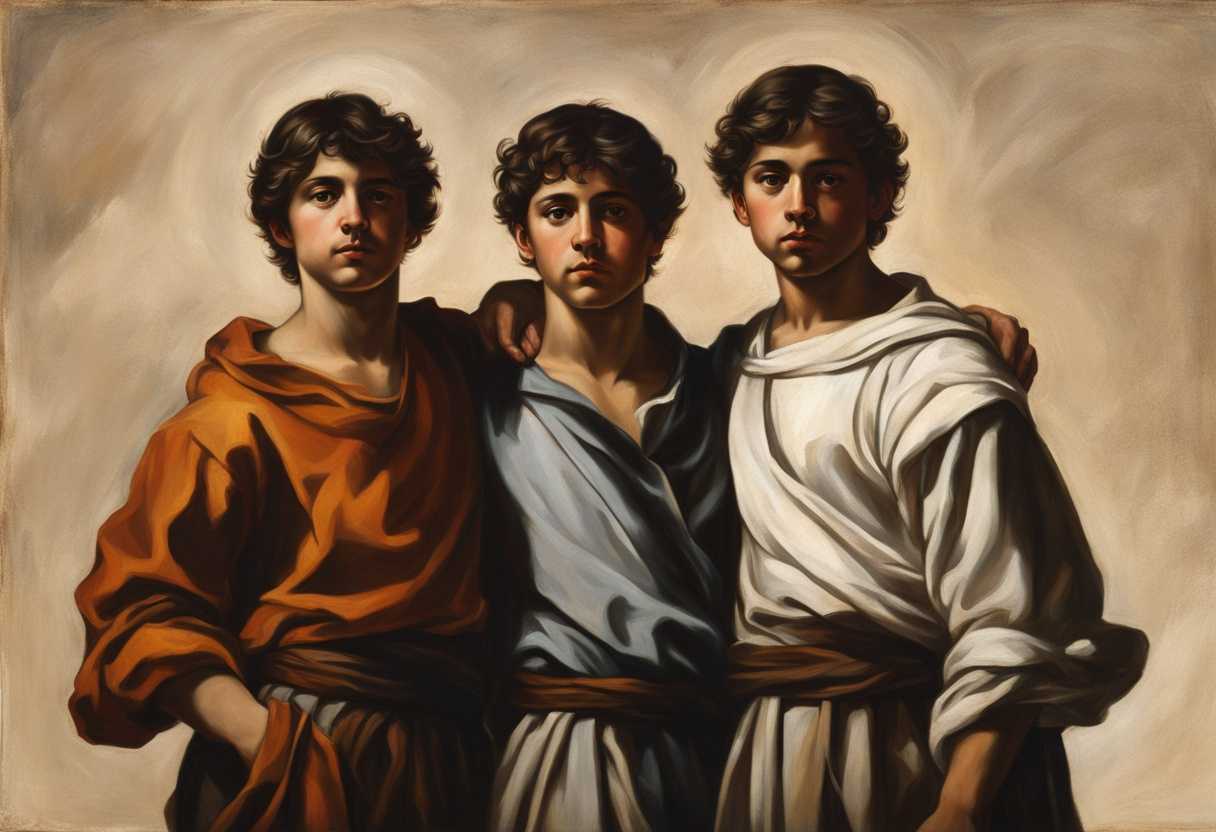
Setting the Scene for Genesis 22:22
In Genesis chapter 22, we find Abraham after God tested his faith by asking him to sacrifice his son, Isaac. The scene is set on Mount Moriah, where Abraham obediently took Isaac to offer him as a burnt offering. As they reached the designated place, Abraham built an altar and arranged the wood on it. Isaac, unaware of the true purpose of their journey, questioned his father about the missing sacrificial lamb. Abraham, with a heavy heart but unwavering faith, assured Isaac that God would provide the sacrifice.
The two figures, father and son, stood on the mountain, surrounded by the solemn silence of their impending trial. The tension in the air was palpable as Abraham bound Isaac and laid him on the altar. Just as Abraham raised the knife to slay his son, an angel of the Lord intervened, staying his hand. The faith and obedience displayed by Abraham in this moment are a testament to his unwavering trust in God, even in the face of the most challenging test imaginable. This scene serves as a powerful example of faith, obedience, and the ultimate provision of God’s grace.
What is Genesis 22:22 about?
A genealogy of Nahor’s descendants is seen in this verse from Genesis. At first glance, it may seem like just a list of names without much significance. We realize that each name represents a unique individual, a link in the chain of generations when we delve deeper. Imagine the stories, struggles, and triumphs of each of these individuals that have led to their place in Nahor’s lineage. We should consider the importance of family and heritage in our own lives. What stories and lessons have been passed down through your own family tree? Just like Nahor’s descendants, each of us is part of a larger story that stretches back generations. This verse reminds us of the connections that bind us to those who came before us and the legacy we will leave for those who come after. It prompts us to reflect on the richness of our own family history and the values that have been handed down to us.
Understanding what Genesis 22:22 really means
To provide a meaningful commentary on Genesis 22:22, let’s approach this with a structured framework. We’ll look at the context, textual analysis, cross-references, contemporary relevance, and an anecdote to illustrate the message. Since the specific verse itself is part of a broader narrative, we’ll incorporate surrounding verses to help ground our discussion.
1. Contextual Overview
Genesis 22 recounts the story of Abraham’s profound test of faith, where God commands him to sacrifice his son Isaac. Verse 22 falls within the genealogical list of Nahor’s descendants, Abraham’s brother, which seems less prominently discussed compared to the dramatic narrative of Abraham and Isaac. However, understanding this genealogical listing provides crucial context for the story of Israel and God’s broader plan.
2. Textual Analysis
Phrase like “Nahor’s descendants” might seem like mere historical data, but it ties into the larger narrative of God’s promise to Abraham. It enumerates key figures such as Uz, Buz, Kemuel (the father of Aram), Chesed, Hazo, Pildash, Jidlaph, and Bethuel. This detailed listing points to the continuation of family lines that will play significant roles in biblical history, emphasizing the importance of lineage and God’s faithfulness to His promises across generations.
3. Cross-References
This verse gains more significance when cross-referenced with passages like Genesis 12:2-3, where God promises to make Abraham a great nation. The genealogical list in Genesis 22:22 is a testament to God’s faithfulness in fulfilling this promise. Furthermore, throughout the Bible, genealogies serve to anchor stories in history, connecting people to God’s ongoing work, as seen in the genealogies of Jesus in Matthew 1 and Luke 3.
**4. These genealogies remind us of our place in a larger narrative in today’s world, where identity can often seem fluid and fragmented. They urge us to consider our spiritual lineage and the faith stories that we are a part of. They offer a perspective that our lives are part of a continuum of faith, passed down from generation to generation. Just as Nahor’s descendants contributed to the unfolding story of God’s people, so too do our lives contribute to God’s work in the world today.
5. Anecdote
To illustrate the message, consider the story of a family heirloom—a Bible passed down through generations. Each holder of this Bible adds their own notes and highlights, contributing to a legacy of faith. Just like Nahor’s descendants are meticulously noted, the annotations in the family Bible represent each generation’s walk with God. This continuity offers comfort and challenges us to reflect on what legacy of faith we are leaving behind.
6. Detailed Breakdown
The phrase “descendants of Nahor” speaks volumes about the God of continuity and covenant. It shows that each individual in the lineage is noted by God, reminding us that no life is insignificant in His grand design. It means that every name, including ours, matters to God. It challenges us to live faithfully, knowing our lives are part of a grand tapestry.
7. Reflection
Reflect on this: How does knowing your faith is part of a larger story affect the way you live daily? Does it inspire you to live in a way that honors those who have come before you and prepares the path for those who will come after?
Every verse in the Bible, even those that seem merely informational, has depth and purpose. Genesis 22:22, though it may appear as just a list of names, invites us to see ourselves within the eternal story of God’s unfolding faithfulness. It calls us to recognize our role in God’s plans and to contribute our chapter with faith and dedication.
How can we trust God’s plan in difficult moments?
Understanding and trusting in God’s plan can be difficult in times of hardship and challenges. However, by reflecting on the story in Genesis 22, we can draw strength in knowing that God ultimately has a greater purpose and plan. Just like how Abraham trusted in God’s plan even when it seemed difficult and incomprehensible, we too can find solace in the fact that God’s plan is always for our ultimate good, even if it may not seem that way in the moment. We can find peace and comfort in times of struggle by remembering that God sees the bigger picture and has a perfect plan for each of us. It may be hard to comprehend why we are faced with challenges, but having faith that God’s plan is unfolding as it should can help us navigate through difficult moments with a sense of hope and trust. We can find the strength to overcome any obstacles that come our way by surrendering ourselves to God’s will and trusting in His divine plan.
Application
Think of your life like a busy, ever-evolving workplace. In Genesis 22:22, Abraham shows us the way—he trusted in God’s timing and provision. Just as you trust a project deadline to guide your work, can you trust God’s plan for your family and life? Imagine placing that same faith in God’s hands, even when the job gets tough. Will you take that step of faith, like Abraham did, believing in a plan greater than your own?

Reverend Michael Johnson is an experienced Church Minister with a profound expertise in spirituality and guidance. With a serene presence and a compassionate heart, he has faithfully served his congregation for over 20 years, leading them on a spiritual journey towards inner peace and enlightenment. Reverend Johnson’s extensive knowledge of religious philosophies and profound understanding of human nature have made him a trusted confidant and mentor to many, as he seamlessly weaves his profound wisdom into life teachings. Reverend Johnson’s calming demeanor and empathetic nature continue to uplift and heal souls, nurturing a sense of unity and tranquility within his community.