
Genesis 23:16-18 is about Abraham purchasing a burial plot for his wife Sarah from the Hittites, demonstrating the importance of honoring the deceased with a proper resting place and showing respect for the customs and traditions of the people among whom one dwells.
16 Abraham listened to Ephron, and Abraham weighed out for Ephron the silver that he had named in the hearing of the Hittites, four hundred shekels of silver, according to the weights current among the merchants.
17 So the field of Ephron in Machpelah, which was to the east of Mamre, the field with the cave that was in it and all the trees that were in the field, throughout its whole area, was made over
18 to Abraham as a possession in the presence of the Hittites, before all who went in at the gate of his city.
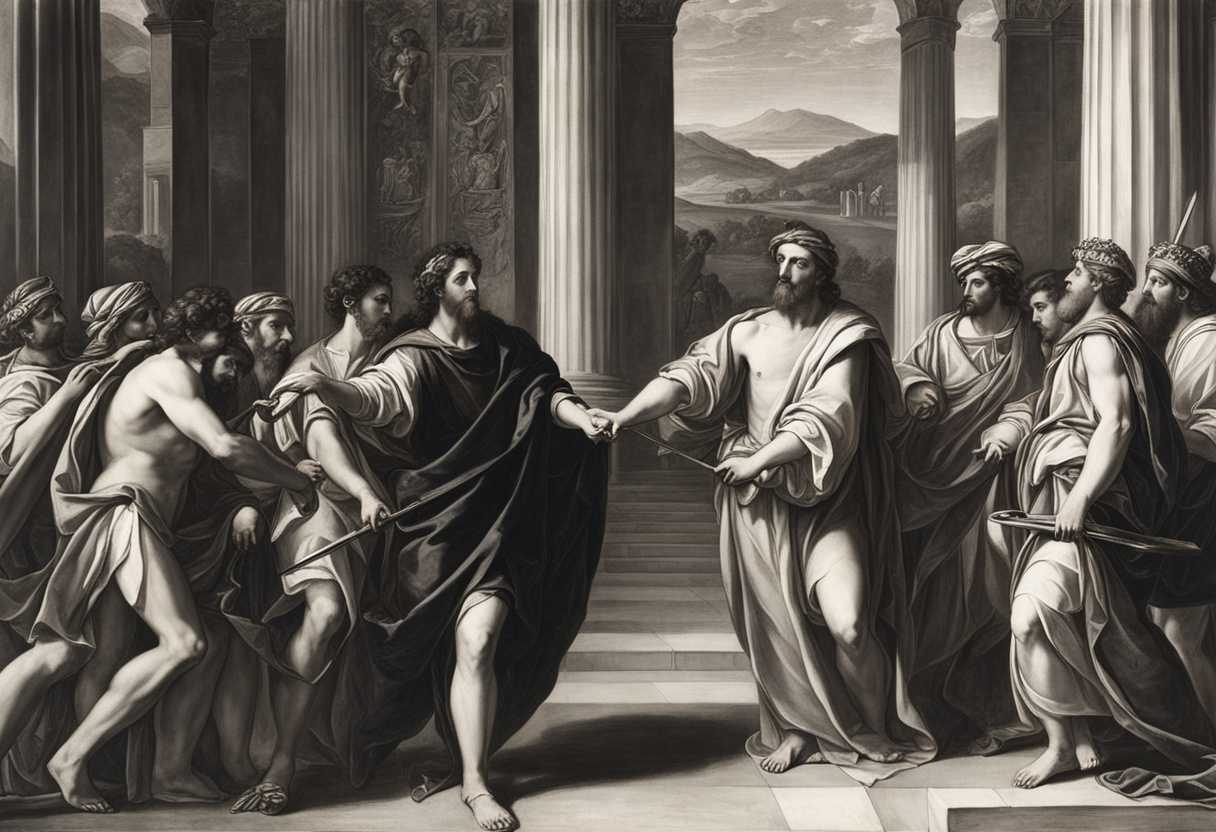
Setting the Scene for Genesis 23:16-18
In Genesis 23:16-18, we find Abraham purchasing a burial plot for his wife Sarah. The scene is set in the land of Canaan, specifically in the city of Hebron. Abraham is negotiating with the Hittites, the local inhabitants, to buy a cave and the surrounding field as a burial site for Sarah. The negotiations are taking place at the city gate, a common location for legal and business transactions in ancient times.
Abraham is accompanied by his trusted servant, who is likely assisting him in the negotiations and the transaction. The Hittites, led by Ephron the Hittite, are also present, as they are the ones who own the land that Abraham wishes to purchase. The atmosphere is solemn and respectful, as the discussion revolves around the final resting place for Sarah, who was not only Abraham’s wife but also a matriarch figure in their family.
The surroundings are likely bustling with activity, as the city gate was a central meeting point for the community. The dusty streets of Hebron are filled with people going about their daily tasks, while the negotiations between Abraham and the Hittites take place against the backdrop of the ancient city walls. The importance of family, tradition, and honoring the deceased are palpable in this poignant scene as Abraham secures a burial place for his beloved wife.
What is Genesis 23:16-18 about?
This verse demonstrates the deep love and respect that Abraham had for his wife, Sarah. He was honoring her even in death by purchasing a burial plot for her in the land of Canaan. This act also reflects the importance of proper burial practices in the ancient world, showing how significant it was for individuals to be laid to rest in a place of significance and honor.
Think about the significance of a burial plot in today’s society. What does it represent? How does it reflect our beliefs and values surrounding death and remembrance? Abraham was not only fulfilling a practical need but also showing his commitment to honoring Sarah’s memory for generations to come by buying a burial plot for her. It’s a powerful reminder of the enduring nature of love and the importance of honoring our loved ones, both in life and in death.
Understanding what Genesis 23:16-18 really means
In Genesis 23:16-18, we witness a pivotal moment in Abraham’s life as he purchases the cave of Machpelah from Ephron the Hittite as a burial site for Sarah. This transaction holds great significance as it represents Abraham’s first legal ownership of a piece of the Promised Land, a tangible fulfillment of God’s promise to him. The act of Abraham weighing out the silver for Ephron showcases his integrity and willingness to pay a fair price, highlighting the importance of honesty and fairness in all dealings.
The mention of the transaction being conducted “in the hearing of the sons of Heth” underscores the public nature of the exchange, ensuring transparency and accountability in the agreement. This public display serves as a reminder of the importance of conducting our affairs openly and honestly, reflecting values that are timeless and applicable in today’s world. The transfer of the field of Ephron to Abraham symbolizes the legal transfer of property, marking the beginning of the fulfillment of God’s promise to Abraham regarding the land.
These verses resonate with other passages in the Bible, such as Genesis 12:7, where God promises Abraham and his descendants the inheritance of the land. Hebrews 11:9-10 commends Abraham for his faith in God’s promises, even as he lived as a foreigner in the Promised Land, looking forward to the city whose architect and builder is God. Acts 7:5 further emphasizes God’s promise of the land to Abraham and his descendants, highlighting the faith and trust required to believe in unseen promises.
The relevance of this passage to people today lies in its timeless lessons on integrity, transparency, and faith. It serves as a reminder that the fulfillment of God’s promises often begins with small, seemingly insignificant steps, requiring unwavering faith and trust in His plan. In a world where ethical conduct can be compromised for personal gain, the story of Abraham’s transaction with Ephron encourages us to uphold honesty and openness in all our dealings, reflecting God’s values in our actions.
To illustrate the impact of integrity, we can imagine a small business owner who prioritizes fair pricing and transparent dealings amidst a competitive market. Over time, this commitment to honesty and integrity builds a reputation that attracts loyal customers and partners, leading to long-term success and blessings. Similarly, Abraham’s integrity in the purchase of the cave of Machpelah laid a foundation for the fulfillment of God’s promises to him, showcasing the enduring value of integrity and faith in God’s plan.
In conclusion, Genesis 23:16-18 serves as a powerful reminder of the importance of integrity, transparency, and faith in our lives. By emulating Abraham’s example of honesty and trust in God’s promises, we pave the way for blessings and fulfillment beyond our expectations. Let us strive to conduct our affairs with integrity and faith, knowing that even the smallest steps of obedience can lead to the realization of God’s promises in our lives.
How can we honor God with our material possessions?
One way to honor God with our material possessions is to use them to serve others in need. We can use our resources to provide for the less fortunate, support ministries, and meet the needs of those around us, just as Abraham purchased a burial plot for Sarah. We demonstrate our love for God and acknowledge that all we possess ultimately belongs to Him by extending a helping hand and showing kindness with what we have.
Furthermore, we can honor God with our material possessions by being good stewards of what we have been entrusted with. This involves managing our resources wisely, avoiding wastefulness, and using what we have in ways that align with God’s values and principles. We show gratitude for God’s provision and acknowledge His ownership over all that we possess by being responsible with our material blessings.
Finally, honoring God with our material possessions also involves recognizing that true wealth is found in our relationship with Him and not in the abundance of our possessions. We can maintain a proper perspective on earthly riches by prioritizing our spiritual growth, seeking God’s kingdom above all else, and using our material blessings in ways that bring glory to Him. We reflect God’s character and honor Him with all that we have by living with a mindset of generosity, contentment, and faithfulness.
Application
Let’s take a moment to reflect on how Abraham took care of Sarah in preparing for the future. Just as he secured a place for her, let’s also ensure our loved ones are taken care of. It’s time to listen to God’s guidance and make sure our affairs are in order. Are you ready to honor your loved ones by taking practical steps to prepare for the future today?

Reverend Michael Johnson is an experienced Church Minister with a profound expertise in spirituality and guidance. With a serene presence and a compassionate heart, he has faithfully served his congregation for over 20 years, leading them on a spiritual journey towards inner peace and enlightenment. Reverend Johnson’s extensive knowledge of religious philosophies and profound understanding of human nature have made him a trusted confidant and mentor to many, as he seamlessly weaves his profound wisdom into life teachings. Reverend Johnson’s calming demeanor and empathetic nature continue to uplift and heal souls, nurturing a sense of unity and tranquility within his community.