
27 When the boys grew up, Esau was a skillful hunter, a man of the field, while Jacob was a quiet man, dwelling in tents.
28 Isaac loved Esau because he ate of his game, but Rebekah loved Jacob.
29 Once when Jacob was cooking stew, Esau came in from the field, and he was exhausted.
30 And Esau said to Jacob, “Let me eat some of that red stew, for I am exhausted!” (Therefore his name was called Edom.)
31 Jacob said, “Sell me your birthright now.”
32 Esau said, “I am about to die; of what use is a birthright to me?”
33 Then Jacob said, “Swear to me now.” So he swore to him and sold his birthright to Jacob.
34 Then Jacob gave Esau bread and lentil stew, and he ate and drank and rose and went his way. Thus Esau despised his birthright.
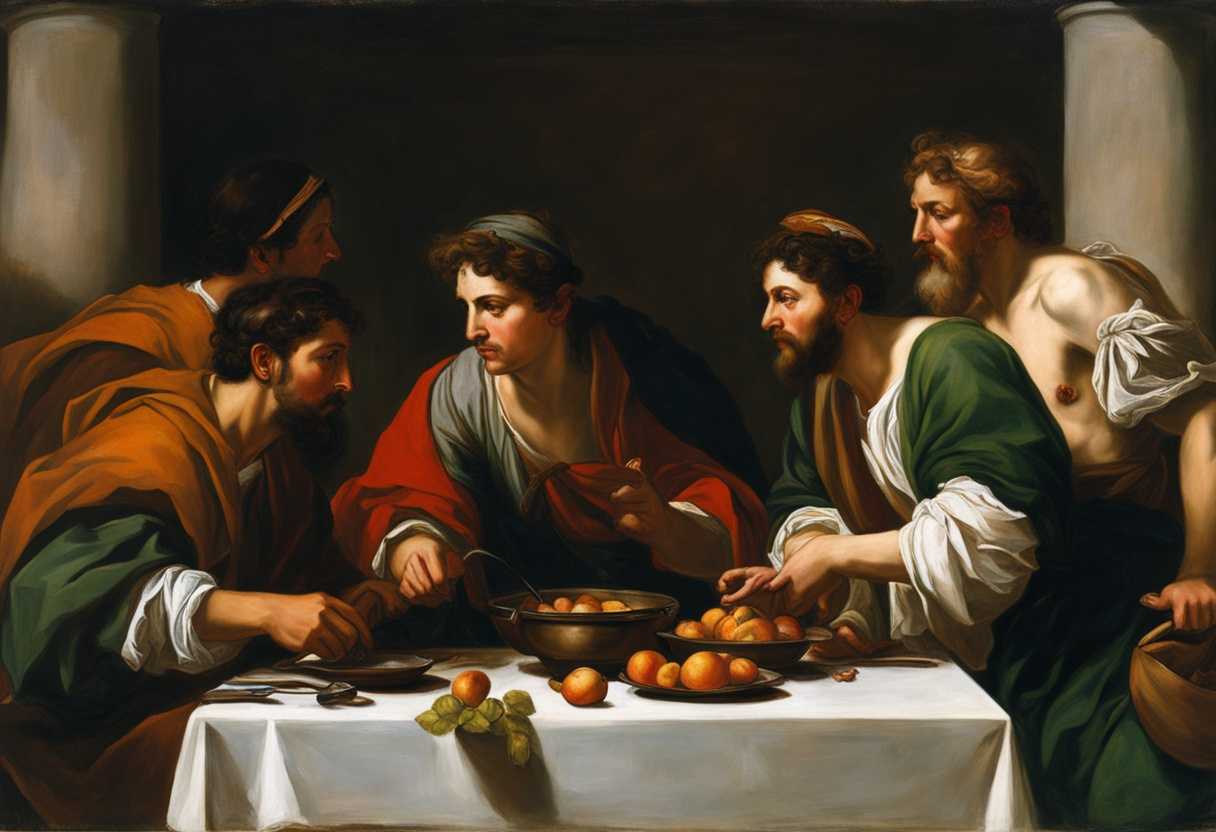
Setting the Scene for Genesis 25:27-34
In Genesis chapter 25, we find the scene where Esau, the elder son of Isaac and Rebekah, returns from a hunting trip famished and exhausted. As he enters the camp, he is greeted by the savory aroma of the lentil stew that his younger brother Jacob is cooking. Esau, driven by his hunger, implores Jacob to give him some of the stew in exchange for his birthright. Jacob, known for his cunning nature, seizes this opportunity to gain the birthright and agrees to the trade.
The setting is a simple campsite in the wilderness, with a small fire crackling under a pot where Jacob is preparing the lentil stew. The brothers, Esau and Jacob, are both present in this scene, with Esau looking disheveled and weary from his hunting expedition, while Jacob appears calculating and shrewd. The tension between the brothers is palpable as they negotiate the terms of the trade, with Esau’s impulsive hunger driving him to make a decision that will have far-reaching consequences for their family and future generations. The surroundings are rugged and barren, mirroring the moral dilemma and spiritual emptiness that permeate this pivotal moment in their lives.
What is Genesis 25:27-34 about?
Esau and Jacob, two brothers with very different priorities, are seen in this verse. Esau, driven by immediate gratification and physical needs, gives up his birthright, which was his rightful position as the firstborn son with privileges and responsibilities, in exchange for a simple bowl of stew. On the other hand, Jacob, known for his cunning and prudence, takes advantage of Esau’s impulsiveness to secure the birthright for himself.
This verse serves as a reminder of the consequences of making hasty decisions based on short-term desires. It prompts us to reflect on the value we place on our long-term goals and commitments compared to fleeting pleasures. It challenges us to consider whether we are willing to sacrifice our future blessings for temporary satisfaction. We should learn from Esau’s impulsive action as we navigate our own choices and priorities, striving to make decisions that align with our values and aspirations for the future.
Understanding what Genesis 25:27-34 really means
Genesis 25:27-34 recounts the intriguing episode of Esau selling his birthright to Jacob. This narrative is rich with layers of symbolic and literal lessons that continue to resonate with us today.
Initially, the story functions on a literal level: Esau, the firstborn, fatigued and famished, disregards the sacredness of his birthright for immediate gratification— a bowl of lentil stew prepared by his brother, Jacob. Here lies our first critical reflection: What are our “bowls of stew”? These represent our temptations to choose immediate comfort over long-term blessings. Like Esau, modern individuals, too, can make hasty decisions that satisfy present urges but forfeit richer, everlasting rewards.
The transaction between the brothers is also symbolic of deeper spiritual truths. The birthright signified not only wealth and leadership but also spiritual leadership and the covenant blessings of Abraham. Esau demonstrated a disregard for his spiritual heritage and responsibilities by trading his birthright. This mirrors how contemporary society often undervalues spiritual commitments. Are we, like Esau, allowing the spiritual aspects of our lives to be overshadowed by temporal needs?
Jacob’s role is equally critical. While his desire for the birthright demonstrates valuing the family’s covenant with God, his method—taking advantage of his brother’s weakness—raises questions about ethics and morality. It prompts us to consider: Does the end justify the means? Jacob’s actions point to a complex biblical truth about God working through flawed human actions.
Further reflection is drawn from Hebrews 12:16, where Esau is described as godless for trading away his divine inheritance. This passage underscores the gravity of Esau’s decision and serves as a warning: do not take lightly the gifts and calling that God places in our lives. Consider a practical real-world setting at a workplace scenario. A person might be tempted to undermine a colleague to gain a promotion. This promotion might be the “bowl of stew,” but the relational and ethical costs are significant. Is the immediate gain worth the long-term effects on one’s character and relationships? Genesis 25:27-34 isn’t merely a historical account but a vivid narrative pregnant with ongoing relevance. It urges us to ponder the value we assign to immediate benefits versus lasting virtues. Reflect on this passage as you consider the legacy you are building—will it endure, or is it as fleeting as Esau’s bowl of stew?
What are we willing to sacrifice for temporary gain?
The story of Esau selling his birthright to Jacob for a bowl of stew in Genesis 25:27-34 serves as a cautionary tale about the consequences of prioritizing temporary gratification over long-term blessings. Esau, in a moment of physical hunger and impulsiveness, chose to sacrifice his birthright, which carried with it significant spiritual and material blessings, for the immediate satisfaction of a meal. This decision ultimately led to feelings of regret and loss as Esau realized the gravity of his choice.
This passage highlights the danger of making decisions based solely on immediate desires and impulses without considering the long-term impact. It suggests that we may be willing to sacrifice valuable and lasting blessings for the sake of temporary gain or pleasure. We may overlook the importance of spiritual inheritance, divine promises, and the legacy we leave for future generations by focusing on short-term gratification.
Esau’s story challenges us to reflect on our own priorities and choices. It reminds us to consider the consequences of our actions and to weigh the value of temporary pleasures against the lasting rewards of faithfulness, obedience, and perseverance in God’s plan for our lives. It prompts us to resist the temptation to trade our birthright, our spiritual inheritance, for fleeting and temporary gains.
Application
Imagine standing at a crossroads every morning: one path paved with quick fixes, like fast food for the soul, and the other carved with long-term goals, akin to preparing a nourishing family dinner that fills not just your stomach but also enriches your spirit. Just as Esau traded his future for immediate comfort, we too face the temptation to opt for short-term ease over lasting blessings. In the rush of our daily grind, are we sacrificing our spiritual inheritance for fleeting satisfaction? How often do we forsake enduring rewards because we’re too hurried to see beyond the here and now? Before you make your next decision, ask yourself: Will this choice bring momentary relief or contribute to my lasting legacy?

Reverend Michael Johnson is an experienced Church Minister with a profound expertise in spirituality and guidance. With a serene presence and a compassionate heart, he has faithfully served his congregation for over 20 years, leading them on a spiritual journey towards inner peace and enlightenment. Reverend Johnson’s extensive knowledge of religious philosophies and profound understanding of human nature have made him a trusted confidant and mentor to many, as he seamlessly weaves his profound wisdom into life teachings. Reverend Johnson’s calming demeanor and empathetic nature continue to uplift and heal souls, nurturing a sense of unity and tranquility within his community.