
29 Once when Jacob was cooking stew, Esau came in from the field, and he was exhausted.
30 And Esau said to Jacob, “Let me eat some of that red stew, for I am exhausted!” (Therefore his name was called Edom.)
31 Jacob said, “Sell me your birthright now.”
32 Esau said, “I am about to die; of what use is a birthright to me?”
33 Then Jacob said, “Swear to me now.” So he swore to him and sold his birthright to Jacob.
34 Then Jacob gave Esau bread and lentil stew, and he ate and drank and rose and went his way. So Esau despised his birthright.
Setting the Scene for Genesis 25:29-34
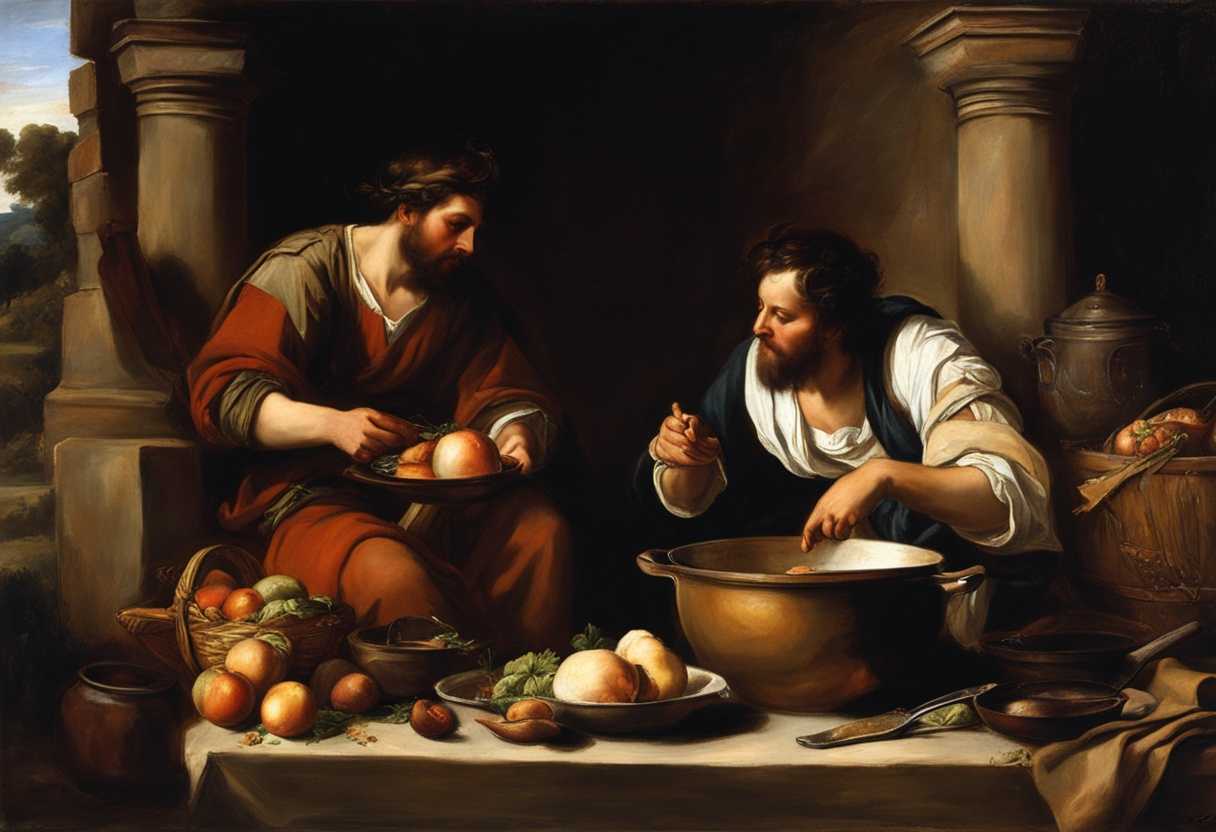
In Genesis 25:29-34, we find the scene where Esau, the elder son of Isaac and Rebekah, returns from hunting in the field. He is exhausted and famished, having been out all day. At the same time, Jacob, his younger twin brother, is cooking a stew. The aroma of the savory dish fills the air, tempting Esau as he enters the camp.
Esau, driven by his hunger, approaches Jacob and pleads for some of the stew. Jacob, seizing the opportunity, cunningly offers to give Esau the stew in exchange for his birthright. The birthright was a significant privilege in ancient times, entitling the recipient to a double portion of the inheritance and the leadership of the family upon the father’s passing. Despite the weight of this offer, Esau, driven by his immediate need, agrees and exchanges his birthright for a bowl of stew.
The scene is set in the camp of Isaac and Rebekah, with the tents pitched in the wilderness. The sun is setting, casting a warm glow over the scene as the brothers interact. The tension between the brothers is palpable, with Jacob’s shrewdness contrasting with Esau’s impulsiveness. This pivotal moment sets the stage for the future dynamics between the brothers and foreshadows the deception and rivalry that will unfold in their relationship.
What is Genesis 25:29-34 about?
Esau makes a seemingly irrational decision by selling his birthright to Jacob in exchange for a bowl of stew in this verse. Birthright was a significant privilege in the ancient world, entitling the firstborn son to a double portion of inheritance and a position of leadership within the family. Esau displays impulsiveness and a lack of foresight by trading this valuable birthright for a momentary gratification of hunger. This decision highlights the contrast between immediate desires and long-term consequences, emphasizing the importance of thoughtful decision-making and considering the bigger picture.
Have you ever been faced with a choice between instant gratification and long-term benefits? How do you prioritize your needs and wants in such situations? The story of Esau selling his birthright serves as a cautionary tale, reminding us to weigh our decisions carefully and consider their long-lasting implications. It prompts us to reflect on the values we hold dear and the sacrifices we are willing to make for temporary pleasures. We should learn from Esau’s mistake and strive to make choices that align with our goals and values, even when faced with tempting offers.
Understanding what Genesis 25:29-34 really means
Structure:
- Introduction and Context
- Key Phrases and Their Meanings
- Cross-references to Other Biblical Passages
- Relevance to Modern Readers
- Esau sells his birthright to his brother Jacob in Genesis 25:29-34. This passage is set within the larger narrative of the patriarchal family and portrays a critical moment that has significant implications for the lineage of Israel. Esau, being famished, trades something of great long-term value—his birthright—for immediate gratification, a simple meal of lentil stew.
Key Phrases and Their Meanings
A pivotal phrase here is “I’m about to die,” exclaimed by Esau. This exaggeration reflects his impulsiveness and skewed sense of priorities. His hunger, although urgent, is not life-threatening, yet he acts as though it is. Jacob’s question, “Sell me this day thy birthright,” reveals his opportunistic nature. The birthright was not just an inheritance; it included spiritual responsibilities and blessings (Deuteronomy 21:17). Esau’s undervaluing of this shows a profound disregard for what is sacred.
Cross-references to Other Biblical Passages
The story resonates with other scriptures that warn against impulsiveness and the failure to value what is truly important. Hebrews 12:16-17 warns that no one should be like Esau, who traded his birthright for a single meal, likening such behavior to godlessness. Proverbs 13:16 says, “Every prudent man acts with knowledge, but a fool flaunts his folly,” emphasizing the value of foresight and wisdom.
Relevance to Modern Readers
Today’s culture often prioritizes instant gratification over long-term benefits, much like Esau prioritizing immediate satisfaction over his future inheritance. This scripture serves as a reminder to evaluate our choices carefully. Are we willing to compromise our values and long-term well-being for momentary pleasures? This dilemma manifests in various forms in contemporary society: financial decisions, career choices, and even relationships.
Reflective Questions and Conclusion
Have you ever found yourself making a decision for instant gratification that you later regretted? What “birthrights” are you potentially trading away in your life right now? God offers us eternal blessings and responsibilities that far outweigh any temporary satisfaction. This passage is a clarion call for wisdom, foresight, and the prioritization of what truly matters in our lives. Reflecting on Esau’s mistake encourages us to make decisions that honor God’s gifts and blessings, not just our immediate desires.
What are we willing to sacrifice for worldly desires?
The story of Esau selling his birthright for a bowl of lentil stew serves as a cautionary tale about the dangers of prioritizing worldly desires over spiritual blessings. Esau gives up his birthright, a prestigious position and blessing in the family, in exchange for a momentary satisfaction of his immediate hunger in this account. This demonstrates the shortsightedness and impulsiveness that can result from being driven by worldly desires.
The lesson from this story is that we should not be willing to sacrifice long-term blessings or compromise our values for temporary gratification or immediate gain. It challenges us to consider the true worth of what we have been given and to be wise in our decision making, especially when faced with temptations that may lead us away from the path of righteousness. The story of Esau ultimately shows the consequences of yielding to the desires of the flesh and losing sight of the spiritual inheritance and blessings that come from walking in obedience to God. It prompts us to reflect on our own priorities and what we are willing to sacrifice for the fleeting treasures of this world.
Application
Imagine trading your career for a quick snack or your family’s future for momentary ease. Esau swapped his legacy for a fleeting meal. What about you? Are you letting temporary cravings overshadow lasting spiritual wealth? Don’t compromise your divine inheritance for short-lived desires. Will you stand up for your eternal birthright today?

Reverend Michael Johnson is an experienced Church Minister with a profound expertise in spirituality and guidance. With a serene presence and a compassionate heart, he has faithfully served his congregation for over 20 years, leading them on a spiritual journey towards inner peace and enlightenment. Reverend Johnson’s extensive knowledge of religious philosophies and profound understanding of human nature have made him a trusted confidant and mentor to many, as he seamlessly weaves his profound wisdom into life teachings. Reverend Johnson’s calming demeanor and empathetic nature continue to uplift and heal souls, nurturing a sense of unity and tranquility within his community.