
Hebrews 12:16-17 is about warning against giving in to temporary, worldly desires like Esau did, instead urging believers to seek God’s blessings, for it is impossible to reverse the consequences of rejecting God’s promises.
16 that no one is sexually immoral or unholy like Esau, who sold his birthright for a single meal.
17 For you know that afterward, when he desired to inherit the blessing, he was rejected, for he found no chance to repent, though he sought it with tears.
Setting the Scene for Hebrews 12:16-17
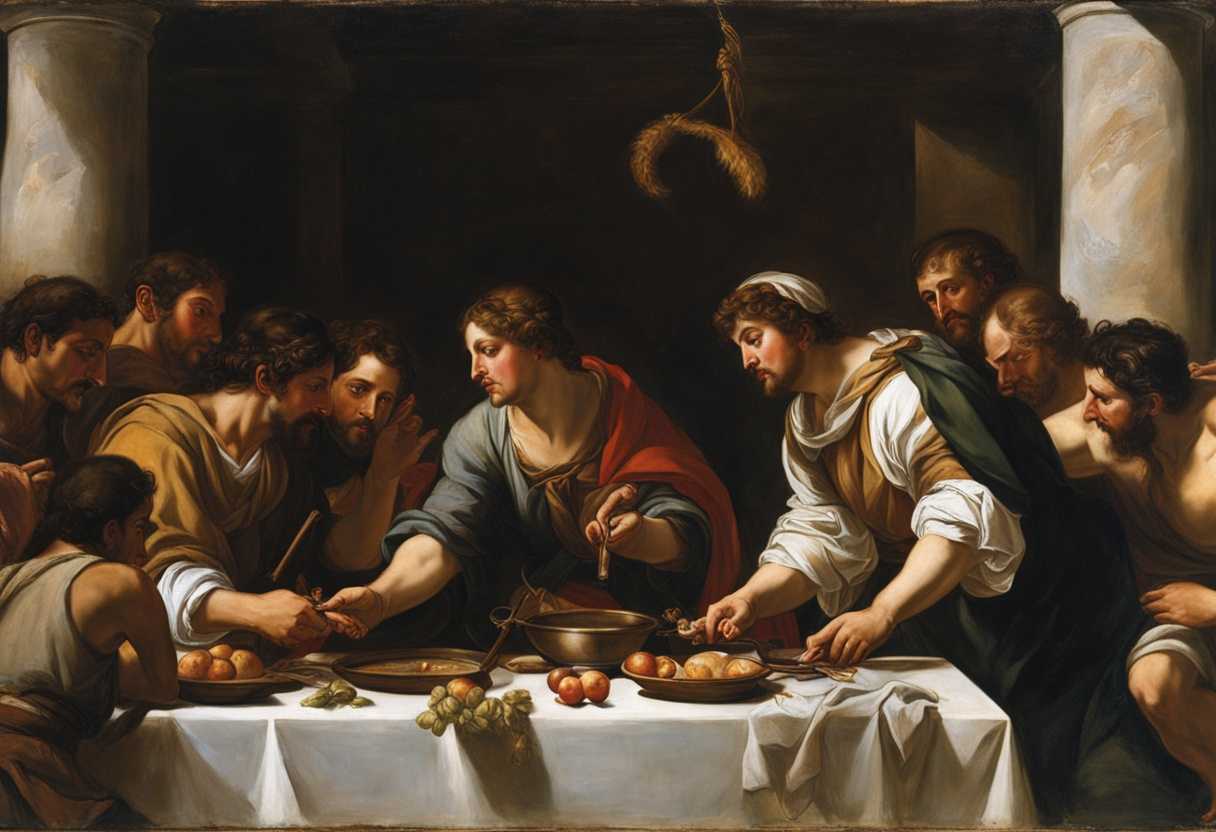
In Hebrews chapter 12, the scene is set in a gathering of early Christians who have come together for a bible study and fellowship. The group consists of both men and women, young and old, from various backgrounds and walks of life. They have gathered in a humble meeting place, perhaps a home or a simple meeting hall, with wooden benches and tables arranged in a circle to facilitate discussion and sharing.
Among the attendees is a man named Jacob, a former thief who has recently found faith in Christ and is eager to learn more about the teachings of the Bible. Sitting next to him is Sarah, a widow known for her generosity and kindness in the community. The group is led by a wise elder named Timothy, who has been a pillar of strength and guidance for the young church.
As they delve into the scriptures, discussing the importance of living a life of holiness and avoiding the pitfalls of sin, the atmosphere is filled with a sense of reverence and unity. The flickering light of oil lamps casts a warm glow over the room, creating a peaceful and intimate setting for the study. The group listens attentively as Timothy shares insights and wisdom from the scriptures, encouraging them to support and uplift one another in their journey of faith.
What is Hebrews 12:16-17 about?
The author cautions against a lifestyle characterized by immorality and godlessness in Hebrews 12:16-17. The verses emphasize the seriousness of these sins and the consequences they can have on one’s spiritual well-being. The passage reminds us of the fleeting nature of worldly desires and the importance of prioritizing our relationship with God above all else by highlighting the example of Esau, who traded his birthright for a single meal.
Have you ever found yourself tempted to compromise your values for temporary gratification? These verses serve as a powerful reminder that our choices have lasting implications, and it is crucial to remain steadfast in our faith even when faced with temptation. We can find redemption and restoration by seeking repentance and relying on God’s grace, turning away from a path of destruction towards a life of purpose and righteousness. The message of Hebrews 12:16-17 calls us to reflect on our actions, realign our priorities, and strive towards a life that is pleasing to God.
Understanding what Hebrews 12:16-17 really means
The Book of Hebrews was penned to Jewish Christians facing persecution, urging them to stand firm in their faith in Christ. In verses 16-17, the author draws a parallel to Esau, who impulsively traded his birthright for a single meal. This cautionary tale warns against prioritizing immediate gratification over lasting spiritual blessings, highlighting the consequences of undervaluing what is truly important.
The phrase “Sexually immoral or unholy like Esau” admonishes against living a life devoid of moral integrity and spiritual values. Esau’s actions symbolize those who choose fleeting pleasures over eternal blessings, showcasing the danger of such a mindset. Similarly, “Sold his birthright for a single meal” underscores the foolishness of exchanging something of immense value for something transient, serving as a stark reminder of the perils of impulsive decisions.
“He found no chance to repent, though he sought it with tears” emphasizes the irreversible nature of certain choices. Esau’s regret came too late, highlighting the importance of making wise decisions before it’s too late. This narrative echoes throughout the Bible, resonating with passages like Genesis 25:29-34 and Matthew 16:26, emphasizing the eternal significance of spiritual blessings over worldly gains.
In today’s society, where instant gratification often takes precedence, the lesson of Esau remains relevant. Whether in career paths, relationships, or personal choices, the verse urges us to consider the long-term implications of our actions. It prompts us to value our spiritual inheritance and not trade it for fleeting pleasures or conveniences, encouraging a mindset focused on eternal rewards.
Consider a scenario where a young professional is enticed by a lucrative yet unethical job offer. While the immediate financial gain is tempting, recalling Esau’s story might lead them to prioritize integrity and long-term career prospects over short-term benefits. Hebrews 12:16-17 thus stands as a poignant reminder to uphold integrity, cherish spiritual blessings, and make decisions with foresight, mindful of their impact on our spiritual journey.
Am I allowing bitterness to defile and destroy others?
The verses in Hebrews 12:16-17 warn against allowing bitterness to take root in our hearts and defile others. Bitterness can spread like a poison, negatively impacting not only our own lives but also those around us. When we hold onto bitterness, it can lead to destructive behavior and cause harm to our relationships with others. It is important to guard our hearts against bitterness and choose forgiveness and grace instead. We risk causing division, strife, and hurt to those in our lives by allowing bitterness to fester within us. It is crucial to confront and address any bitterness we may be harboring, seeking God’s help in releasing it and choosing to walk in love and forgiveness towards others. Instead of letting bitterness destroy, we should strive to be peacemakers and agents of reconciliation, extending grace and understanding to those around us.
Application
Embrace the wisdom in Hebrews 12:16-17, urging us to uphold righteousness and purity in our actions, steering clear of temptations that may veer us off course from God’s path. Let these words be a calling to safeguard our souls, ensuring they remain untainted by negativity. Pledge to nurture a life adorned with honesty and goodness. Will you respond to the call to walk the path of truth and prioritize God’s guidance above all distractions in this chaotic world?

Reverend Michael Johnson is an experienced Church Minister with a profound expertise in spirituality and guidance. With a serene presence and a compassionate heart, he has faithfully served his congregation for over 20 years, leading them on a spiritual journey towards inner peace and enlightenment. Reverend Johnson’s extensive knowledge of religious philosophies and profound understanding of human nature have made him a trusted confidant and mentor to many, as he seamlessly weaves his profound wisdom into life teachings. Reverend Johnson’s calming demeanor and empathetic nature continue to uplift and heal souls, nurturing a sense of unity and tranquility within his community.