
9 And his sons Isaac and Ishmael buried him in the cave of Machpelah, in the field of Ephron the son of Zohar the Hittite, east of Mamre,
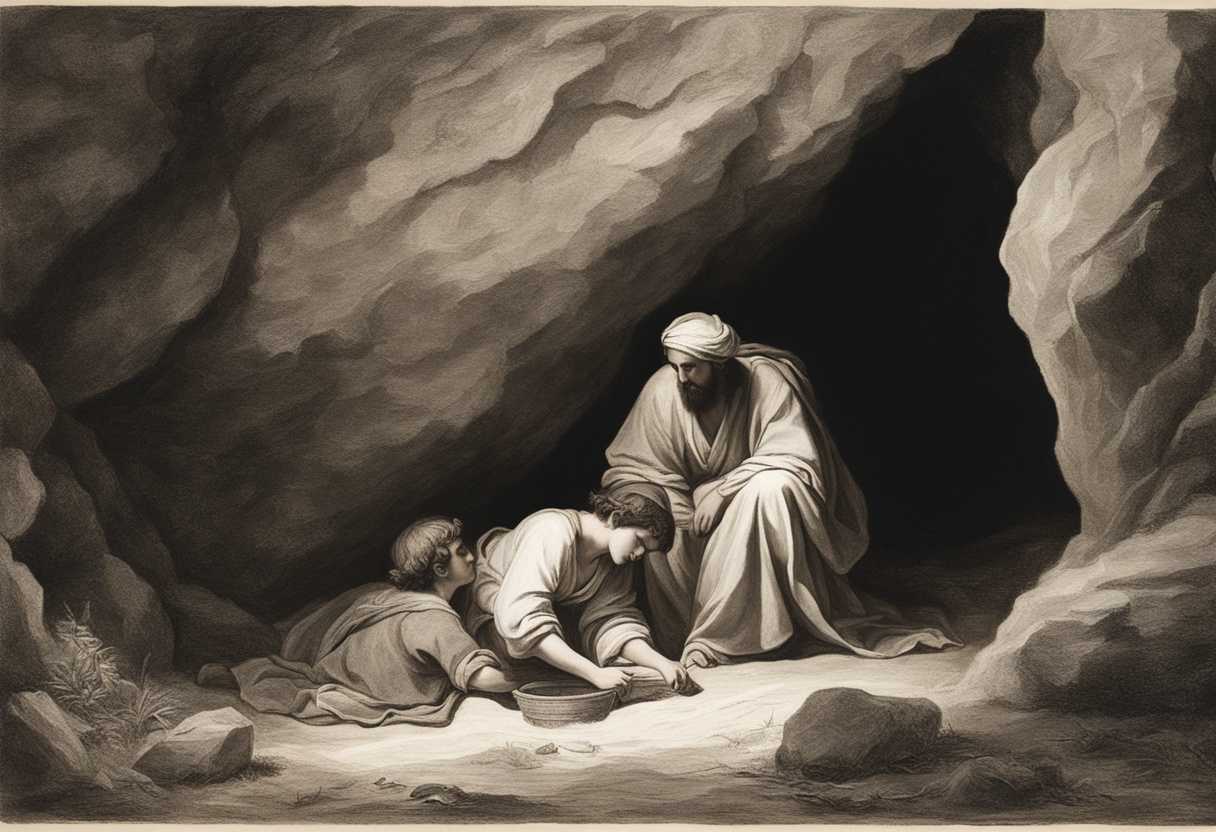
Setting the Scene for Genesis 25:9
In Genesis chapter 25, we find ourselves in the midst of a solemn and poignant scene. The focus is on the burial of Abraham, the patriarch of the Israelites, who had passed away at the age of 175. The setting is a vast and arid landscape, with the scorching sun casting long shadows over the group gathered to pay their respects.
Among those present are Abraham’s two sons, Isaac and Ishmael, who had been estranged for many years but have now come together to honor their father’s memory. Also in attendance are Abraham’s other descendants, as well as his loyal servants and friends. The air is heavy with a mix of grief and reverence as they lay Abraham to rest in the cave of Machpelah, a burial site he had purchased earlier as a final resting place for his beloved wife Sarah.
As the group stands in silence, the weight of their shared history and the legacy of faith and promise that Abraham had passed down to them hangs in the air. The scene serves as a powerful reminder of the passage of time and the continuity of God’s plan through the generations of Abraham’s descendants.
What is Genesis 25:9 about?
Isaac and Ishmael come together to bury their father, Abraham, in the cave of Machpelah as seen in Genesis 25:9. This act of unity and reverence for their father’s legacy reminds us of the importance of family bonds and honoring our ancestors. Despite their differences and the complexities of their relationship, Isaac and Ishmael set aside any conflicts to pay their respects to their father. This gesture shows us the power of forgiveness, reconciliation, and coming together in times of loss and mourning. We reflect on this verse, reminding us of the significance of family ties and the duties we have towards our loved ones, both in life and in death. It prompts us to consider how we can set aside our differences, grievances, and misunderstandings to come together in times of need and show respect for our elders and ancestors. This verse challenges us to think about how we can uphold our family traditions, values, and legacies through acts of unity, respect, and love, just like Isaac and Ishmael did in honoring their father, Abraham.
Understanding what Genesis 25:9 really means
Isaac and Ishmael come together to bury their father, Abraham, in the cave of Machpelah, revealing a deeply significant moment in the narrative of the Patriarchs as we analyze Genesis 25:9. This passage not only marks a poignant episode of familial reunion at the closure of Abraham’s earthly life but also symbolizes themes of reconciliation and legacy that resonate profoundly within the biblical context and our contemporary lives.
Firstly, consider the act of both sons, Isaac and Ishmael, burying their father together. Despite their historically strained relationship and the conflict between their descendants that the Scriptures chronicle, this joint act signifies a temporary reconciliation and mutual respect in honor of their father. It prompts us to ponder: How often do we set aside our differences to honor a greater purpose? Jesus pronounces in Matthew 5:9, “Blessed are the peacemakers, for they will be called children of God.”” This beatitude echoes through Genesis 25:9, reminding us of the peace that comes from putting aside conflict to honor family and faith.
Further exploring this verse, the location of the burial, the cave of Machpelah, holds substantial significance as well. Abraham purchased this site earlier in Genesis as a family tomb, signifying his faith in God’s promise that Canaan would be the land for his descendants. This action by Abraham, and its reaffirmation by his sons, underlines the importance of legacy and faith in the promises of God. It prompts an introspective query: What legacies are we building, and do they align with our faith and values?
Relevance to contemporary readers emerges clearly here. The symbolism of unity and reconciliation in Genesis 25:9 serves as a poignant reminder of the power of coming together for common, honorable goals in a world brimming with conflicts, both personal and global. An anecdote of a community torn by strife over a local issue is considered. When members chose to focus on their shared values and history, rather than what divided them, they found a pathway to peace and collaborative solutions. Similarly, Isaac and Ishmael’s united act can inspire us to seek reconciliation in our own relationships. This passage challenges us today to reflect on our relationships with family and with those from whom we are estranged in terms of practical application. Are there conflicts that could be softened, or even resolved, by focusing on shared values and respect? What steps can we take to build legacies that honor our deeper values and beliefs, much like the patriarchs did?
Thus, as we meditate on Genesis 25:9, let us seek to emulate the examples of Isaac and Ishael, striving for reconciliation and working toward legacies that align with our faith. Let this passage inspire us to be peacemakers, to value our shared heritage, and to live out the promises of God in our daily lives, contributing to a narrative of unity and faithfulness that transcends generations.
How can we honor our deceased loved ones?
One way to honor our deceased loved ones is by remembering their legacy and the impact they had on our lives. Reflecting on their positive attributes, cherished memories, and the lessons they taught us can help us keep their spirit alive in our hearts. It’s also important to continue their good deeds and values, passing down their teachings to future generations as a way to honor their memory.
Another way we can honor our deceased loved ones is by performing acts of kindness and charity in their name. Whether it’s volunteering, donating to a cause they were passionate about, or helping someone in need, these actions can serve as a tribute to the values and principles they stood for during their lifetime. We can continue the legacy of love and compassion they left behind by making a positive impact in the world in their honor.
Application
Imagine your life as a quilt, each patch representing the faces of those who’ve loved you, taught you, and guided you along your path. Just as Isaac cherished the memory of Abraham in Genesis 25:9, it’s our turn to stitch reverence and appreciation into the fabric of our daily lives. Let’s honor the legacy of those remarkable souls who’ve set the foundations of our own stories. Think of it as a family heir performance review—where respect and remembrance are key metrics. Will you choose to weave their memory into your journey, making it richer and more colorful? How will you keep their legacy alive in your heart and actions?

Reverend Michael Johnson is an experienced Church Minister with a profound expertise in spirituality and guidance. With a serene presence and a compassionate heart, he has faithfully served his congregation for over 20 years, leading them on a spiritual journey towards inner peace and enlightenment. Reverend Johnson’s extensive knowledge of religious philosophies and profound understanding of human nature have made him a trusted confidant and mentor to many, as he seamlessly weaves his profound wisdom into life teachings. Reverend Johnson’s calming demeanor and empathetic nature continue to uplift and heal souls, nurturing a sense of unity and tranquility within his community.