
34 When Esau was forty years old, he took Judith the daughter of Beeri the Hittite to be his wife, and Basemath the daughter of Elon the Hittite,
35 They made life bitter for Isaac and Rebekah.
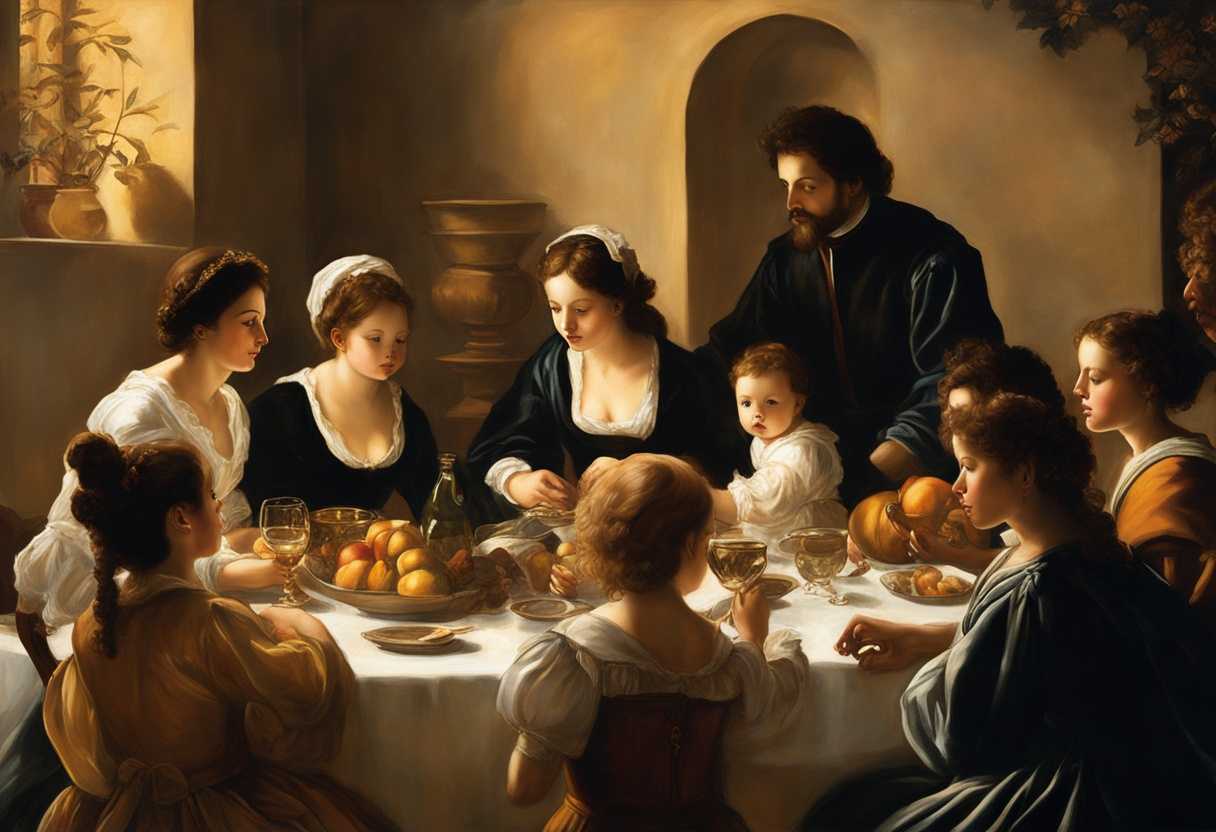
Setting the Scene for Genesis 26:34-35
In Genesis chapter 26, we find Isaac, the son of Abraham, settling in the land of Gerar with his wife Rebekah. The scene unfolds in the midst of a tumultuous time as Isaac faces challenges and blessings in this new land. As Isaac and Rebekah navigate their new surroundings, they find themselves in the company of Abimelech, the king of the Philistines, and his wife.
The setting is a vibrant and bustling city, with the palace of Abimelech standing tall in the background. The air is filled with the sounds of merchants trading their goods in the marketplace, children playing in the streets, and the occasional bleating of sheep and goats. Isaac and Rebekah, with their small entourage of servants, have been invited to dine with Abimelech and his court, a gesture of goodwill and friendship in this foreign land.
As the evening progresses, tensions rise as the local women, including Abimelech’s wife, begin to despise Rebekah. The dynamics of power, jealousy, and cultural differences come to the forefront in this scene, setting the stage for the events that will unfold in the chapters to come. Isaac and Rebekah find themselves in a precarious position, navigating the complexities of relationships and societal expectations in a land that is not their own.
What is Genesis 26:34-35 about?
This verse highlights a common theme in the Bible: the importance of following God’s will in all aspects of life, especially in relationships. Esau’s decision to marry Hittite women, who were not part of God’s chosen people, caused distress to his parents because they understood the significance of marrying within their own faith and culture. This story serves as a reminder that our choices in relationships can have a significant impact on our families and our spiritual journeys.
Think about the importance of honoring our parents and the values they have instilled in us. Our choices in our relationships can either bring us closer to God’s plan for us or lead us further away. Reflect on the significance of marriage as a covenant between two people and how marrying someone who shares our faith and values can strengthen that covenant. We should seek guidance from God and honor our heritage by choosing partners who share our beliefs and commitment to living a life aligned with His will as we navigate our own relationships.
Understanding what Genesis 26:34-35 really means
Introduction and Contextual Background
The verses you bring forth introduce us to a pivotal moment in the life of Esau, one of Isaac and Rebekah’s sons. Here, we see him taking two Hittite women, Judith and Basemath, as his wives, and the resulting impact on his family. This small narrative packs profound underlying themes and significance that extends beyond its ancient context into our contemporary lives.
Connections to Other Biblical Passages
A critical aspect of engaging with this passage is understanding its surrounding context and cross-references. Esau’s marriage to Hittite women stands in contrast to the practice established by Abraham, who explicitly instructed his servant to find a wife for Isaac from his own kin (Genesis 24). Later, we observe similar caution in Jacob’s story, where Rebekah expresses grave concern over the prospect of him taking a Canaanite wife (Genesis 27:46). Such connections underscore the importance placed on maintaining cultural and religious integrity through marriage within the chosen lineage.
Emotional and Familial Impact
The phrase “they were a source of grief to Isaac and Rebekah” sheds light on the personal anguish and familial discord that arose from Esau’s decisions. This emotional strife transcends generations and cultures, reminding us of the deep impact our decisions can have on our loved ones. Today, families often experience similar tensions when values and choices diverge significantly. How do we navigate such complexities in our own lives while maintaining love and respect for family members who make different choices?
Relevance to Contemporary Life
Esau’s decision, seen through the lens of ancient cultural values, emphasizes the broader theme of aligning personal choices with one’s spiritual and cultural heritage. Individuals in today’s world might translate this to making life choices that resonate with their core values and beliefs, whether in relationships, careers, or daily living. Are we making decisions that honor our faith and respect the guidance of those who care for us?
One modern-day example might be the difficulty parents face when their children choose paths divergent from their upbringing. A friend of mine, deeply committed to their faith, grappled with their child marrying someone of a different belief system. It led to many conversations, prayers, and eventually, a deeper understanding and respect for each other’s journeys.
Detailing Specific Phrases
The term “source of grief” is rich with meaning. ‘Grief’ here isn’t just a passing sorrow but a profound, enduring heartache. It exemplifies the depths of disappointment and emotional pain that align with decisions that deviate from expected norms or values. This resonates in our current age, where diverse societal changes often clash with traditional values, leading to substantial personal and collective turmoil. These verses beckon us to reflect on our own relationships and choices. They challenge us to consider how our decisions resonate with our faith, values, and the well-being of our communities. How often do we pause to think about the broader impact of our actions, not just on ourselves but on those around us? We learn to navigate the complexities of modern life with wisdom and compassion by engaging thoughtfully with passages like these, anchoring our decisions in the enduring principles of our faith.
This passage, while rooted in an ancient context, is a guidepost for introspection and relational harmony today. How will you apply its lessons in your journey?
How can we navigate interfaith relationships in faith?
Interfaith relationships in faith can be challenging but also provide an opportunity for growth and understanding. Approach such relationships with respect, empathy, and an open mind when navigating them. Just as in the story referenced in Genesis, where Esau’s marriage to women from a different faith caused strife within the family, it is essential to acknowledge and address any cultural or religious differences that may arise.
Communication is key in interfaith relationships. Honest and open conversations about beliefs, practices, and expectations can help foster understanding and mutual respect. It is also important to be willing to learn from one another’s faith traditions, to celebrate each other’s differences, and to find common ground where possible. Navigating interfaith relationships in faith ultimately requires patience, compromise, and a genuine willingness to learn and grow together. Individuals can create a harmonious and enriching environment where both partners can thrive spiritually and personally by approaching these relationships with love and understanding.
Application
Think about your life as a journey, with your colleagues and family members as your traveling companions. Esau’s choice to marry women who brought grief to his parents is a powerful example of what happens when we don’t choose wisely. In your own relationships, are you surrounding yourself with people who uplift and encourage you? Take a moment to evaluate those connections. Are you ready to make the necessary changes to align your relationships with God’s will?

Reverend Michael Johnson is an experienced Church Minister with a profound expertise in spirituality and guidance. With a serene presence and a compassionate heart, he has faithfully served his congregation for over 20 years, leading them on a spiritual journey towards inner peace and enlightenment. Reverend Johnson’s extensive knowledge of religious philosophies and profound understanding of human nature have made him a trusted confidant and mentor to many, as he seamlessly weaves his profound wisdom into life teachings. Reverend Johnson’s calming demeanor and empathetic nature continue to uplift and heal souls, nurturing a sense of unity and tranquility within his community.