
11 But Jacob said to Rebekah his mother, “Behold, my brother Esau is a hairy man, and I am a smooth man.
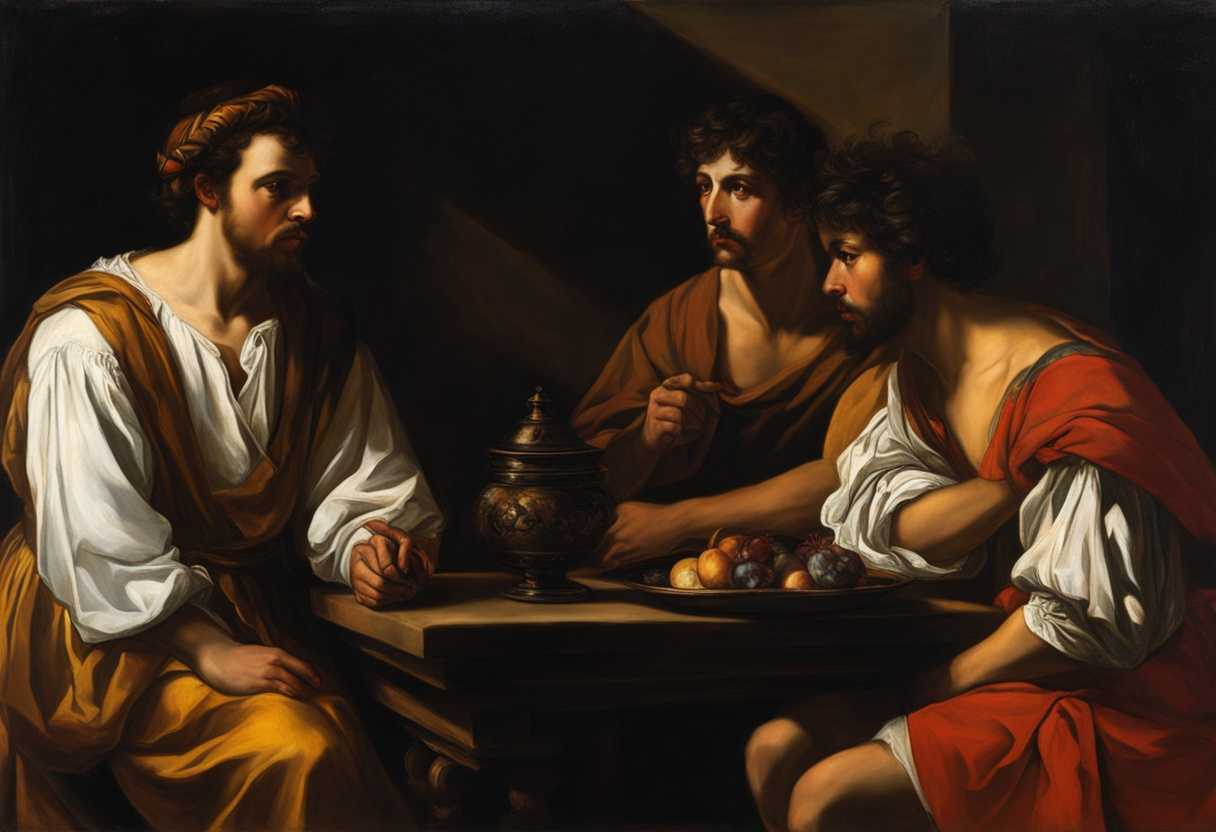
Setting the Scene for Genesis 27:11
In Genesis chapter 27, we find the scene where Isaac, the aging patriarch of the family, is preparing to bless his son Esau. Rebekah, Isaac’s wife and the mother of Esau and Jacob, overhears this and devises a plan to have Jacob, her favorite son, receive the blessing instead. She instructs Jacob to bring her two young goats from the flock, which she then prepares as a savory dish that mimics Esau’s cooking. She also dresses Jacob in Esau’s clothes and covers his hands and neck with the goat skins to imitate Esau’s hairy appearance.
As the scene unfolds, we see Jacob, a smooth-skinned man, hesitantly playing along with his mother’s scheme, feeling both nervous and deceitful. Rebekah guides him through the process, ensuring that he successfully deceives his father into believing he is Esau. Meanwhile, Isaac, who is blind and unable to see the deception, questions Jacob’s identity but ultimately blesses him, thinking he is blessing Esau. The tension in the room is palpable as the characters navigate this web of lies and manipulation in pursuit of the coveted blessing.
What is Genesis 27:11 about?
Jacob resorts to deceit in this verse in order to take advantage of the situation and receive Esau’s blessing. Jacob tricks his father Isaac into believing he is Esau, the older brother who was supposed to receive the blessing by pretending to be his brother. This act of deception ultimately leads to a strained relationship between the brothers and causes a rift in the family. We reflect on this story, prompting us to consider the consequences of our actions and the impact of deceit on relationships. We are challenged to think about whether the end justifies the means and whether it is ever acceptable to deceive others in pursuit of our own goals. This verse serves as a cautionary tale, reminding us of the importance of honesty, integrity, and the value of familial relationships.
What would you do in Jacob’s situation? How do you think his actions affected his relationship with his family members? Reflecting on this verse, how can we apply the lesson of honesty and integrity in our own lives and relationships?
Understanding what Genesis 27:11 really means
Structure for the Commentary:
- Introduction to the Verse
- Context within the Chapter
- Analysis of Key Phrases
- Correlations with Other Biblical Passages
- Relevance to Modern Life
- Reflective Questions and Conclusion
Commentary:
Introduction to the Verse
The verse in question is part of a pivotal moment in the Book of Genesis, where Jacob and Rebekah conspire to deceive Isaac into giving Jacob the blessing meant for Esau. This complex narrative delves into themes of deception, family dynamics, and the fulfillment of God’s promises. To unravel its layers, let’s place this verse within its broader context and analyze its key components.
Context within the Chapter
Genesis 27 recounts how Rebekah overhears Isaac’s plan to bless his elder son, Esau, and devises a counter-plan to ensure Jacob receives the blessing instead. Jacob’s initial hesitation, mentioned in this verse, stems from his fear that his deception will be uncovered, leading to a curse rather than the sought-after blessing. This chapter is a stirring tale of human cunning juxtaposed against divine providence.
Analysis of Key Phrases
The verse mentions Jacob’s concern about being different from his brother Esau, specifically pointing out a physical difference which could reveal the deceit. Jacob’s words show his internal conflict and the fear of the potential consequences. It emphasizes the gravity of resorting to deception, even when guided by a parent. The phrase “My brother Esau is a hairy man, and I have smooth skin” illustrates a clear difference that could unravel their scheme. Other instances of sibling relationships in the Bible, like Cain and Abel in Genesis 4, contrast with Jacob and Esau’s story. While Cain’s story results in tragic violence, Jacob’s story, despite its deceit, eventually leads to reconciliation and the continued lineage of God’s chosen people. Additionally, the theme of deception and fear of being caught can be correlated with Peter’s denial of Jesus in Luke 22:54-62. Here, fear also leads to actions contrary to righteousness, yet it is enveloped in a redemptive arc. This verse can speak volumes about the complexity of moral choices and the consequences of deceit in today’s world. For instance, imagine a business setting where an employee is asked by a superior to falsify reports to secure a lucrative client. The employee may feel conflicted, much like Jacob, recognizing the potential for both profit and ruin. Decisions made in such instances can have lasting effects on one’s integrity and relationships.
Reflective Questions and Conclusion
What drives us to deceive, and how do we reconcile those actions with our faith? Are the temporary gains from deceit worth the potential long-term consequences? This verse compels us to reflect on our own actions and decisions. Are we, like Jacob, acting out of fear and pressure, or are we seeking paths that align with the truth? Meditate on this passage and ponder on the role of honesty and integrity in your life. Jacob’s story, in the end, is one of redemption and fulfillment of God’s promises, despite human failings. This calls us to trust in God’s providence and strive for righteousness in our dealings. Amen.
How can we navigate conflicts within our families?
One way to navigate conflicts within our families is to prioritize communication and honesty. We can address misunderstandings and work towards finding resolutions by openly expressing our thoughts and feelings in a respectful manner. It is important to approach conflict with a willingness to listen and understand the perspectives of others involved, fostering empathy and compassion in the process.
Another strategy is to seek guidance from wise and trusted individuals within our family or community. Consulting with elders or mentors who have experience in resolving conflicts can provide valuable insights and perspectives that may help in navigating challenging situations. Drawing on the wisdom of those who have faced similar struggles can lead to a deeper understanding of the root causes of conflict and help in finding paths towards reconciliation and healing.
Additionally, acknowledging and accepting personal accountability for any role we may have played in the conflict is crucial. Taking responsibility for our actions and apologizing when necessary can help rebuild trust and repair damaged relationships. We can work towards fostering harmony and unity within our families by approaching conflicts with humility and a commitment to growth.
Application
Think of your life like a busy work project. Your family is your most important team. Reflecting on Genesis 27:11, let’s ensure we’re listening and showing respect to our loved ones—our core team members. Today, take a moment to honor your parents and those who stand by you. Just like you’d support a colleague, show your family they matter. Can you make an effort right now to show your appreciation and respect?

Reverend Michael Johnson is an experienced Church Minister with a profound expertise in spirituality and guidance. With a serene presence and a compassionate heart, he has faithfully served his congregation for over 20 years, leading them on a spiritual journey towards inner peace and enlightenment. Reverend Johnson’s extensive knowledge of religious philosophies and profound understanding of human nature have made him a trusted confidant and mentor to many, as he seamlessly weaves his profound wisdom into life teachings. Reverend Johnson’s calming demeanor and empathetic nature continue to uplift and heal souls, nurturing a sense of unity and tranquility within his community.