
30 As soon as Isaac had finished blessing Jacob, when Jacob had scarcely gone out from the presence of Isaac his father, Esau his brother came in from his hunting.
Setting the Scene for Genesis 27:30
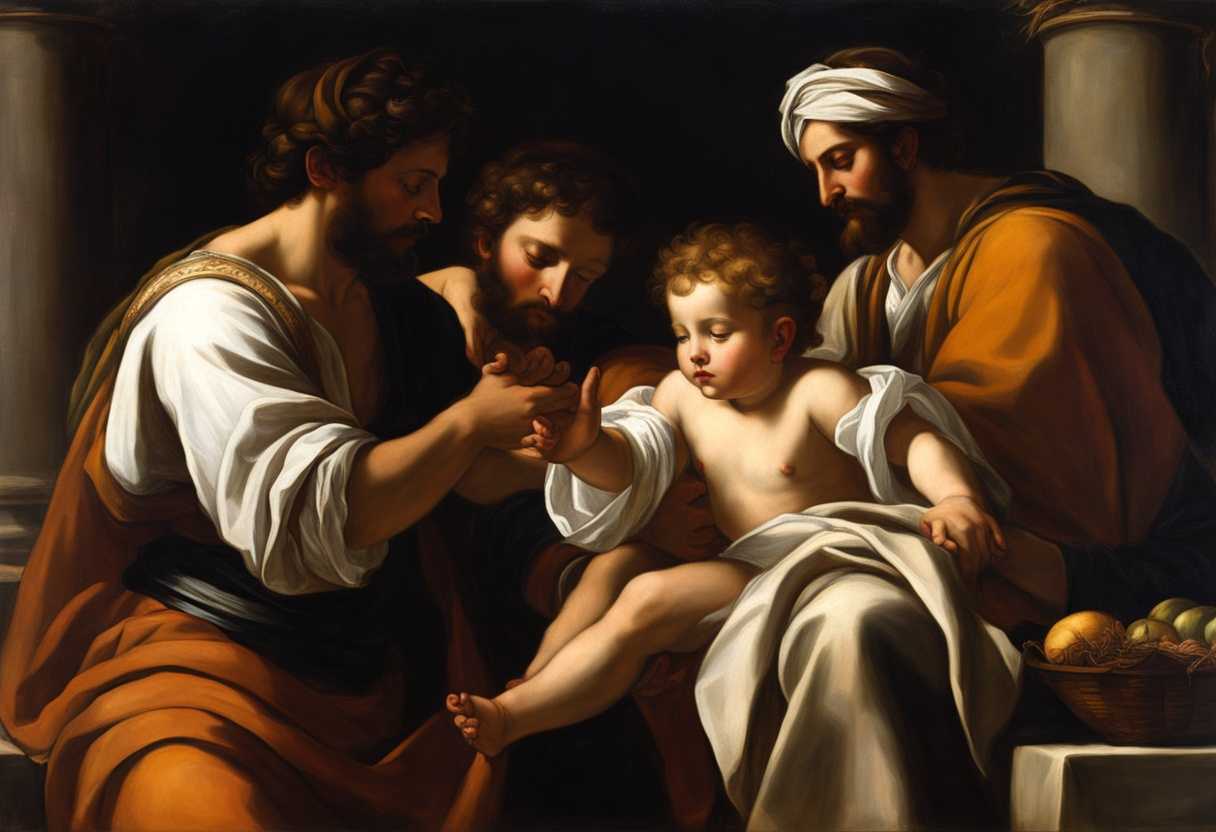
In Genesis chapter 27, we find the scene where Isaac, the aging patriarch of the family, is preparing to bless his son Esau. The setting is a tent in the wilderness, where Isaac resides with his wife Rebekah and their twin sons, Esau and Jacob. The atmosphere is tense as Isaac, who is nearly blind, is unaware of the deception that has been orchestrated by Rebekah and Jacob to secure the blessing for Jacob instead of Esau.
As the scene unfolds, Rebekah has dressed Jacob in Esau’s clothes and covered his smooth skin with goat skins to mimic Esau’s hairy arms. Jacob, though hesitant at first, follows his mother’s instructions to deceive his father into thinking he is Esau. The smell of the savory food that Jacob has prepared fills the tent, adding to the sensory details of the moment.
Isaac, suspicious of Jacob’s identity, questions him repeatedly, but ultimately, he is convinced by the feel of the hairy skins and the scent of the food that it is Esau standing before him. In this pivotal moment, Isaac bestows the blessing meant for Esau upon Jacob, unknowingly setting off a chain of events that will shape the future of the family and fulfill the prophecy given to Rebekah before the twins were born.
What is Genesis 27:30 about?
Ah, what a complex and thought-provoking verse to unpack. Here we see the intertwining of human actions and divine intervention in a way that challenges our understanding of morality and destiny. At first glance, it might seem troubling that Jacob obtains his father’s blessing through deceitful means. However, when we consider the bigger picture, we realize that God’s overarching plan is still fulfilled despite the flawed actions of individuals.
This verse invites us to ponder the mysterious ways in which God works through human choices, using even our shortcomings to bring about His divine will. It prompts us to reflect on the balance between free will and predestination, and how God’s ultimate purposes can transcend our limited understanding. We are reminded of the intricate tapestry of God’s sovereignty and human agency at play in the unfolding of history as we grapple with the complexities of this narrative.
Understanding what Genesis 27:30 really means
Structure for the Commentary
- Verse Introduction and Context
- Explanation of Key Phrases
- Cross-Referencing and Further Meaning
- Relevance to Today’s Reader
- Anecdote for Illustration
- Conclusion and Final Reflection
Commentary
1. Verse Introduction and Context
Genesis 27:30 is a critical juncture in the narrative of Isaac, Rebekah, Jacob, and Esau. This chapter tells the story of how Jacob, with his mother Rebekah’s help, deceives his father Isaac to receive the blessing meant for his older brother Esau. Understanding the context here is essential: Isaac, old and near death, wishes to bless Esau, his firstborn, but Rebekah manipulates the situation to favor Jacob. This familial tension and deceit highlight significant themes within the broader narrative of Genesis: covenant, blessing, and the ethical consequences of our actions.
2. Explanation of Key Phrases
Key phrases in this verse such as “Isaac had finished blessing Jacob” and “Jacob had scarcely gone out” are loaded with meaning. The first phrase emphasizes the finality and irrevocability of Isaac’s blessing. According to the cultural context, once a blessing was given, it couldn’t be retracted. The second phrase indicates the narrow window of time and opportunity in which this deception took place, highlighting the tension and urgency of the narrative. These moments underscore how life-altering decisions often come in fleeting moments.
3. Cross-Referencing and Further Meaning
The irrevocability of blessings is further illustrated in Genesis 27:33, where Isaac trembles violently upon realizing the deception but still accepts that the blessing will stand. This irrevocability reflects the solemn nature of words spoken in God’s name. Similarly, we see in Romans 11:29, “for God’s gifts and his call are irrevocable.” This idea underscores the permanence of God’s promises, offering comfort and assurance of his unwavering commitment to us.
4. Relevance to Today’s Reader
Why is this ancient story relevant today? The themes of deceit, family dynamics, and the consequences of our actions resonate deeply in modern contexts. It serves as a reminder that our actions, no matter how small, can have lasting impacts on our lives and those around us. The story challenges us to consider our own decisions and integrity—are we upholding honesty and trust within our relationships? It urges us to speak and act with wisdom and care, reminding us of the permanent nature of our commitments and words.
**5. Siblings in a modern family vie for their parents’ approval and favor. One sibling undermines the other to gain an advantage, perhaps spreading false rumors to weaken their sibling’s standing. Eventually, when the truth comes to light, the family must deal with the hurt and betrayal. Like Jacob and Esau, the ramifications can be deep and long-lasting, impacting family harmony and trust. This anecdote shows how timeless the lessons from Genesis 27 are: integrity and honesty are foundational to trust and healthy relationships.
6. Conclusion and Final Reflection
Genesis 27:30 is not just a story about historical figures; it’s a reminder about human nature and divine principles that are timeless. It calls us to reflect on our own lives, encouraging us to act with sincerity and integrity. Let us remember the weight of our words and actions as we navigate our relationships and seek blessings in our lives. Let’s strive to uphold the ethical teachings embedded in these ancient stories, ensuring that our journey aligns with the divine values of honesty, integrity, and love.
How can we discern God’s will in difficult decisions?
We can seek God’s will in difficult decisions by turning to prayer and asking for guidance and wisdom. We can meditate on Scripture and seek counsel from others who are also seeking to follow God’s will. We can trust that He will reveal the way forward by focusing on discerning God’s plan and desiring to align ourselves with His purpose.
God’s will often involves walking in obedience, love, and faith. We can be confident that God will direct our paths as we seek to honor Him and follow His commands. Trusting in His sovereignty and goodness, we can step forward in faith, knowing that He will guide us and work all things together for our good. We open ourselves up to receive His guidance and walk in His will by surrendering our desires and plans to Him.
Application
Consider your words as seeds you plant in the garden of your life. Each phrase you utter has the power to grow positivity and strength in the hearts of those you care about. In your work, home, and among friends, let your words be rays of sunshine that nurture growth and well-being. Start today—commit to speaking blessings that uplift and encourage. What seeds of kindness will you sow in your world today?

Reverend Michael Johnson is an experienced Church Minister with a profound expertise in spirituality and guidance. With a serene presence and a compassionate heart, he has faithfully served his congregation for over 20 years, leading them on a spiritual journey towards inner peace and enlightenment. Reverend Johnson’s extensive knowledge of religious philosophies and profound understanding of human nature have made him a trusted confidant and mentor to many, as he seamlessly weaves his profound wisdom into life teachings. Reverend Johnson’s calming demeanor and empathetic nature continue to uplift and heal souls, nurturing a sense of unity and tranquility within his community.