
7 then the Lord God formed the man of dust from the ground and breathed into his nostrils the breath of life, and the man became a living creature.
8 And the Lord God planted a garden in Eden, in the east, and there he put the man whom he had formed.
9 And out of the ground the Lord God made to spring up every tree that is pleasant to the sight and good for food. The tree of life was in the midst of the garden, and the tree of the knowledge of good and evil.
10 A river flowed out of Eden to water the garden, and there it divided and became four rivers.
11 The name of the first is the Pishon. It is the one that flowed around the whole land of Havilah, where there is gold.
12 The gold of that land is good; bdellium and onyx stone are there.
13 The name of the second river is the Gihon. It is the one that flowed around the whole land of Cush.
14 The name of the third river is the Tigris, which flows east of Assyria. And the fourth river is the Euphrates.
15 The Lord God took the man and put him in the garden of Eden to work it and keep it.
16 And the Lord God commanded the man, saying, “You may surely eat of every tree of the garden,
17 but of the tree of the knowledge of good and evil you shall not eat, for in the day that you eat of it you shall surely die.”
18 Then the Lord God said, “It is not good that the man should be alone; I will make him a helper fit for him.”
19 Now out of the ground the Lord God had formed every beast of the field and every bird of the heavens and brought them to the man to see what he would call them. And whatever the man called every living creature, that was its name.
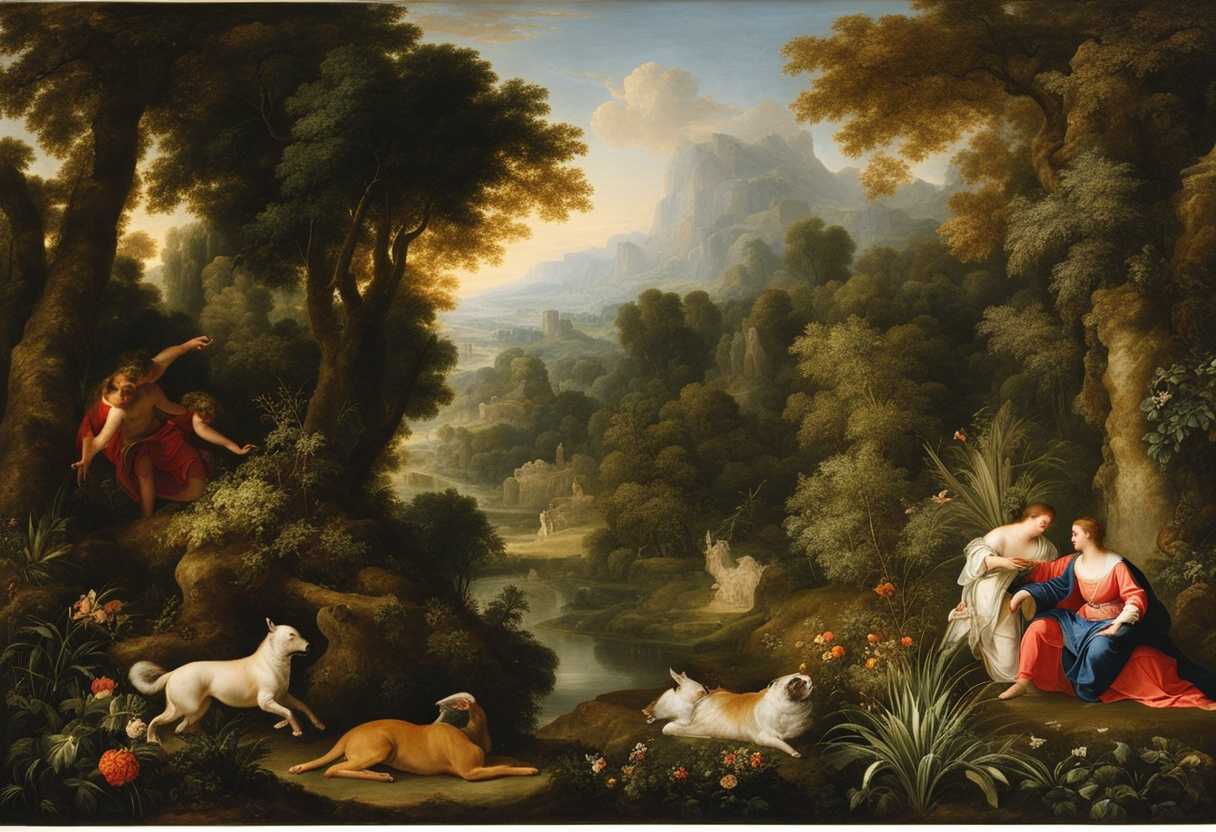
Setting the Scene for Genesis 2:7-19
In Genesis chapter 2, we find ourselves in the Garden of Eden, a lush and bountiful paradise created by God. The scene is set with Adam, the first man, who has just been formed by God from the dust of the ground. Adam is in awe of his surroundings, surrounded by vibrant flora and fauna, with a gentle breeze carrying the sweet scent of flowers through the air. He stands tall, a figure of strength and wonder, as he takes in the beauty of the garden.
God, the divine creator, is also present in this scene, walking among the trees of the garden. His presence is felt in the gentle rustling of leaves and the warmth of the sunlight filtering through the canopy above. God’s love and care for his creation are evident in every detail of the garden, from the crystal-clear streams to the towering trees laden with fruit. As Adam explores his new home, God watches over him with a sense of pride and joy, knowing that all he has created is good.
As Adam marvels at the wonders of the garden, he is joined by the animals of the land. Each creature is brought before him by God, who allows Adam to name them one by one. The animals move about in harmony, their diverse forms and colors a testament to God’s creativity and wisdom. In this idyllic setting, Adam and the animals coexist peacefully, a reflection of the perfect order and balance that God has established in his creation.
What is Genesis 2:7-19 about?
Imagine this incredible act by God—crafting the very first human out of dust, with His own hands! This verse speaks to the intimate connection between God and humanity. It shows that we are intricately designed and fashioned by a loving Creator, with purpose and care poured into every detail of our being.
Placing man in the garden of Eden signifies God’s provision for our needs and His desire for us to dwell in a place of abundance and beauty. It points to the harmony and closeness between humanity and God at the beginning of creation, before sin entered the world. Reflecting on this verse can remind us of our unique value in God’s eyes and the abundant blessings He desires to bestow upon us when we are in close relationship with Him. Let’s consider the significance of God’s act of forming us from dust as we ponder on this verse. How does this reflect His power and creativity? What does it mean for us to be placed in a garden by God, and how does that speak to His desire for our well-being? Let’s marvel at the depth of God’s love and care for each one of us, as seen in the very act of our creation. Let’s strive to cultivate a deeper connection with our Creator and dwell in His presence, just like Adam did in the garden of Eden.
Understanding what Genesis 2:7-19 really means
Let’s delve into Genesis 2:7-19’s rich tapestry. To provide a structured commentary, we will break this down into sections: Creation of Man, The Garden of Eden, Divine Instructions, Creation of Animals, and Relevance Today.
Creation of Man
The phrase “formed man of dust from the ground” highlights the humble origins of humanity. Unlike other creation myths that depict humans being made from celestial materials, the Bible underscores our earthy beginning. God denotes that our life force comes directly from God when He “breathes into his nostrils the breath of life.” Reflecting on this reminds us that our existence is both fragile and divine. Echoing Genesis 1:27, where humans are made in God’s image, we see a dual nature—earthly and heavenly.
The Garden of Eden
Scripturally, the Garden of Eden represents a place of perfect harmony between human beings and their environment. The phrase “to cultivate and keep it” isn’t just agricultural—it implies stewardship. This mandate recalls Psalm 8:6-8, where humanity is given dominion over creation. Our job isn’t to exploit but to nurture and preserve the bounties God has provided.
Divine Instructions
God’s commandment about the Tree of Knowledge of Good and Evil is straightforward yet profound. “You shall not eat” teaches us about boundaries and obedience. When paired with Deuteronomy 30:19, which emphasizes choosing life and prosperity over death and destruction, we are invited to consider our daily choices carefully, understanding their broader spiritual implications.
Creation of Animals
God formed “every beast of the field and every bird of the sky” and brought them to Adam to name—a task that conferred a sense of responsibility and authority. This act of naming is akin to God’s creative speech in Genesis 1. Intriguingly, it prefigures the relational aspect between humans and animals seen in Isaiah 11:6-9, where harmony in God’s creation is envisioned.
Relevance Today
How does this ancient story speak to modern lives? Consider stewarding the earth. Environmental issues are urgent, and recognizing our role as caretakers, not consumers, resonates deeply with today’s ecological challenges. Think of an anecdote where someone opts for sustainable living despite greater effort and cost—it’s a daily Eden-like choice reflecting divine trust and responsibility.
The terms “breathed into his nostrils” and “breath of life” underscore that our vibrancy comes directly from God. This can foster gratitude and humility. Recognizing that each breath is a God-given gift can transform our outlook in the hustle of contemporary life, helping us to live more gratefully and purposefully. Next time you’re caught up in stress, remember this divine breath sustaining you. Genesis 2:7-19 ultimately urges us to see divinity in daily acts, to cherish creation, and to live obediently within God-given boundaries. Let’s navigate our lives with a sense of sacred purpose as we engage with these timeless truths, stewarding well what God has entrusted to us. What choices will you make today to live in harmony with God’s original design?
How can we honor and care for God’s creation?
We honor and care for God’s creation by recognizing the significance and sanctity of all living beings that He has created. Just as God formed man and placed him in the garden to tend and keep it, we are called to be stewards of the earth and all its inhabitants. This means taking responsibility for the well-being of our planet and all living creatures, treating them with respect, kindness, and compassion. We can show reverence for the beauty and diversity of the natural world that God has entrusted into our care by being conscious of our ecological footprint and making choices that promote sustainability and environmental stewardship. This includes advocating for policies and practices that protect fragile ecosystems, reducing waste and pollution, conserving resources, and supporting conservation efforts to preserve God’s creation for future generations. We can demonstrate our love and gratitude for the bountiful gifts of the earth that God has blessed us with in this way.
Application
Think of your life like managing a project at work or nurturing your family. In Genesis 2:7-19, we see God creating us with a purpose—to care for the world. Are you handling this responsibility with the same dedication you show in your daily tasks? Let these verses inspire you to take action in protecting and nurturing our environment. Are you ready to step up and be a true caretaker of God’s creation?

Reverend Michael Johnson is an experienced Church Minister with a profound expertise in spirituality and guidance. With a serene presence and a compassionate heart, he has faithfully served his congregation for over 20 years, leading them on a spiritual journey towards inner peace and enlightenment. Reverend Johnson’s extensive knowledge of religious philosophies and profound understanding of human nature have made him a trusted confidant and mentor to many, as he seamlessly weaves his profound wisdom into life teachings. Reverend Johnson’s calming demeanor and empathetic nature continue to uplift and heal souls, nurturing a sense of unity and tranquility within his community.