
Genesis 2:8-9, 15-17 is about the creation of the Garden of Eden and the establishment of humanity’s responsibility to care for and maintain the garden, along with the warning about the consequence of disobedience to God’s command not to eat from the tree of the knowledge of good and evil.
8 And the Lord God planted a garden in Eden, in the east, and there he put the man whom he had formed.
9 And out of the ground the Lord God made to spring up every tree that is pleasant to the sight and good for food. The tree of life was in the midst of the garden, and the tree of the knowledge of good and evil.
15 The Lord God took the man and put him in the garden of Eden to work it and keep it.
16 And the Lord God commanded the man, saying, “You may surely eat of every tree of the garden,
17 but of the tree of the knowledge of good and evil you shall not eat, for in the day that you eat of it you shall surely die.”
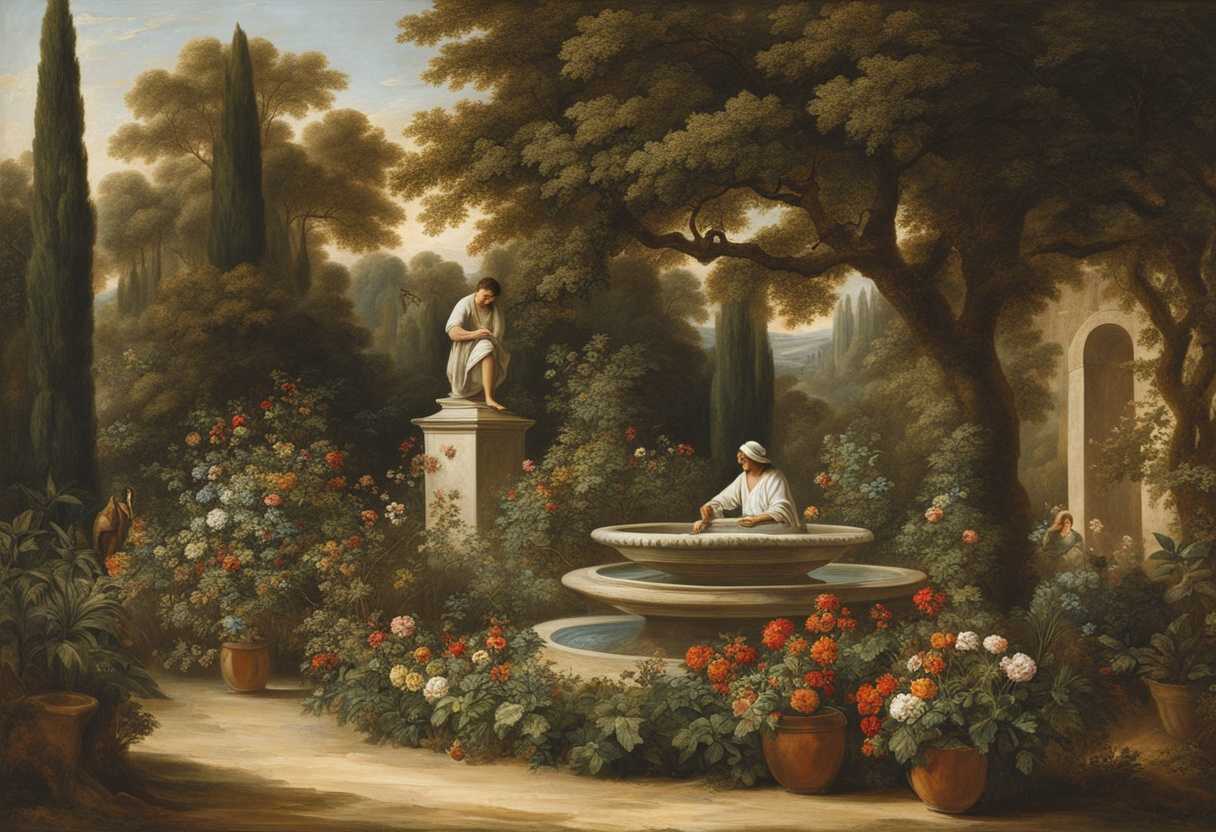
Setting the Scene for Genesis 2:8-9, 15-17
In Genesis chapter 2, we find ourselves in the Garden of Eden, a lush and bountiful paradise created by God. The scene is set with Adam, the first man created by God, wandering through the garden, marveling at the beauty of the plants and animals surrounding him. Adam is in awe of the perfect harmony and peace that exists in this pristine environment.
God has placed Adam in the Garden of Eden to tend and care for it, giving him the responsibility of naming all the animals. As Adam goes about his task, he is filled with a sense of purpose and wonder at the incredible diversity of God’s creation. The garden is teeming with life, with trees bearing delicious fruits and rivers flowing with crystal-clear water.
In the midst of this idyllic setting, God gives Adam a command not to eat from the tree of the knowledge of good and evil, warning him of the consequences of disobedience. The scene is filled with a sense of innocence and purity, as Adam and the animals live in perfect harmony with each other and with their Creator.
What is Genesis 2:8-9, 15-17 about?
This verse from the Bible can be found in the book of Genesis and marks the beginning of creation, where God forms the first man, Adam, and places him in the Garden of Eden. The significance of this verse lies in the establishment of a special relationship between God and humanity. God showcases a sense of stewardship and partnership with His creation by planting a garden and entrusting Adam with the responsibility to care for it. God shows immense trust and faith in humanity by giving Adam just one command – a simple rule to not eat from the tree of knowledge of good and evil. This act symbolizes God’s desire for humans to live in harmony with Him while exercising free will. Reflect on the profound implications of this verse – the divine intention for humans to be caretakers of the Earth and the need to follow God’s guidance. How does this narrative resonate with the concept of accountability and the consequences of our choices? We should contemplate our own responsibilities towards preserving and nurturing the world around us as we ponder on God’s act of creation and our role in it.
Understanding what Genesis 2:8-9, 15-17 really means
In Genesis 2:8-9, 15-17, we delve into the creation of the Garden of Eden, a place of unparalleled beauty and abundance where God placed Adam, the first man. The meticulous care with which God planted this garden in Eden, in the east, showcases His deliberate intention to provide a perfect environment for humanity to thrive. The presence of the Tree of Life and the Tree of the Knowledge of Good and Evil within this garden symbolizes crucial aspects of human existence – eternal life and moral discernment.
God’s command to Adam regarding these trees encapsulates the essence of free will, obedience, and the weight of choices. The freedom granted to Adam to freely eat from every tree in the garden, except the Tree of the Knowledge of Good and Evil, underscores the delicate balance between liberty and responsibility. This command serves as a foundational moment in human history, setting the stage for the unfolding drama of human choice and its consequences.
The phrases “Tree of Life” and “Tree of the Knowledge of Good and Evil” hold profound significance. The Tree of Life represents eternal communion with God and the promise of everlasting life, while the Tree of Knowledge symbolizes the boundary set by God and humanity’s capacity for moral decision-making. This dichotomy highlights the tension between obedience to God’s directives and the allure of exploring beyond His established limits.
As we reflect on this passage, we are prompted to consider the implications of our choices in the context of obedience to God. Just as Adam faced a pivotal decision with far-reaching consequences, we too navigate a world brimming with choices that shape our moral and spiritual journey. The narrative of Eden serves as a poignant reminder of the gravity of our decisions and the enduring impact they can have on our lives and relationships.
Drawing parallels to contemporary scenarios, we can liken God’s command to Adam to a parent setting boundaries for a child’s safety, such as warning against touching a hot stove. In a similar vein, the boundaries established by God in the garden were not to restrict but to safeguard Adam’s well-being. This analogy underscores the loving guidance inherent in God’s commands, designed to protect us from harm and lead us towards flourishing.
In conclusion, Genesis 2:8-9, 15-17 beckons us to introspect on the nature of our choices and the significance of aligning our will with God’s wisdom. It underscores the delicate interplay between freedom and responsibility, urging us to heed God’s guidance amidst a world teeming with options. As we navigate the complexities of life, may we find solace in God’s provision, embrace the weight of our decisions, and strive for obedience that leads to abundant life in communion with our Creator.
What does it mean to have free will?
Having free will means having the ability to make choices and decisions for ourselves, without being controlled by external forces. God gives Adam and Eve the freedom to choose whether to eat from the tree of the knowledge of good and evil in the context of the verse provided. They are given clear instructions and boundaries but ultimately have the freedom to decide whether to obey or disobey.
This story highlights the concept of free will and the consequences that come with it. Adam and Eve’s choice to eat from the forbidden tree resulted in significant repercussions. This suggests that while we have the freedom to choose our actions, we must also bear the responsibility for the outcomes of those choices. Free will allows us to make choices that can lead to either positive or negative outcomes, highlighting the importance of making wise and responsible decisions.
Application
Dear friend, just as Adam tended the garden, we are entrusted with the duty to care for our world and foster a strong bond with our Creator. Let us embrace this responsibility with open hearts, nurturing the earth and our spiritual connection. Reflect on how you can play your part in preserving God’s creation and growing closer to Him. Will you heed His call and be a faithful steward of both the world around you and your spiritual journey?

Reverend Michael Johnson is an experienced Church Minister with a profound expertise in spirituality and guidance. With a serene presence and a compassionate heart, he has faithfully served his congregation for over 20 years, leading them on a spiritual journey towards inner peace and enlightenment. Reverend Johnson’s extensive knowledge of religious philosophies and profound understanding of human nature have made him a trusted confidant and mentor to many, as he seamlessly weaves his profound wisdom into life teachings. Reverend Johnson’s calming demeanor and empathetic nature continue to uplift and heal souls, nurturing a sense of unity and tranquility within his community.