
9 And out of the ground the Lord God made to spring up every tree that is pleasant to the sight and good for food. The tree of life was in the midst of the garden, and the tree of the knowledge of good and evil.
10 A river flowed out of Eden to water the garden, and there it divided and became four rivers.
11 The name of the first is the Pishon. It is the one that flowed around the whole land of Havilah, where there is gold.
12 The gold of that land is good; bdellium and onyx stone are there.
13 The name of the second river is the Gihon. It is the one that flowed around the whole land of Cush.
14 The name of the third river is the Tigris, which flows east of Assyria. And the fourth river is the Euphrates.
15 The Lord God took the man and put him in the garden of Eden to work it and keep it.
16 And the Lord God commanded the man, saying, “You may surely eat of every tree of the garden,
17 but of the tree of the knowledge of good and evil you shall not eat, for in the day that you eat of it you shall surely die.”
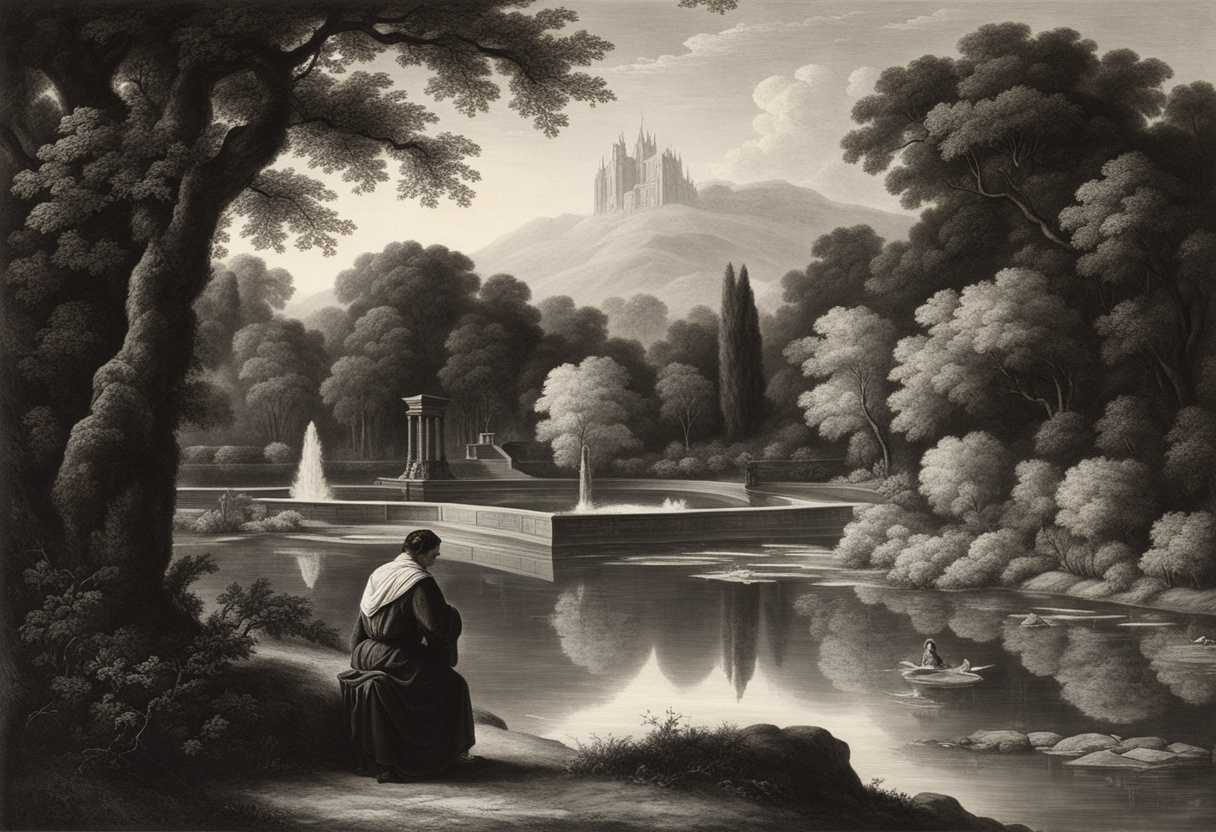
Setting the Scene for Genesis 2:9-17
In Genesis chapter 2, we find ourselves in the Garden of Eden, a lush and bountiful paradise created by God. The scene is set with Adam, the first man created by God, wandering through the garden, marveling at the beauty of the plants and animals around him. He is in awe of the perfection of this place that God has provided for him.
As Adam explores the garden, he comes across various trees, including the Tree of Life and the Tree of the Knowledge of Good and Evil. God has given Adam the task of naming all the animals, and as he carries out this duty, he realizes that he is alone and in need of a companion. God then puts Adam into a deep sleep and creates Eve, the first woman, from one of Adam’s ribs.
In this serene and idyllic setting, God gives Adam and Eve one command: they are free to eat from any tree in the garden except for the Tree of the Knowledge of Good and Evil. God warns them that if they eat from that tree, they will surely die. This pivotal moment sets the stage for the fall of humanity and the beginning of sin in the world.
What is Genesis 2:9-17 about?
God introduces the story of the Garden of Eden and gives Adam the first commandment in this verse. The Garden of Eden is portrayed as a paradise, a place of beauty and abundance created by God for Adam and Eve to dwell in. It is a symbol of God’s love and provision for humanity.
God’s commandment to Adam not to eat from the tree of knowledge is a test of obedience and trust. It is a way for God to establish boundaries and to see if Adam will follow His instructions. The tree of knowledge represents the choice between obeying God’s will and seeking knowledge or wisdom apart from Him. It is a reminder that true wisdom and understanding come from God, and that disobedience leads to consequences. We are challenged to consider our own obedience to God’s commands as we reflect on this verse. Do we trust in God’s wisdom and authority, or do we seek knowledge and understanding on our own terms? Are we willing to submit to God’s will, even when it goes against our own desires? Just like Adam, we are faced with choices every day that test our faith and obedience. We should strive to follow God’s commands with a humble and obedient heart, trusting in His wisdom and guidance for our lives.
Understanding what Genesis 2:9-17 really means
Structure for Commentary
- Introduction and Context
- Analysis of Key Phrases
- Cross-Referencing with Other Biblical Passages
- Relevance to Today’s Readers
- Anecdotal Illustration
- Conclusion and Reflection
Commentary
1. Introduction and Context
The passage from Genesis 2:9-17 introduces us to the Garden of Eden, a paradise prepared by God for humanity. Among the abundant trees in the garden, God emphasizes two in particular: the tree of life and the tree of the knowledge of good and evil. This narrative sets the stage for understanding humanity’s relationship with God, free will, and the consequences of choices.
2. Analysis of Key Phrases
The phrase “the tree of life” symbolizes eternal life and a close relationship with God. Contrarily, “the tree of the knowledge of good and evil” represents the moral autonomy that humanity seeks but isn’t ready to handle responsibly. When God commands Adam to not eat from this tree, it underlines the theme of obedience and trust. Each phrase asks us to consider our relationship with divine authority and moral responsibility.
3. Cross-Referencing with Other Biblical Passages
Several passages support and expand upon these themes. Proverbs 3:18 states, “She is a tree of life to those who lay hold of her,” connecting wisdom to eternal life. Revelation 22:2 brings the narrative full circle by describing the tree of life in the new Jerusalem, signifying restoration and eternal communion with God. Additionally, Romans 5:19 reveals, “For just as through the disobedience of the one man the many were made sinners, so also through the obedience of the one man the many will be made righteous,” contrasting Adam’s fall with Christ’s redemptive act.
4. Relevance to Today’s Readers
This passage speaks powerfully to modern concerns about ethical decision-making, the quest for knowledge, and the boundaries set for our benefit. We live in a world abundant with information and choices but lacking in wisdom and discernment. This calls us to revisit the importance of divine guidance and boundaries. How do we respect the moral limits set by God while navigating a world that continuously pushes for autonomy and self-determination?
5. A young professional, in the pursuit of a successful career, faces ethical dilemmas. This person is offered a promotion that involves unethical practices. Torn between ambition (the tree of knowledge) and integrity (obedience to moral principles), the choices they make mirror Adam’s dilemma. They realize that true fulfillment and peace come from adhering to God’s guidance rather than succumbing to the tempting knowledge that leads to ruin by reflecting on Genesis 2:9-17.
6. Conclusion and Reflection
Genesis 2:9-17 invites us to meditate on the purpose of divine commandments. It’s a call to trust that God’s limitations are for our ultimate good. This passage offers a timeless reminder of the need for divine wisdom and the consequences of our choices in a society that often blurs the lines of right and wrong. How are you embracing or resisting the wisdom and guidance of God’s word in your daily decisions?
This commentary encourages each reader to deeply reflect on their personal relationship with God’s commandments and consider how these ancient truths apply to their contemporary lives.
What are the consequences of disobeying God’s commands?
Disobeying God’s commands can have serious consequences. God gives a clear command to Adam not to eat from the tree of the knowledge of good and evil in this passage. Disobeying this command leads to the entrance of sin into the world. Sin separates humanity from God and brings about various forms of suffering, pain, and brokenness. Adam and Eve being expelled from the Garden of Eden and facing the consequences of their actions result from disobeying God’s command.
The consequences of disobedience showcase the importance of obeying God’s commands and the subsequent blessings that come from following His will. Though God gives us free will to choose our actions, there are often repercussions for straying from His instructions. Disobedience not only impacts the individual disobeying, but it can also have wider implications on the community or even all of humanity. It is a reminder of the power and authority of God and the importance of aligning our actions with His will to avoid the negative consequences of disobedience. Disobeying God’s commands can ultimately lead to spiritual, emotional, and physical harm. God sets boundaries and gives commands for our well-being and flourishing, and when those commands are disregarded, it can result in a separation from God, as well as internal and external turmoil. The consequences of disobedience serve as a cautionary tale to heed God’s guidance and follow His commands to experience the fullness of life and avoid the detrimental outcomes that come from disobedience.
Application
Think of your life like a well-managed family. Just as a parent ensures their family’s needs are met, God has provided abundantly for you. Recognize the blessings that fill your day, from your morning coffee to the roof over your head. Trust that just as these needs are met, so too will your future ones. How will you express your gratitude for these daily gifts today?

Reverend Michael Johnson is an experienced Church Minister with a profound expertise in spirituality and guidance. With a serene presence and a compassionate heart, he has faithfully served his congregation for over 20 years, leading them on a spiritual journey towards inner peace and enlightenment. Reverend Johnson’s extensive knowledge of religious philosophies and profound understanding of human nature have made him a trusted confidant and mentor to many, as he seamlessly weaves his profound wisdom into life teachings. Reverend Johnson’s calming demeanor and empathetic nature continue to uplift and heal souls, nurturing a sense of unity and tranquility within his community.