
Genesis 30:7-8 is about Rachel’s deep desire for children and her frustration at being unable to conceive, leading her to give her maid Bilhah to her husband Jacob as a means to bear children for her.
7 And Rachel’s servant Bilhah conceived again and bore Jacob a second son.
8 Then Rachel said, “With mighty wrestlings I have wrestled with my sister and have prevailed.” So she called his name Naphtali.
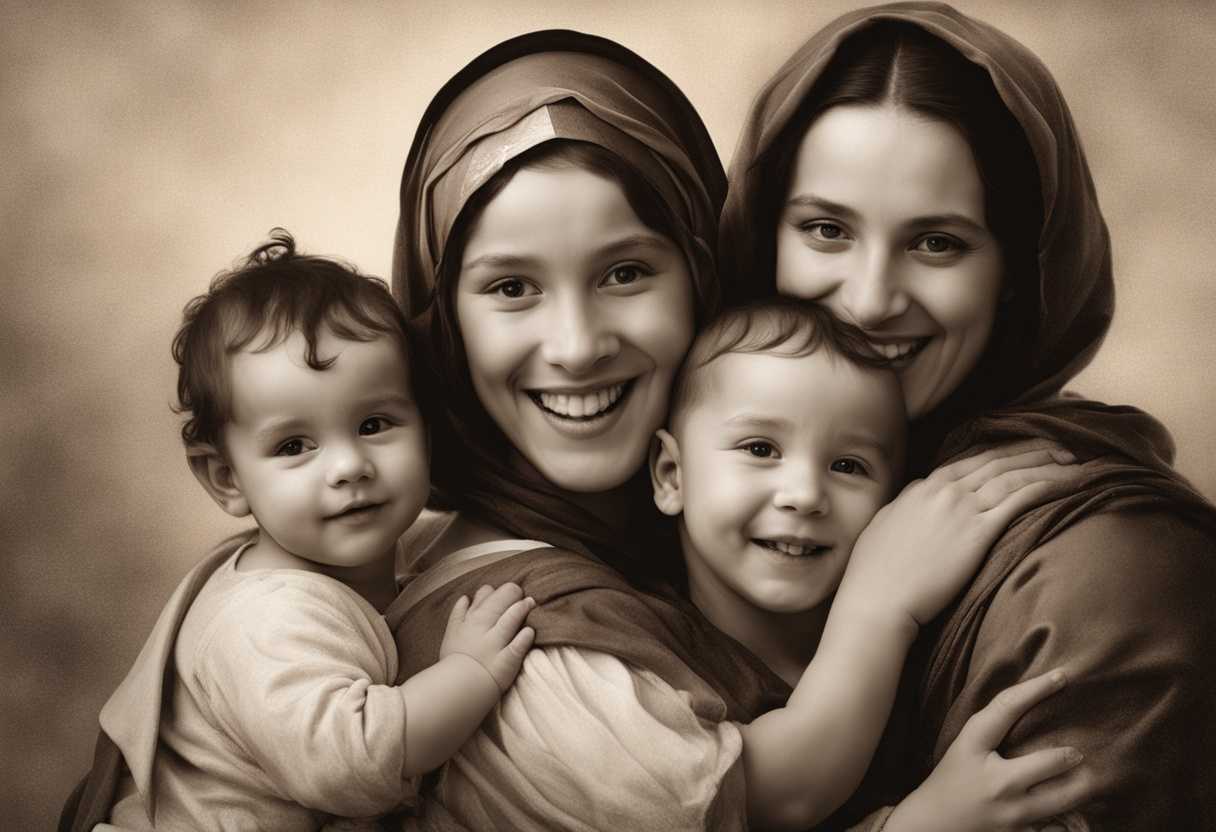
Setting the Scene for Genesis 30:7-8
In the scene described in Genesis 30:7-8, we find Rachel, one of the wives of Jacob, in a moment of deep longing for children. Rachel had been unable to conceive while her sister Leah had already borne several sons to Jacob. Feeling the weight of her barrenness, Rachel turned to Jacob and said, “Here is my maid Bilhah, go in to her, that she may bear on my knees and that through her I too may have children.”
The setting is a tent in the ancient land of Canaan, where Jacob lived with his two wives, Rachel and Leah, along with their handmaids, Bilhah and Zilpah. The atmosphere is tense with the unspoken competition between the sisters for Jacob’s affection and the desire to bear children. Rachel’s desperation to have children drives her to make this decision, a common practice in that time where a barren woman would offer her maid to her husband to bear children on her behalf.
As Rachel watches Bilhah bear children for Jacob, the complex dynamics of this polygamous family come to the forefront, showcasing the cultural norms and struggles of the time. The scene is filled with a mix of emotions – longing, jealousy, and ultimately, a deep desire for fulfillment and legacy.
What is Genesis 30:7-8 about?
Oh, how complex and tragic human desires can be! Rachel’s yearning for children was so deep that she was willing to take unconventional and perhaps even desperate actions to fulfill it. Imagine the longing in her heart, the ache for motherhood that must have consumed her every waking moment. She made a decision in her desperation that would have far-reaching consequences, not only for herself but for generations to come.
This verse reminds us of the power of our desires and the lengths we may go to in order to satisfy them. It prompts us to reflect on the ways in which we navigate our own desires and what compromises we are willing to make in pursuit of them. It also serves as a cautionary tale, showing us how our decisions in moments of intense desire can have lasting effects that we may not have considered in the heat of the moment. Let us learn from Rachel’s story and strive for balance and wisdom in our pursuit of our deepest desires.
Understanding what Genesis 30:7-8 really means
Genesis 30:7-8 unfolds a poignant chapter in the intricate narrative of Jacob, Rachel, and Leah, shedding light on the profound rivalry between the two wives as they navigate the delicate terrain of bearing children. Rachel’s initial barrenness prompts her to offer her maid, Bilhah, as a surrogate to conceive on her behalf, a practice reflective of the cultural norms of the time while also revealing Rachel’s fervent desire for motherhood.
The phrase “Rachel’s maid Bilhah conceived again and bore Jacob a second son” encapsulates Rachel’s unwavering determination to expand her family through unconventional means, showcasing the lengths she is willing to go to fulfill her longing for children. Moreover, Rachel’s declaration, “With mighty wrestlings I have wrestled with my sister and have prevailed,” paints a vivid picture of the intense emotional and social struggle between Rachel and Leah, with the word “prevailed” hinting at a hard-won victory tinged with complexity.
Drawing parallels with related biblical passages such as Genesis 29:31-35 and 1 Samuel 1:1-20, the narrative of Rachel, Leah, and Bilhah resonates with timeless themes of rivalry, desire, and the human inclination to take matters into one’s own hands. The passage serves as a poignant reminder of the universal experiences of inadequacy, competition, and the profound yearning for the seemingly unattainable, inviting readers to introspect on their own struggles and aspirations.
In a contemporary context, the dynamics between Rachel, Leah, and Bilhah find echoes in modern scenarios of competition and desire, such as colleagues vying for a promotion. This analogy underscores the repercussions of resorting to drastic measures to achieve one’s goals, mirroring Rachel’s decision to use Bilhah as a means of competing with Leah. It prompts contemplation on the consequences of prioritizing personal ambitions over integrity and trust in divine timing.
Genesis 30:7-8 encapsulates the intricate tapestry of human emotions and relationships, urging readers to ponder their responses to deep-seated desires and rivalries. By exploring the interconnected themes of faith, patience, and integrity through biblical parallels and contemporary illustrations, individuals can glean valuable insights into navigating their personal journeys with grace and wisdom. The passage stands as a poignant testament to the enduring relevance of ancient narratives in illuminating the complexities of the human experience.
How do our actions affect our spiritual blessings?
Our actions have a direct impact on our spiritual blessings. Rachel’s impatience and frustration led her to make a decision that ultimately affected her spiritual blessings by observing her actions in these verses. Instead of waiting on the Lord and trusting in His timing, Rachel took matters into her own hands, which resulted in negative consequences.
When we act impulsively or outside of God’s will, we risk missing out on the spiritual blessings He has in store for us. It is important to seek guidance from the Lord and align our actions with His Word in order to receive and safeguard our spiritual blessings. Patiently trusting in God’s timing and following His instructions will lead us to the blessings He has planned for us.
May we learn from Rachel’s example and strive to align our actions with God’s will, trusting in His timing and plan for our lives. We can ensure that we are not only receiving spiritual blessings but also protecting and nurturing them through obedience and faithfulness by doing so.
Application
Just like in a busy office, let’s not rush our tasks but carefully craft each one with diligence and faith. As we navigate the complexities of our modern lives, let’s not cut corners but stay true to our principles and values. Just like supporting our family, let’s nurture our faith with patience and trust in God’s timing. Will we choose to wait faithfully for God’s perfect plan to manifest in our lives?

Reverend Michael Johnson is an experienced Church Minister with a profound expertise in spirituality and guidance. With a serene presence and a compassionate heart, he has faithfully served his congregation for over 20 years, leading them on a spiritual journey towards inner peace and enlightenment. Reverend Johnson’s extensive knowledge of religious philosophies and profound understanding of human nature have made him a trusted confidant and mentor to many, as he seamlessly weaves his profound wisdom into life teachings. Reverend Johnson’s calming demeanor and empathetic nature continue to uplift and heal souls, nurturing a sense of unity and tranquility within his community.