
34 Now Rachel had taken the household gods and put them in the camel’s saddle and sat on them. Laban felt all about the tent, but did not find them.
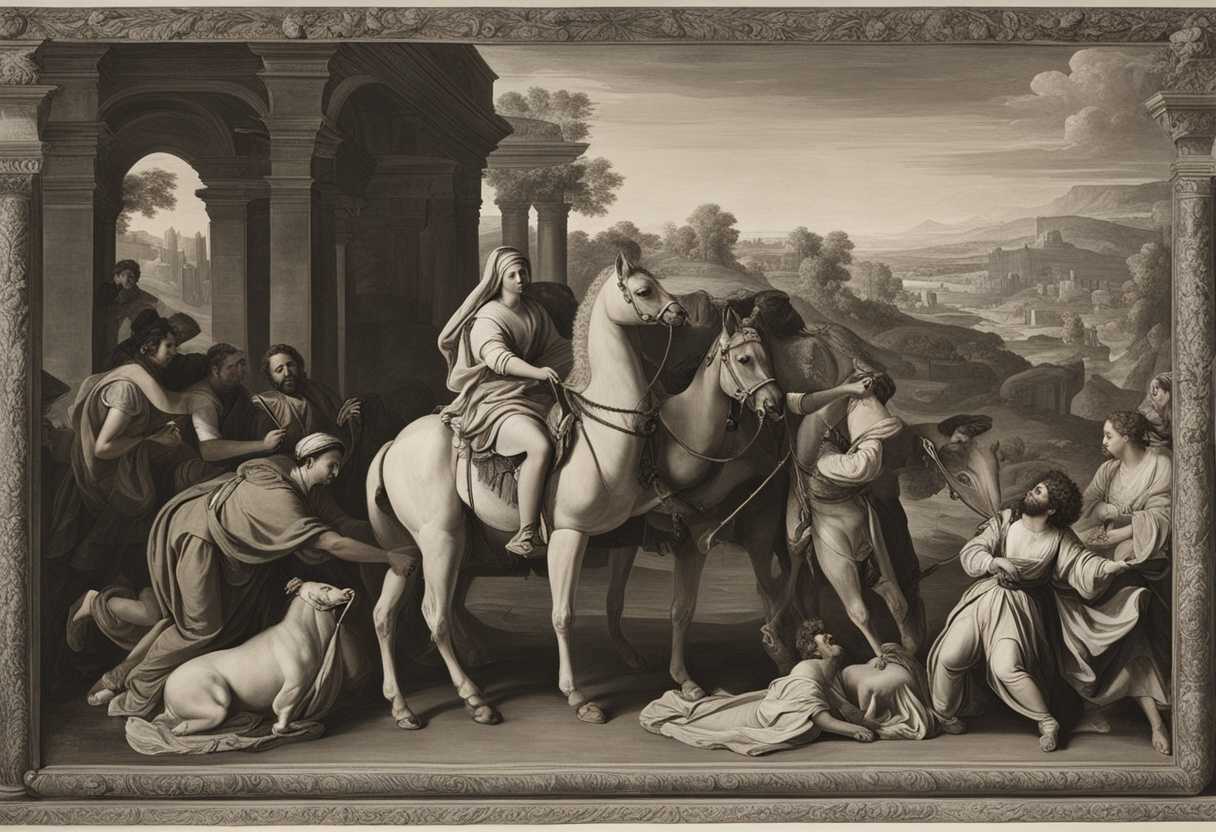
Setting the Scene for Genesis 31:34
In Genesis chapter 31, we find Jacob, Rachel, and Leah in a tense and dramatic scene. Jacob had been working for his uncle Laban for many years, and tensions had been rising between them. Laban’s daughters, Rachel and Leah, were also Jacob’s wives. As Jacob decided to leave Laban’s household and return to his own land, Laban pursued him, accusing Jacob of stealing his household idols.
The scene unfolds as Laban searches through all of Jacob’s belongings, including the tents of Rachel and Leah. Rachel, desperate to protect Jacob, secretly takes Laban’s household idols and hides them in her camel’s saddle, then sits on them, claiming she cannot stand up because she is on her period. Laban searches high and low but cannot find his idols. This deception by Rachel ultimately saves Jacob from Laban’s wrath and allows them to continue their journey back to Canaan.
The setting is a campsite in the desert, with tents pitched for each family member. The tension is palpable as Laban accuses Jacob of theft, and Rachel’s quick thinking and deception play a crucial role in the unfolding events. This scene marks a turning point in the story of Jacob and his family, as they prepare to leave behind the deceit and manipulation of Laban and journey towards their destiny in the land promised to them by God.
What is Genesis 31:34 about?
Rachel resorts to deception by hiding her father’s household gods in a camel saddle in this verse. This act raises questions about the lengths people will go to in order to protect what they believe is important to them. Rachel’s actions show the complexity of human nature and the various ways people navigate difficult situations. It also highlights the conflicts that can arise within families and the dynamics of relationships.
When we analyze this verse, we are prompted to consider the ethics of deception and the consequences of our actions. We must reflect on whether Rachel’s actions were justified and the impact they had on her relationship with Laban. This story challenges us to think about the values we hold dear and how far we would go to protect them. It also reminds us of the importance of honesty and integrity in our interactions with others.
Understanding what Genesis 31:34 really means
To provide meaningful commentary on Genesis 31:34, it is helpful to break down our discussion into several structured steps: Context, Key Themes/Ideas, Biblical Cross-References, Relevance Today, and Personal Anecdote/Application.
Context
Genesis 31:34 occurs in the narrative where Jacob has decided to flee from his father-in-law, Laban. This is a turning point in Jacob’s story, reflecting themes of conflict, deception, and transition. Rachel, Jacob’s wife, secretly steals her father’s household gods and hides them as her family departs. Understanding the context gives us insights into the characters’ motivations and the culture of the time. Themes of idolatry, deception, and the pursuit of independence are seen in this verse. Rachel, aware that her father might pursue them, conceals the stolen idols, symbolizing a struggle between the old ways (idolatry) and the new covenant relationship with God being forged by Jacob’s family.
“Rachel had taken the household gods and put them in the camel’s saddle and was sitting on them.”
This phrase underscores Rachel’s secretive actions and the lengths she was willing to go to deceive her own father. Idolatry was deeply ingrained in their culture, despite Jacob’s allegiance to the God of Israel. This act of hiding the idols can reflect the internal conflict between old loyalties and new faith.
Biblical Cross-References
- Exodus 20:3-4: The commandment against idolatry. This correlation emphasizes how earlier practices contrast sharply with later laws given to the Israelites, illustrating a shift from polytheism to monotheism.
- Joshua 24:14: Joshua challenges the Israelites to throw away the gods their ancestors worshiped. This encourages the reader to view Rachel’s act as a reflection of the ongoing struggle to fully commit to God’s ways.
Relevance Today
Idolatry might seem like an ancient issue, but today’s idols are often more subtle: money, career, or even relationships can become objects of our ultimate trust and desire. Rachel’s story reminds us of the importance of rooting out what we may unwittingly prioritize over our relationship with God.
Personal Anecdote/Application
Let me share a story of a member of our congregation. John had an impressive career and found his identity and worth in his job. When layoffs hit, he was devastated, feeling like he had lost his purpose. He later realized he had placed his career above his relationship with God. Much like Rachel hiding those idols, John had been harboring something that ultimately didn’t fulfill his spiritual needs. Through this experience, John re-evaluated his priorities, placing God back at the center of his life.
This verse, when examined closely, provides more than just a historical or cultural lesson. It’s a mirror, reflecting our own hidden idols and challenging us to address them. Rachel’s clandestine act serves as a caution, urging us to bring all aspects of our lives into the light of God’s truth. This verse resonates with ongoing human struggles when discussing Genesis 31:34. Whether ancient statues or modern-day distractions, we are called to discern and remove what stands between us and a wholehearted commitment to God.
How can we discern between physical and spiritual treasures?
Physical treasures are material possessions that we can see, touch, and possess in the physical world. These can be items such as gold, silver, land, or other valuable assets that provide temporary satisfaction or security. On the other hand, spiritual treasures refer to intangible qualities or aspects of life that hold eternal value. These treasures include virtues like love, compassion, kindness, faith, and wisdom, which enrich our souls and relationships with others.
Discerning between physical and spiritual treasures involves recognizing the difference in their nature and impact. While physical treasures may offer temporary comfort or status, spiritual treasures provide lasting fulfillment and peace. Focusing on spiritual treasures can lead to a deeper sense of purpose, inner growth, and a more meaningful existence. We nurture our spiritual well-being and contribute to a more harmonious and fulfilling life both for ourselves and those around us by prioritizing spiritual treasures over physical ones.
Application
Think about Rachel in Genesis 31:34, hiding stolen idols from her father. Just like a small lie at work can snowball into a major breach of trust, dishonesty corrodes relationships bit by bit. Choose honesty in all your interactions, whether at home or in the office. Being truthful builds strong, lasting bonds. Will you commit to living a life of truth and integrity starting today?

Reverend Michael Johnson is an experienced Church Minister with a profound expertise in spirituality and guidance. With a serene presence and a compassionate heart, he has faithfully served his congregation for over 20 years, leading them on a spiritual journey towards inner peace and enlightenment. Reverend Johnson’s extensive knowledge of religious philosophies and profound understanding of human nature have made him a trusted confidant and mentor to many, as he seamlessly weaves his profound wisdom into life teachings. Reverend Johnson’s calming demeanor and empathetic nature continue to uplift and heal souls, nurturing a sense of unity and tranquility within his community.