
Genesis 33:1-4 is about Jacob encountering his brother Esau after years of separation, symbolizing reconciliation and forgiveness in the face of past grievances and conflicts.
1 And Jacob lifted up his eyes and looked, and behold, Esau was coming, and four hundred men with him. So he divided the children among Leah and Rachel and the two female servants.
2 And he put the servants with their children in front, then Leah with her children, and Rachel and Joseph last of all.
3 He himself went on before them, bowing himself to the ground seven times, until he came near to his brother.
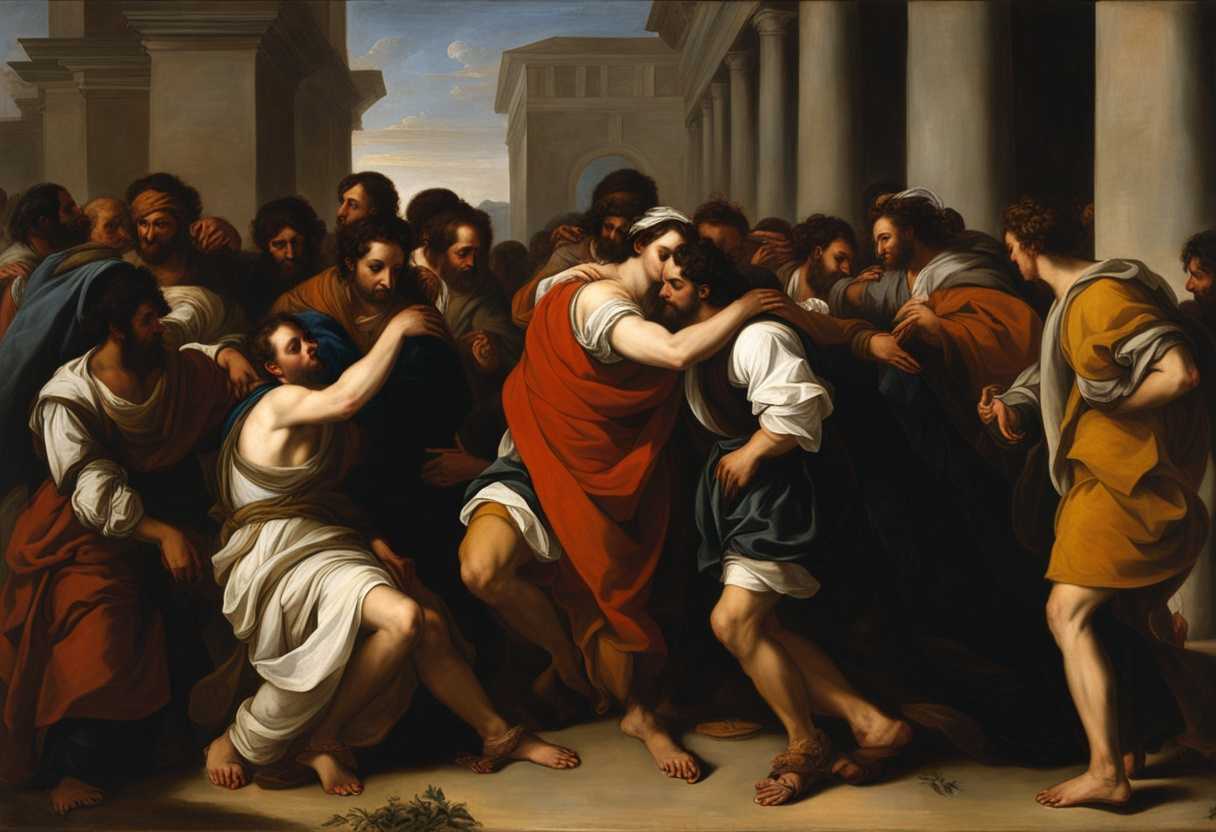
4 But Esau ran to meet him and embraced him and fell on his neck and kissed him, and they wept.
Setting the Scene for Genesis 33:1-4
As the sun began to set over the horizon, casting a warm golden glow over the land, Jacob nervously awaited the arrival of his brother, Esau. After years of separation and a tumultuous past, Jacob was filled with apprehension about their impending meeting. The scene was set in the vast wilderness of Canaan, with rolling hills and a clear sky stretching out in every direction.
Jacob had sent messengers ahead to Esau, informing him of his return and seeking reconciliation. As Esau’s entourage appeared on the horizon, Jacob could see his brother leading the way, his expression unreadable from a distance. Jacob’s heart raced as he prepared himself for the encounter, unsure of what to expect after all these years of estrangement.
As Esau drew closer, Jacob could see a mix of emotions flickering across his brother’s face. And then, to Jacob’s surprise and relief, Esau ran to meet him, embracing him warmly. The tension that had been building within Jacob melted away as the brothers were finally reunited, their past grievances fading into the background as they embraced each other in forgiveness and reconciliation.
What is Genesis 33:1-4 about?
Isn’t it beautiful to see the power of forgiveness and reconciliation between two estranged brothers, Jacob and Esau, in this verse? After years of conflict and distance between them, Jacob humbled himself, approached Esau with humility, and demonstrated genuine brotherly love. This act of reconciliation reminds us of the importance of letting go of past grievances and embracing forgiveness to heal broken relationships.
The story of Jacob and Esau teaches us valuable lessons about the power of empathy, humility, and love in overcoming conflicts. It shows that it is never too late to make amends and rebuild broken relationships, no matter how deep the wounds may be. Jacob and Esau set an example for all of us to follow in our own relationships by showing kindness and humility, reminding us of the transformative power of forgiveness and reconciliation. As we reflect on this verse, let us also consider the relationships in our own lives that may be strained or broken. Let Jacob and Esau’s reconciliation inspire us to take the first step towards healing and rebuilding bridges with those we have drifted apart from. May this story serve as a reminder of the importance of forgiveness, humility, and brotherly love in fostering harmonious and meaningful connections with others.
Understanding what Genesis 33:1-4 really means
In Genesis 33:1-4, we witness a poignant moment in the biblical narrative as Jacob and Esau, estranged brothers with a history of deceit and conflict, come face to face after years of separation. This reunion holds significant weight in the broader context of Genesis, marking a pivotal moment of reconciliation and forgiveness between two brothers torn apart by jealousy and betrayal.
The history between Jacob and Esau is fraught with tension, stemming from Jacob’s deception to receive his father Isaac’s blessing meant for the firstborn. This act of trickery led to Esau’s deep resentment and Jacob’s fear of retaliation, setting the stage for a dramatic confrontation between the brothers. The preceding chapters depict Jacob’s palpable fear and anxiety as he anticipates the meeting with Esau, unsure of how his brother will receive him after their tumultuous past.
As Jacob catches sight of Esau approaching with four hundred men, his initial reaction is one of fear and apprehension, fearing the worst from his brother’s formidable entourage. However, Jacob’s response is one of humility and repentance, as he bows down to the ground seven times before his brother, a gesture of submission and contrition. The unexpected turn of events unfolds as Esau, instead of meting out vengeance, runs to meet Jacob, embracing him, kissing him, and weeping together, showcasing a profound display of grace, forgiveness, and emotional reconciliation.
Drawing parallels with other biblical passages, such as the Parable of the Prodigal Son in Luke 15:11-32, we see a common theme of forgiveness and reconciliation emphasized. Jesus’ teachings in Matthew 5:23-24 further underscore the importance of seeking reconciliation with others before offering gifts at the altar, highlighting the priority of restoring relationships over religious rituals.
The timeless message of Genesis 33:1-4 resonates with readers today, urging us to reflect on the universal themes of forgiveness, reconciliation, and the healing of broken relationships. This passage serves as a poignant reminder of the transformative power of forgiveness, the humility required to seek reconciliation, and the profound joy that comes from restoring fractured bonds.
In our own lives, we may have experienced moments where forgiveness and reconciliation played a pivotal role in healing relationships. The emotional and spiritual relief that accompanies resolving conflicts and rebuilding connections serves as a testament to the profound impact of extending grace and seeking reconciliation with others.
As we contemplate the lessons from Genesis 33:1-4, let us internalize the importance of forgiveness, humility, and reconciliation in our interactions with others. May we be inspired to seek out opportunities for healing broken relationships, extending grace, and fostering emotional reconciliation in our own lives, mirroring the transformative journey of Jacob and Esau.
How can we reconcile with those who have wronged us?
One way to reconcile with those who have wronged us is to approach them with a spirit of humility and forgiveness. It is important to let go of any feelings of resentment or anger and instead focus on opening our hearts to the possibility of reconciliation. We too can strive to rebuild relationships that have been strained by past wrongdoings, just as Jacob and Esau overcame years of conflict and animosity through their encounter.
We can also seek to understand the perspective of the person who has wronged us and strive to empathize with their circumstances or motivations. We create a space for healing and reconciliation to take place by practicing compassion and showing a willingness to listen and communicate openly. We can set the foundation for rebuilding trust and repairing relationships by taking the initiative to extend forgiveness and understanding, requiring a mutual effort from all parties involved in reconciliation.
Application
Just like a successful project at work, mending relationships requires effort and determination. Let’s take a page from Jacob and Esau’s book and mend the broken bridges in our lives. Just imagine the relief and joy that comes from restoring harmony with others. Are you ready to take that brave step towards reconciliation today?

Reverend Michael Johnson is an experienced Church Minister with a profound expertise in spirituality and guidance. With a serene presence and a compassionate heart, he has faithfully served his congregation for over 20 years, leading them on a spiritual journey towards inner peace and enlightenment. Reverend Johnson’s extensive knowledge of religious philosophies and profound understanding of human nature have made him a trusted confidant and mentor to many, as he seamlessly weaves his profound wisdom into life teachings. Reverend Johnson’s calming demeanor and empathetic nature continue to uplift and heal souls, nurturing a sense of unity and tranquility within his community.