
Genesis 33:18-20 is about Jacob settling in the land of Canaan, where he bought a parcel of land and built an altar as a symbol of his gratitude and dedication to God for his blessings and protection throughout his journey.
18 And Jacob came safely to the city of Shechem, which is in the land of Canaan, on his way from Paddan-aram, and he camped before the city.
19 And from the sons of Hamor, Shechem’s father, he bought for a hundred pieces of money the piece of land on which he had pitched his tent.
20 There he erected an altar and called it El-Elohe-Israel.
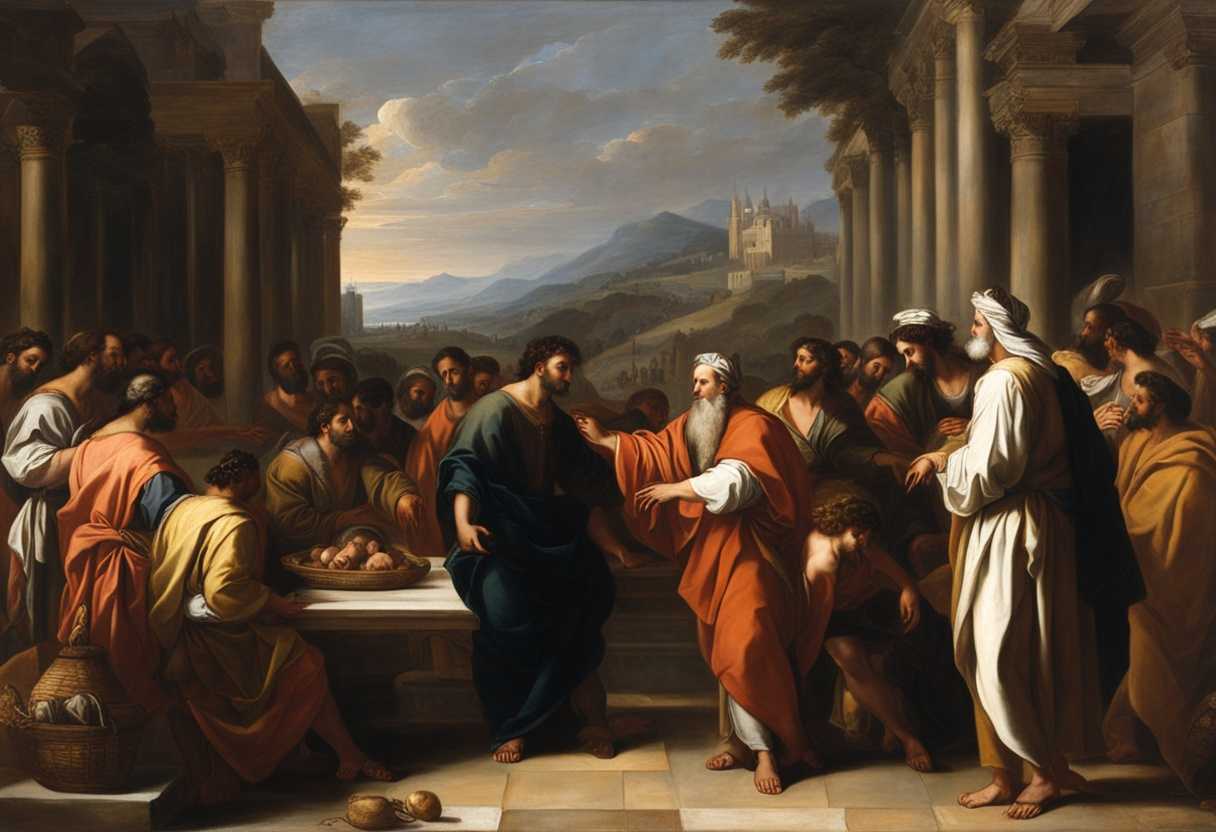
Setting the Scene for Genesis 33:18-20
As the sun began to set over the horizon, casting a warm golden glow over the land, Jacob and his family found themselves in the lush region of Canaan. After years of separation and turmoil, Jacob was finally reunited with his brother Esau. The tension that once filled the air had dissipated, replaced by a sense of peace and reconciliation. Esau, with his rugged appearance and warm smile, welcomed Jacob with open arms, putting an end to their long-standing feud.
In this moment of reconciliation, Jacob presented a gesture of goodwill to his brother, offering him a gift of livestock as a token of his gratitude. The scene was set against the backdrop of rolling hills and fertile valleys, a testament to the abundance of the land that both brothers now shared. As they stood together, surrounded by their families and flocks, there was a sense of unity and forgiveness that filled the air, marking a new chapter in their relationship.
The exchange of gifts symbolized not only the reconciliation between Jacob and Esau but also the restoration of their bond as brothers. As they parted ways, each heading towards their respective lands, there was a sense of closure and hope for the future. The scene captured a moment of healing and forgiveness, a reminder of the power of reconciliation and the importance of letting go of past grievances.
What is Genesis 33:18-20 about?
We witness a beautiful example of gratitude and faith in this verse. Jacob, after enduring various trials and tribulations, arrives in Canaan and takes the time to acknowledge God’s guidance and providence by building an altar. Through this act, he not only shows appreciation for the blessings he has received but also demonstrates his commitment to his relationship with God.
This verse serves as a powerful reminder of the importance of recognizing and giving thanks for the blessings in our lives. It prompts us to reflect on our own journey and consider the ways in which we have been supported and guided by a higher power or a force greater than ourselves. We can cultivate a deeper sense of appreciation, connection, and spirituality by following Jacob’s example and taking the time to acknowledge and express gratitude for the goodness in our lives. Building an altar serves as a physical representation of one’s faith and gratitude, signifying its significance. How does this act of building an altar symbolize a deeper commitment to God and a recognition of His presence in one’s life? Reflect on the impact that expressing gratitude can have on our spiritual well-being and relationship with the divine. How can we incorporate moments of thanksgiving and reflection into our daily lives to honor and acknowledge the blessings we have received?
Understanding what Genesis 33:18-20 really means
In Genesis 33:18-20, we witness a pivotal moment in Jacob’s life as he arrives in Shechem following his reconciliation with his brother Esau. This event holds both physical and spiritual significance for Jacob, marking a new chapter in his journey. After purchasing a plot of land, Jacob sets up an altar, naming it “El-Elohe-Israel,” which translates to “God, the God of Israel.”
These verses are interconnected with other passages in the Bible, such as Genesis 28:20-22, where Jacob makes a vow at Bethel, promising to make the Lord his God. The fulfillment of this vow is evident in Genesis 33:18-20. Additionally, Joshua 24:32 mentions the burial of Joseph’s bones in Shechem on the land Jacob acquired, emphasizing the enduring impact of Jacob’s purchase. Furthermore, in John 4:5-6, Jesus converses with the Samaritan woman at Jacob’s well in Shechem, underscoring the lasting significance of this location.
The act of Jacob setting up an altar serves as a reminder of the importance of acknowledging God’s presence in our lives, expressing gratitude for His guidance, and protection. In today’s fast-paced world, it is essential to pause, reflect on our journey, and recognize God’s hand in our lives. Just as Jacob took the time to establish a place of worship, we too can create moments of reverence and thanksgiving in our lives.
Consider a person who has overcome numerous challenges and finally finds stability and peace. They may designate a special place in their home for prayer and reflection, akin to Jacob’s altar. This act symbolizes a constant reminder of God’s faithfulness and the journey they have traversed.
The phrases used in these verses hold profound meanings. “Came safely to the city of Shechem” highlights God’s protection and fulfillment of His promises. Jacob’s safe arrival underscores God’s faithfulness. “Bought the piece of land” signifies a sense of permanence and commitment, as Jacob moves from a wandering existence to establishing roots. “Set up an altar” represents a space for worship and gratitude, a tangible expression of Jacob’s acknowledgment of God’s sovereignty. Lastly, “El-Elohe-Israel” encapsulates Jacob’s recognition of God’s personal relationship with him, a declaration of faith and identity.
Reflecting on Genesis 33:18-20 reminds us of the importance of acknowledging God’s presence in our lives, expressing gratitude, and fostering a personal relationship with Him. Just as Jacob found significance in setting up an altar, may we too find moments of reverence and thanksgiving in our daily lives.
Where is our spiritual home?
Our spiritual home is not defined by physical structures or geographical locations, but rather by our connection and relationship with God. Jacob settled in the land of Canaan, where he purchased a piece of land and built an altar to worship the Lord. This act of consecration and commitment to God symbolizes the establishment of a spiritual home, a place where Jacob could seek and encounter God’s presence.
Similarly, we are reminded that our true spiritual home is found in the presence of God, wherever we may be. It is in our moments of worship, prayer, and obedience that we build our spiritual home, a place where we can commune with God and experience His peace and guidance. We are called to cultivate an atmosphere of worship and reverence in our lives, making every place we dwell a sacred space where God’s presence resides, just as Jacob built an altar to honor God in the land of Canaan. Our spiritual home ultimately transcends earthly constraints and is not confined to physical boundaries. It is a place where our hearts are aligned with God’s will, our minds are focused on His word, and our spirits are attuned to His presence. We can find comfort, security, and fulfillment in knowing that our true home is in God as we seek to deepen our relationship with Him and prioritize His presence in our lives.
Application
Reflecting on Genesis 33:18-20, let’s remember the importance of gratitude towards God, just like Jacob did. Let’s build our own altars of thankfulness and devotion in our lives, acknowledging the blessings and protection we receive. It’s time to prioritize our spiritual connection above all, honoring Him with our genuine appreciation. Will you take this vital step to set up your spiritual altar and commit yourself to expressing gratitude to the One who sustains us all?

Reverend Michael Johnson is an experienced Church Minister with a profound expertise in spirituality and guidance. With a serene presence and a compassionate heart, he has faithfully served his congregation for over 20 years, leading them on a spiritual journey towards inner peace and enlightenment. Reverend Johnson’s extensive knowledge of religious philosophies and profound understanding of human nature have made him a trusted confidant and mentor to many, as he seamlessly weaves his profound wisdom into life teachings. Reverend Johnson’s calming demeanor and empathetic nature continue to uplift and heal souls, nurturing a sense of unity and tranquility within his community.