
20 There he erected an altar and called it El-Elohe-Israel.
Setting the Scene for Genesis 33:20
In Genesis chapter 33, we find Jacob, who had just reconciled with his brother Esau after years of estrangement. The scene takes place in the hill country of Seir, a region in Edom where Esau resided. Jacob had sent messengers ahead to Esau, informing him of his return and seeking his favor. Esau, filled with compassion and forgiveness, had run to meet Jacob, embraced him, and wept.
As they stood in the hill country, surrounded by the rugged terrain and the vast expanse of the land, Jacob and Esau exchanged words of reconciliation and peace. Jacob, humbled by the forgiveness shown to him by his brother, offered gifts as a token of his gratitude. The brothers, once divided by jealousy and deceit, now stood united in forgiveness and love, a testament to the power of reconciliation and the grace of God.
The sun began to set over the hill country of Seir as Jacob and Esau parted ways, each going to their respective homes. The scene in Genesis 33 captures a powerful moment of healing and restoration, showcasing the transformative power of forgiveness and the importance of reconciliation in relationships.
What is Genesis 33:20 about?
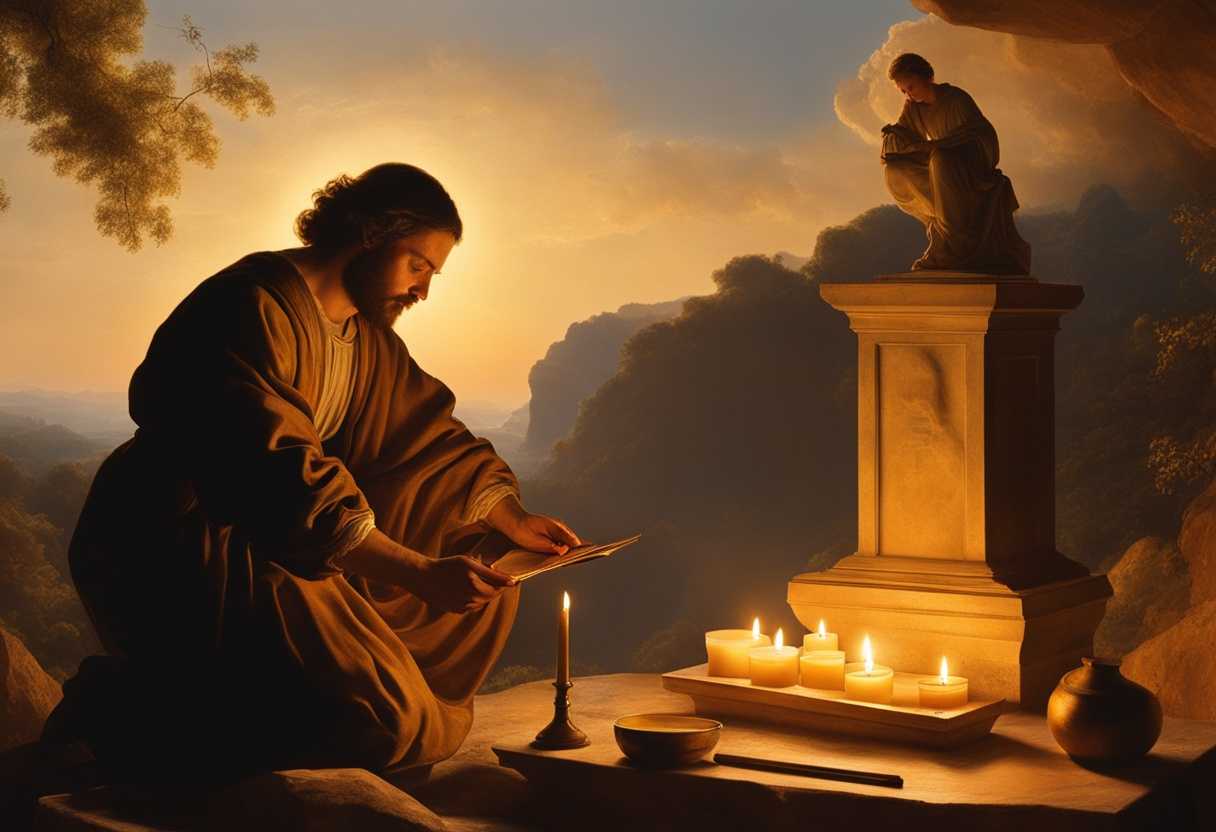
We witness a pivotal moment in Jacob’s spiritual journey in this verse. Jacob is not just constructing a physical structure but also symbolically marking a significant shift in his identity and relationship with God by building an altar and giving it the name “God, the God of Israel.” Through this act, Jacob is publicly acknowledging his faith in the one true God and solidifying his commitment to follow Him.
Imagine the emotions and thoughts swirling within Jacob as he constructs this altar. Reflect on the journey he has been on, the trials he has faced, and the moments of divine intervention he has experienced. Jacob is affirming not only his personal faith but also his recognition of God’s presence and authority in his life and the life of his descendants by naming the altar “God, the God of Israel.” This act serves as a reminder to himself and future generations of the power and faithfulness of the God he serves. Let us ponder this verse while considering our own spiritual journey. What altars have we built in our lives to honor and worship God? How have we acknowledged His presence and authority in our daily lives? Just like Jacob, may we also take time to reflect on our faith and publicly declare our commitment to follow the one true God. Let Jacob’s example inspire us to strive to build altars of worship and remembrance in our own lives.
Understanding what Genesis 33:20 really means
Structure for Commentary:
1. Introduction
2. Context and Background
3. Key Phrases and Their Meanings
4. Connection to Other Biblical Passages
5. Relevance for Today
6. Engaging Anecdote
7. Conclusion
Introduction:
Often in the scriptures, we encounter moments where a place or an act is given profound significance. Genesis 33:20 is one such instance, where Jacob sets up an altar and names it. But why is this act so important? Let’s identify the subject: “we”
Rewritten sentence: We will delve into its context and extract the profound lessons it has for us today.
Context and Background:
To understand this verse, we need to consider the preceding narrative. Jacob, having reconciled with his brother Esau after years of estrangement and fear, is finally at peace. His journey, fraught with divine encounters and personal evolution, culminates in this act of worship. Jacob erects an altar in Shechem and names it “El-Elohe-Israel. He acknowledges God’s role in his life and the promise fulfilled – safe passage and reconciliation by doing so.
Key Phrases and Their Meanings:
The phrase “set up an altar” holds deep significance. Altars in biblical times were constructed as sites of worship, thanksgiving, or remembrance. They were tangible declarations of faith and commitment. Jacob publically acknowledges his dependence on and gratitude towards God by building an altar.
Naming the altar “El-Elohe-Israel” is even more intimate. It translates to “God, the God of Israel.” Here, “Israel” refers to Jacob, whose name was changed by God, marking a transformation in his identity. This name encapsulates a personal relationship with the divine, emphasizing God’s unique and powerful role in Jacob’s life.
Connection to Other Biblical Passages:
This act recalls other moments of worship and thanksgiving in the Bible. For instance, in Genesis 12:7, Abram builds an altar after God promises him the land of Canaan. Similarly, in Exodus 17:15, Moses erects an altar and names it “The Lord is My Banner” following a victory over the Amalekites. Each altar represents an encounter with God and recognition of His providence. Do we have moments in our own lives where we need to set up “altars” of remembrance or thanksgiving? Although we may not build physical structures, we can create spiritual markers. These could be moments of deep prayer, communal worship, or even journaling our blessings. These practices anchor us in faith and remind us of God’s continuous work in our lives in a world that constantly shifts our focus away from gratitude and reflection.
Engaging Anecdote:
I recall a congregant named Sarah who, after battling and overcoming a severe illness, created a prayer garden in her backyard. She planted flowers and set up a small cross, dedicating that space as a constant reminder of God’s healing. Much like Jacob’s altar, her garden became a place of personal worship, thanksgiving, and a testament to God’s presence in her life.
Conclusion:
Jacob’s act of building an altar and naming it signifies more than an ancient ritual; it is a timeless reminder of recognizing and commemorating God’s faithfulness. May we pause to acknowledge the divine interventions in our lives as we navigate our own journeys, creating our own “altars” of gratitude and personal worship. Our faith, like Jacob’s, is a journey marked by moments of divine encounter and thanksgiving.
How can we reconcile with those who wronged us?
One way we can reconcile with those who have wronged us is by choosing to let go of the past and showing forgiveness. By forgiving those who have hurt us, we release ourselves from the burden of anger and resentment and open the door for healing and reconciliation. Forgiveness allows us to move forward with a renewed sense of peace and freedom.
Another important aspect of reconciliation is to seek understanding and empathy towards those who have wronged us. Trying to see the situation from their perspective may help us gain insight into their motivations or struggles, which can soften our hearts and facilitate the reconciliation process. Compassion and empathy can bridge the gap between us and our offenders, paving the way for mutual understanding and forgiveness.
Lastly, reconciliation often involves open communication and a willingness to work towards rebuilding trust and repairing the relationship. Honest dialogue, expressing feelings, and listening to each other with an open mind can foster empathy and create a safe space for healing. Through genuine efforts to communicate, understand, and forgive, reconciliation becomes a possibility, leading to a path of peace and restoration.
Application
Just like Jacob built an altar to show his gratitude, it’s time for you to pause and reflect on your blessings. In the hustle of work and family life, take a moment to thank God for the good in your life. Your actions can be your altar—show your appreciation through kindness, helping others, or offering a prayer. How will you express your gratitude to God today?

Reverend Michael Johnson is an experienced Church Minister with a profound expertise in spirituality and guidance. With a serene presence and a compassionate heart, he has faithfully served his congregation for over 20 years, leading them on a spiritual journey towards inner peace and enlightenment. Reverend Johnson’s extensive knowledge of religious philosophies and profound understanding of human nature have made him a trusted confidant and mentor to many, as he seamlessly weaves his profound wisdom into life teachings. Reverend Johnson’s calming demeanor and empathetic nature continue to uplift and heal souls, nurturing a sense of unity and tranquility within his community.